
The Cartography Table in Valheim: Shared Maps, and the Item Nobody Builds
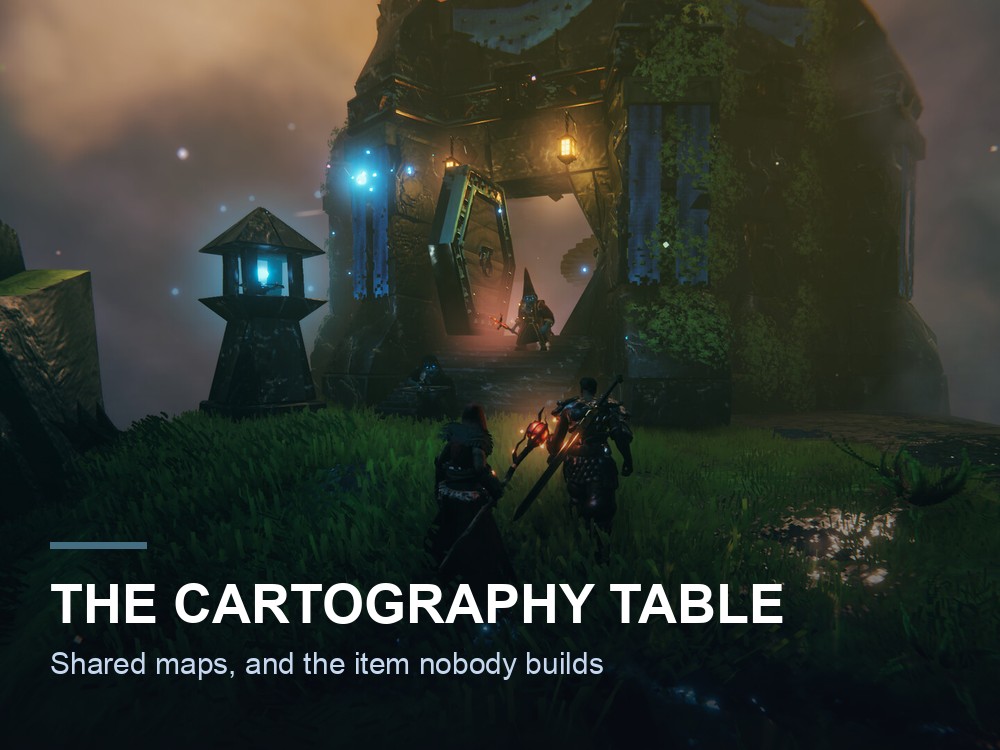
The Cartography Table is the most under-built structure in Valheim. It costs two bronze, ten finewood, ten bone fragments, five leather scraps and four raspberries — a bill you could clear on the way to your first Forge — and it shares your map and your markers with other players. For a group, that is the difference between one person exploring and four people exploring the same coastline separately.
On sourcing. Iron Gate do not publish system documentation. The figures below come from the community wikis and can change with any patch.
What It Costs
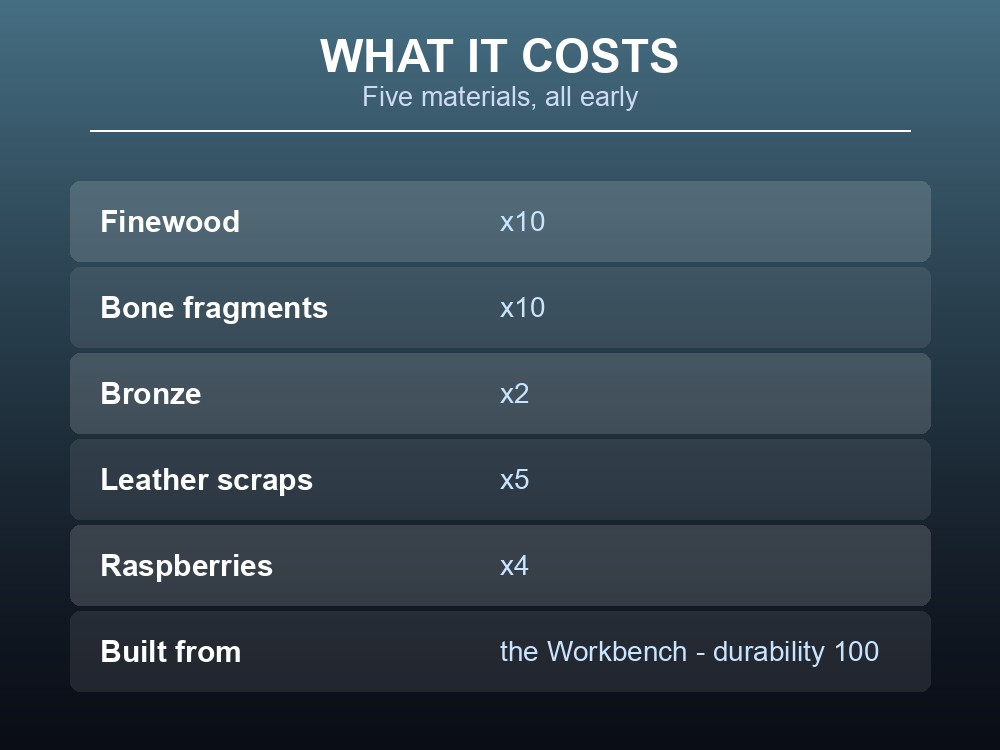
| Finewood | ×10 |
| Bone fragments | ×10 |
| Bronze | ×2 |
| Leather scraps | ×5 |
| Raspberries | ×4 |
| Built from | The Workbench |
| Durability | 100 |
| Size | 2 × 4 |
Two bronze is the only real cost. Everything else is early-game material you have in quantity by the time you can smelt at all — and raspberries in a construction recipe is unusual enough that it is worth noting you will need to go and pick some.
It is built from the Workbench, which means it needs no special station — any base you already have can produce one.
The 2 × 4 footprint makes it a table rather than a small piece, so it needs a room with floor space rather than a wall slot.
Durability 100 is low, comparable to a Cauldron — so keep it indoors and behind a wall like anything else you would rather a raid did not reach.
What It Does
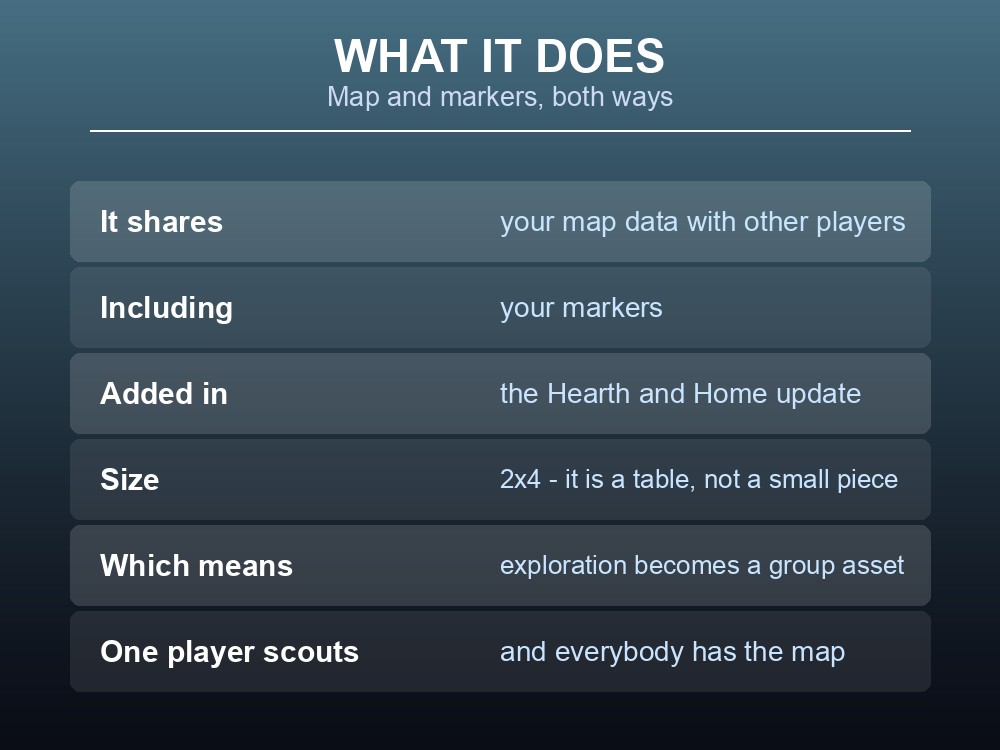
It shares your map data with other players — including your markers.
Both halves matter. The explored terrain is useful; the markers are what turn a shared map into shared knowledge. A marker on a Sunken Crypt cluster, a copper deposit, a Haldor location or a Vegvisir-pinned boss altar is information the whole group can act on.
It was added in the Hearth & Home update, which means guides written for the game's first year do not mention it at all — part of why it stays unbuilt.
And the sharing is a deliberate action at the table, not a passive server-wide setting. Players interact with it to push and pull map data, which means it works as a hub: explore separately, then sync.
For a group, that is the whole value proposition. As our Vegvisir guide notes, a Vegvisir only reveals the boss altar closest to itself and does nothing if that altar is already pinned — so one player reading a stone and sharing the pin saves everyone else the trip.
Why Nobody Builds It
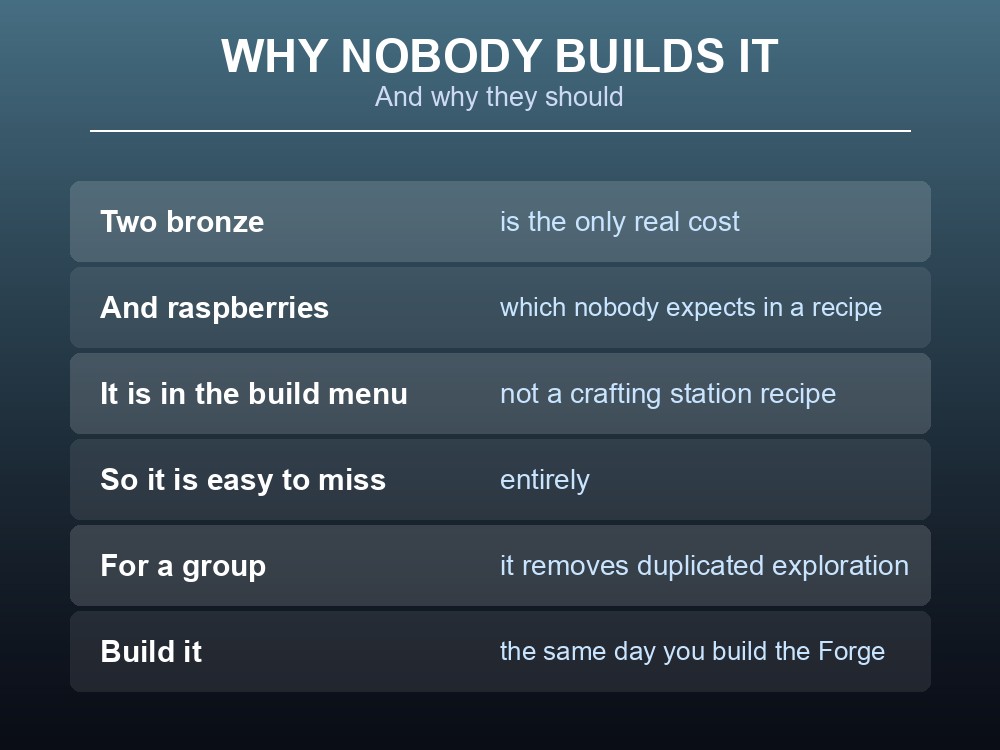
It is in the build menu, not in a crafting station's recipe list. That is the main reason it goes unnoticed — players scan the Workbench and Forge menus for new recipes and never scroll the hammer's Misc tab.
Its materials look like a decoration's. Raspberries and leather scraps read as a furniture recipe rather than a functional one, so even players who see it assume it is cosmetic.
And solo players get nothing from it, which means most single-player guides correctly ignore it — and those guides are what most people read.
But for any group, the return is immediate. Four players exploring independently and syncing at a table cover four times the ground of four players exploring together, and neither duplicates the other's work.
Build it the same day you build the Forge. Two bronze is trivially affordable at that point, and the earlier it exists the more exploration it captures — a table built at the endgame only shares what people happen to have left marked.
One table is enough. It is a sync point, not a network — put it in the main hall where everybody passes through, and treat visiting it as part of coming home.
Practical tips
- Finewood ×10, Bone fragments ×10, Bronze ×2, Leather scraps ×5, Raspberries ×4.
- Built from the Workbench — no special station required.
- It shares your map AND your markers with other players.
- Added in Hearth & Home, so older guides omit it entirely.
- It is in the hammer's build menu, not a crafting station recipe list.
- Two bronze is the only real cost — build it beside your first Forge.
- Solo players gain nothing; for a group the return is immediate.
- One table is enough — put it where everyone passes through.
Running your own Valheim server
A shared map is only worth building on a world the whole group returns to. A gamever Valheim server keeps that world and everyone's exploration persistent for up to 10 players, with one-click backups.
Conclusion
The Valheim Cartography Table costs Finewood ×10, Bone fragments ×10, Bronze ×2, Leather scraps ×5 and Raspberries ×4 from the Workbench, and it shares your map data and your markers with other players. Added in the Hearth & Home update, it goes unbuilt for three reasons: it lives in the hammer's build menu rather than a crafting station's recipe list, its materials read like a decoration's, and solo players gain nothing from it — which is what most guides are written for. For any group it is one of the highest-return structures in the game, because it turns four people exploring the same coastline into four people exploring four coastlines and syncing the result. Two bronze is the only real cost, so build it beside your first Forge rather than at the endgame, when it would only capture whatever people happen to have left marked. One table, in the main hall, visited on the way home.
Want exploration that accumulates? Rent a Valheim server at gamever.io — instant setup, up to 10 players, one-click backups and updates, and 24/7 uptime. Start with a free trial and use promo code WELCOME.