
Anima, the Anima Twist and the Amalgamated: Why Ashenfall Is Like That
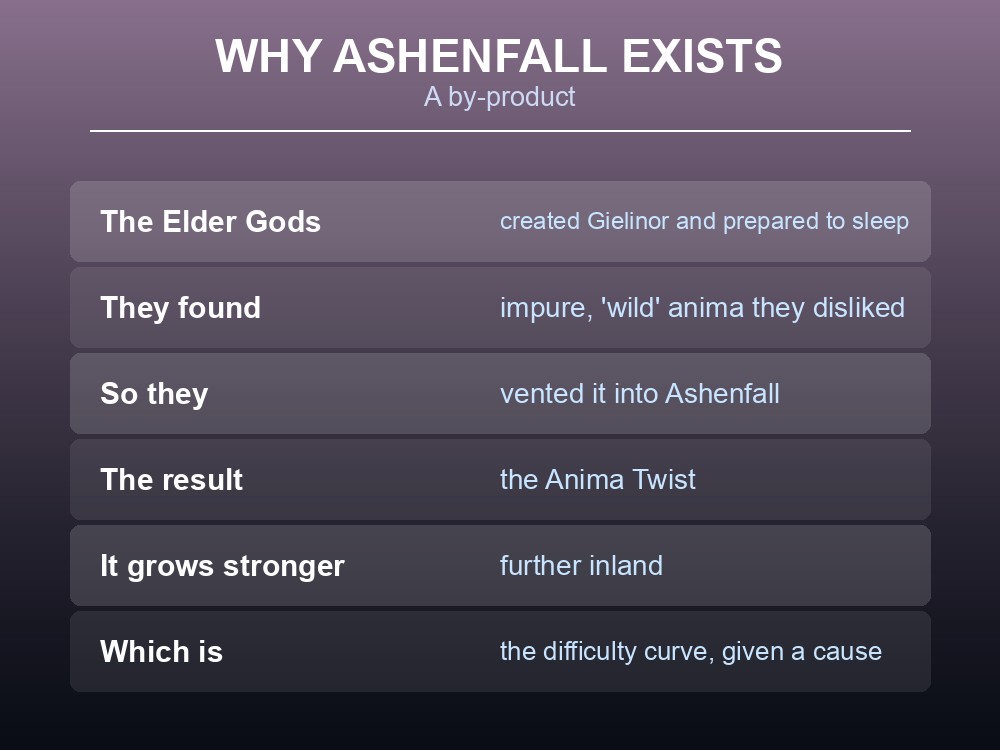
Ashenfall is a rubbish tip. The Elder Gods created Gielinor, found some of its anima impure and distasteful, and vented it into this one continent so their sleeping eggs would get the clean stuff. Everything strange about Dragonwilds follows from that single decision — the mutated wildlife, the persecuted Amalgamated, the thousand-year-old timber, and the fact the danger scales with depth. Here is the mechanic, the history and where you actually meet it in play.
On sourcing. The lore below comes from the community RuneScape: Dragonwilds wiki, and can change with any patch.
What Anima Is
Anima is "the living energy of the universe and all living beings, and the source of magic." It is not a resource Dragonwilds invented — it is the substrate the whole RuneScape cosmology runs on.
The origin story is short and unflattering:
- The Elder Gods created Gielinor.
- They prepared to sleep while their eggs consumed the planet's anima slowly.
- They discovered some impure, "wild" anima they disliked the taste of.
- They used Ashenfall to vent it out of the world.
The result is the Anima Twist, and its defining property is a gradient: "its effects getting stronger further into the continent." That is the game's difficulty curve, given an in-world cause. The regions do not get harder because you levelled up — they get harder because you walked inland.
What the Twist changes:
| It affects | How |
|---|---|
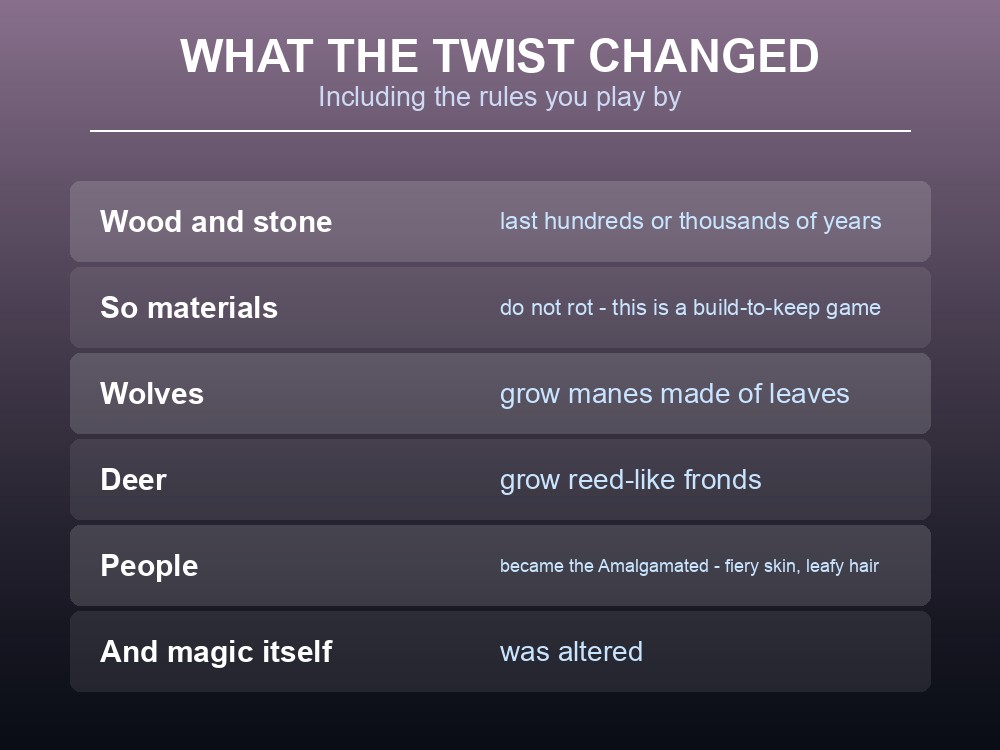
| The environment | Wood and stone last hundreds or thousands of years |
| Wildlife | Wolves grow manes made of leaves; deer grow reed-like fronds |
| Trees | Leaves in unusual hues, resembling sunset |
| People | They become Amalgamated — enhanced with elemental properties |
| Magic itself | Altered |
That first row is quietly the most important one for a player. In a survival game, materials rotting is usually the core tension. Here the setting explicitly says they do not — which is why Dragonwilds is a game about building things that stay built.
The Amalgamated
The Amalgamated are humans and creatures mutated by the Anima Twist into elemental forms — fiery skin, leafy hair, or other magical characteristics.
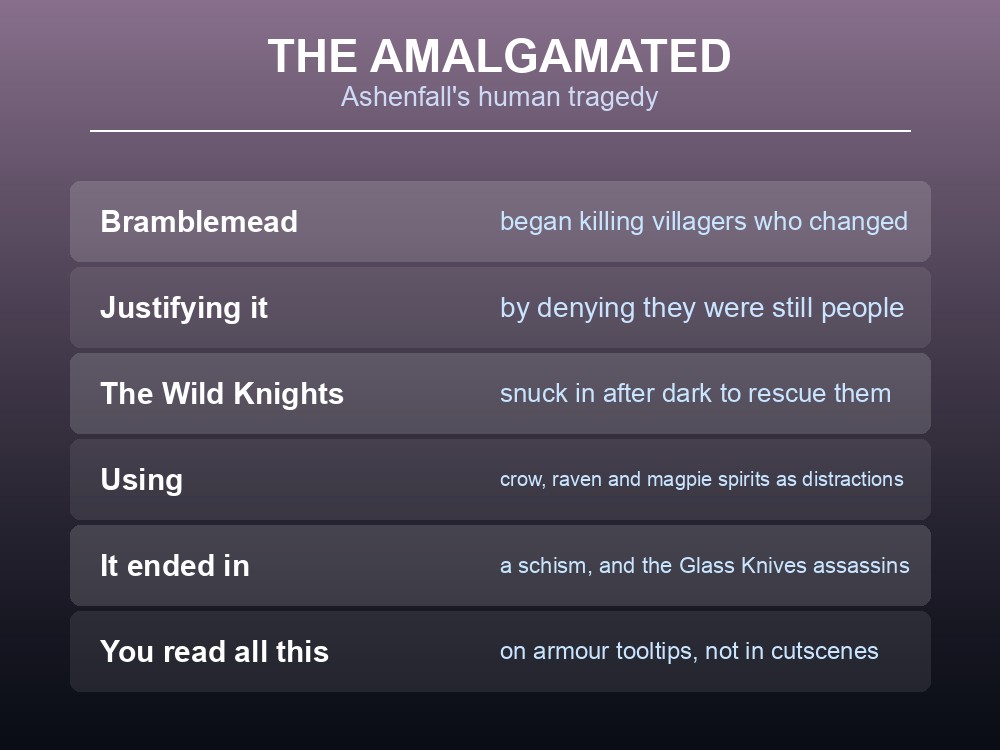
And Ashenfall's central human tragedy is what was done to them. "The Amalgamated were often seen as less than human and were the subject of significant violence."
The sequence, as the game tells it through item descriptions rather than cutscenes:
- Bramblemead, founded by Guthix's followers in the First Age, began killing villagers who became Amalgamated, justifying it by denying they were still people.
- The Wild Knights responded by entering the village after dark to rescue the persecuted, summoning crow, raven and magpie spirits to distract the guards.
- The prejudice outlasted the persecution. Amalgamated who joined the town guard still faced it, with villagers turning away rather than report crimes to them, and few staying in the service long.
- It culminated in a great schism, humans fighting humans.
- Later, assassins calling themselves the Glass Knives — named in memory of a serial killer who murdered Amalgamated — killed a number of Wild Knights.
Where you read all of this is the point. It is on the flavour text of Hard Leather Body, Reinforced Legs, Studded Leather Chaps and Dark Mage Robes — armour pieces, not documents. A player who never opens the Journal and never reads a tooltip finishes the campaign without encountering any of it.
Where You Meet Anima in Play
Anima is not only lore — it is a material category:
| Form | What it is for |
|---|---|
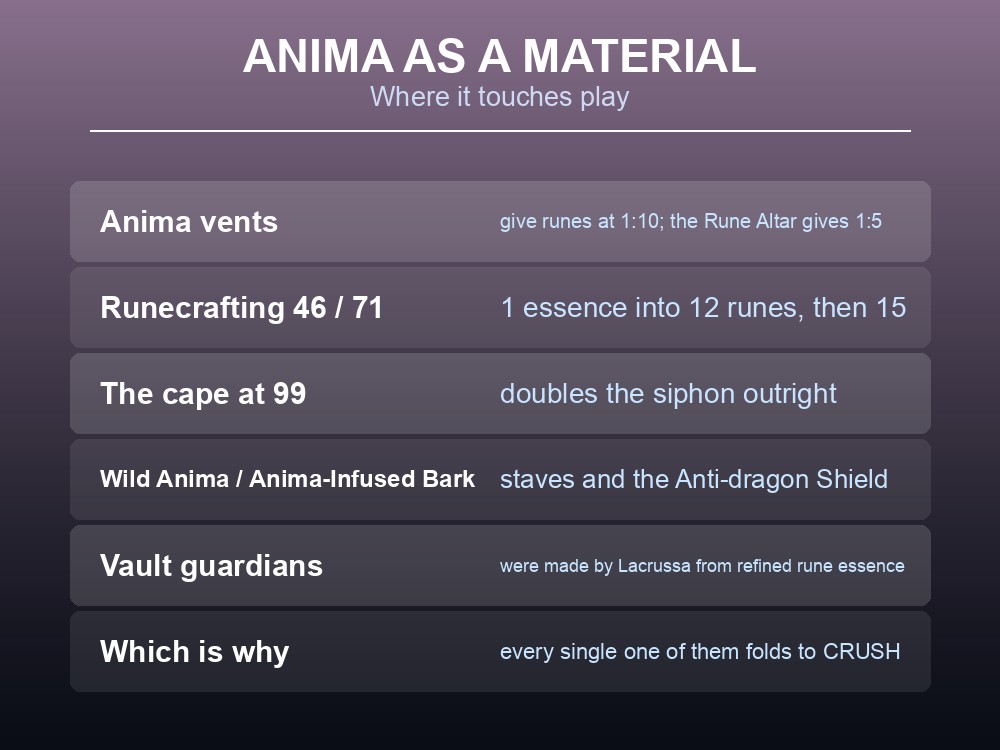
| Anima Vents | Siphoned for runes — the 1:10 source, against the Rune Altar's 1:5 |
| Concentrated vents | Better yield; Greater Elemental Spirits at Runecrafting 64 identifies them |
| Wild Anima | Crafting material — Wizard robes, the Blightwood Battlestaff, the Anti-dragon Shield |
| Anima-Infused Bark | The Oak Battlestaff and the Anti-dragon Shield; harvested in Ghornfell |
| Rune Essence | The base of all runecrafting, and guaranteed in vault chests at 6–12 per chest |
The Runecrafting numbers make anima vents the skill's real engine. The base Rune Altar conversion is 1:5; anima vents give 1:10, and the perks improve on that further — Lesser Anima Siphoning at 46 makes each siphon consume 1 rune essence to produce 12 runes, and Greater Anima Siphoning at 71 takes it to 15. The Runecrafting cape at 99 doubles the amount siphoned outright.
Summon Elemental Spirits at Runecrafting 19 exists precisely because finding vents is the bottleneck — it conjures wisps that guide you to nearby vents.
And the dragonkin vaults are anima technology too. They are "ancient facilities containing lost knowledge and technological wonders", and their guardians were created by the dragonkin Lacrussa using refined rune essence. That single fact explains a pattern players notice long before they learn the reason: every vault guardian in the game is weak to Crush. They are all the same manufacture.
The Peoples the Twist Left Behind
| People | How they got here |
|---|---|
| Humans | Brought by Guthix; seemingly wiped out, until the current expedition |
| Amalgamated | Humans changed by the Twist — and persecuted for it |
| Garou | Bipedal lion-like beings who worshipped the moon goddess Lougrim, split between noble-born — larger, stronger, magic-capable — and common-born |
| Goblins | Brought by Bandos in the Third Age and abandoned when he retreated; they now worship Velgar as their Big High War God |
| Ogres | War refugees, turned into zogres when Imaru infected the region with necrotic energy |
| Dragons | Created and empowered by the dragonkin Cabal as slaves; today all servants of Kuldra |
| Undead | Reanimated in Fellhollow and controlled by Imaru |
| Elves | Travelled here and settled |
| KotHaar | Lava creatures left by the Elder Gods to guard the Lens in Umbral Sands |
Read that column and a theme emerges: almost nobody in Ashenfall chose to be in Ashenfall. Goblins abandoned by their god. Ogres transformed against their will. Dragons bred as slaves. Humans wiped out and returning. Even the KotHaar are security equipment left behind.
Which is thematically consistent with the continent's origin as the place the universe's creators put what they did not want.
Two practical notes for a group that cares about this material.
Journal contents are per-character. One player reading every lore scrap unlocks nothing for anyone else — each person collects their own. The Journal is also where every enemy's weaknesses and resistances live, so the person reading the lore is usefully the person who knows what beats things.
And the lore is genuinely load-bearing on the mechanics. Knowing the vaults are all Lacrussa's work tells you to bring crush. Knowing goblins worship Velgar explains why they are the faction you meet first and fight last. Knowing the Amalgamated absorbed wild anima explains why the deeper regions inflict Wither and Scorch rather than simply hitting harder. In Dragonwilds the setting is a hint sheet.
Practical tips
- Ashenfall exists because the Elder Gods vented anima they disliked into it.
- The Anima Twist strengthens inland — that is the difficulty curve's stated cause.
- It is why wood and stone here last centuries — materials do not rot.
- The Amalgamated are people mutated by it, and were persecuted for it.
- That history lives in armour tooltips, not cutscenes.
- Anima vents give runes at 1:10 against the Rune Altar's 1:5.
- Summon Elemental Spirits (Runecrafting 19) finds vents; Greater (64) flags Concentrated ones.
- Vault guardians were all made by Lacrussa — which is why they all fold to Crush.
- Journal contents are per-character. Everyone collects their own scraps.
Running your own RuneScape: Dragonwilds server
Lore scraps and Journal entries accumulate slowly across dozens of sessions and belong to the character who found them — which only adds up on a world that stays put. A gamever Dragonwilds server keeps Ashenfall available around the clock for up to six players, updates automatically so client and server versions never drift, and takes one-click backups before disruptive changes.
Conclusion
Dragonwilds' setting rests on one decision: the Elder Gods found some of Gielinor's anima impure and distasteful and vented it into Ashenfall so their sleeping eggs would receive the clean supply. The resulting Anima Twist grows stronger further inland — which is the difficulty curve with an in-world cause — and it changes the environment, the wildlife, magic itself and the people, who become the Amalgamated: humans with fiery skin or leafy hair, historically persecuted to the point of a schism that the Wild Knights risked their lives to interrupt. That history is told through armour tooltips rather than cutscenes, in a per-character Journal most players never open. Mechanically, anima shows up as anima vents — the 1:10 rune source against the Rune Altar's 1:5, improved by Lesser and Greater Anima Siphoning at Runecrafting 46 and 71 — as Wild Anima and Anima-Infused Bark, and as the refined rune essence the dragonkin Lacrussa used to build the vault guardians, which is exactly why every one of them is weak to Crush. The peoples around you complete the picture: goblins abandoned by Bandos, ogres transformed into zogres by Imaru, dragons bred as slaves for Kuldra, and KotHaar left behind as guards. Almost nobody in Ashenfall chose to be there.
Want a world where the story has time to accumulate? Rent a Dragonwilds server at gamever.io — instant setup, one-click backups and updates, and 24/7 uptime. Start with a free trial and use promo code WELCOME.