
The Sap Extractor in Valheim: One Dvergr Part, and It Only Works on Ancient Roots
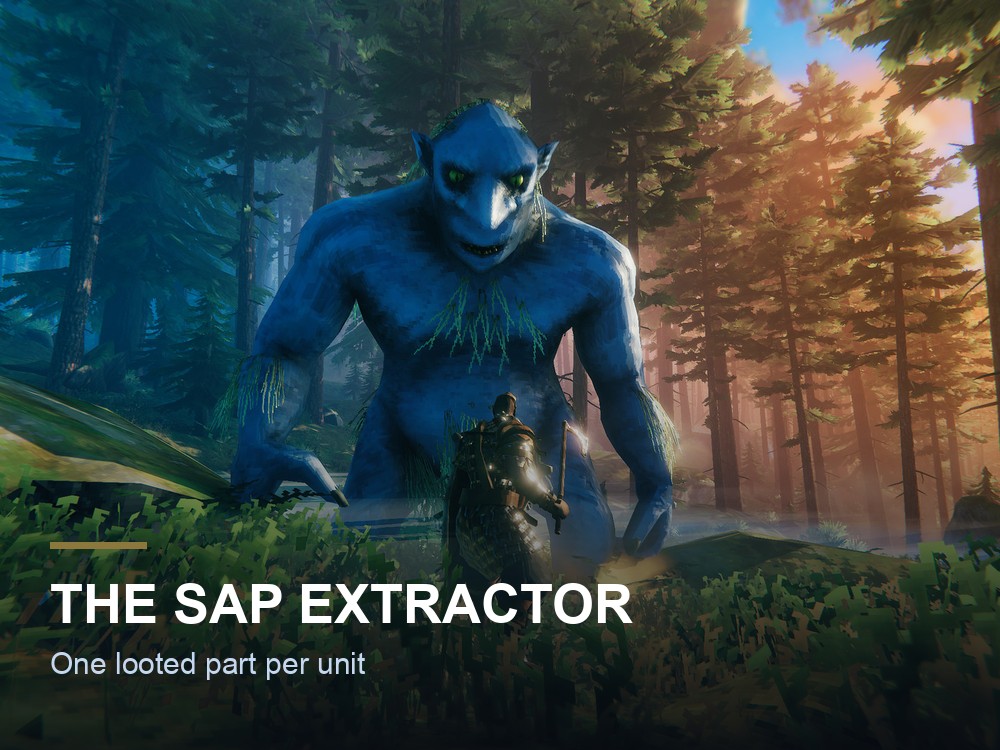
The Sap Extractor is the Mistlands' one piece of passive production, and it comes with the tightest placement rule of any Valheim structure: it can only be built on Ancient Roots, and only within range of a Workbench. Its recipe also contains an item you cannot craft — a Dvergr extractor, which comes exclusively from Dvergr component crates.
On sourcing. Iron Gate do not publish system documentation. The figures below come from the community wikis and can change with any patch.
The Build
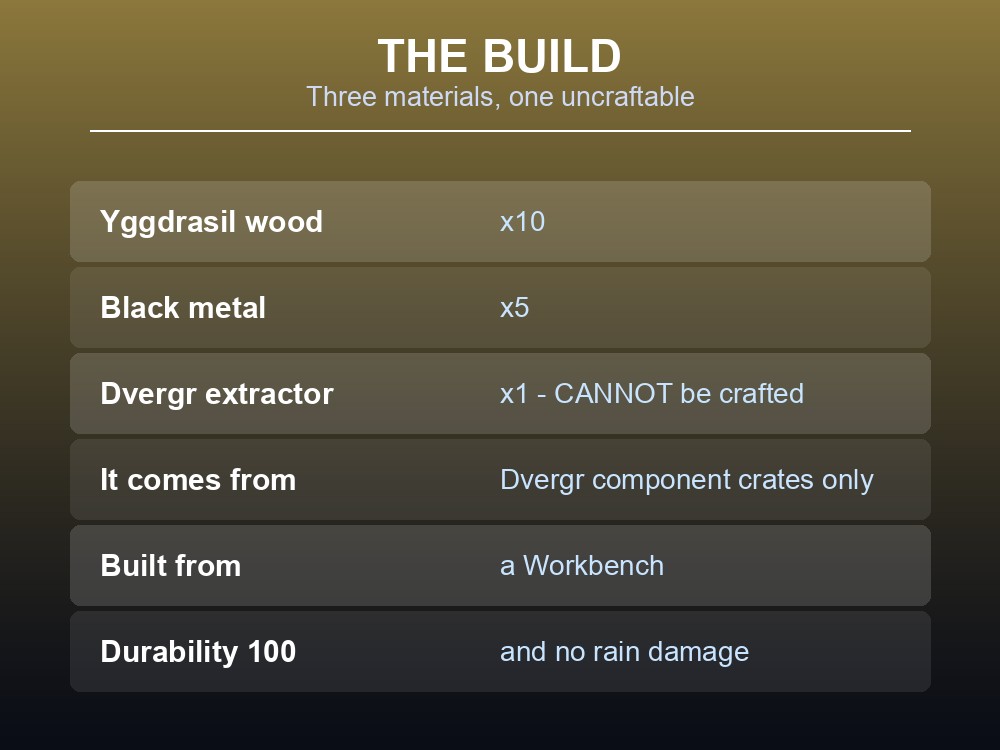
| Field | Value |
|---|---|
| Type | Crafting structure |
| Built from | Workbench |
| Materials | Yggdrasil wood ×10, Black metal ×5, Dvergr extractor ×1 |
| Durability | 100 |
| Size | 0.9 × 3.3 × 0.5 |
| Rain damage | No |
| Immune to | Poison, Spirit, Chop, Pickaxe |
| Placement | On Ancient Roots, within Workbench range |
The Dvergr extractor is the bottleneck. It is not craftable — it comes from Dvergr component crates, which means every Sap Extractor you build costs one looted component. That caps how many you can run by how thoroughly you have looted Dvergr structures, not by how much Black metal you have.
Yggdrasil wood ×10 is the other constraint, and it ties the structure to the Mistlands twice over — the wood is a Mistlands material and the Ancient Roots it stands on are a Mistlands feature.
The Immunity Line Is Unusual
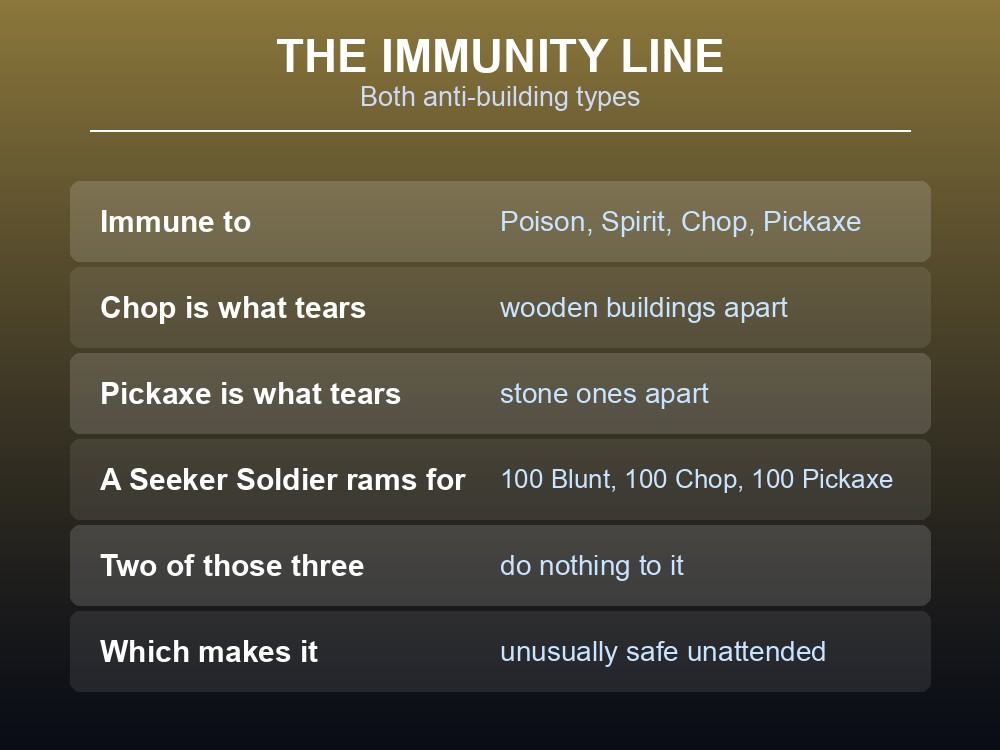
Immune to Poison, Spirit, Chop and Pickaxe.
Read the last two carefully, because they are the structural damage types. Chop is what tears wooden buildings apart and Pickaxe is what tears stone ones apart — and the Sap Extractor ignores both.
That has a direct practical consequence in the Mistlands, where Seeker Soldiers ram for 100 Blunt with 100 Chop and 100 Pickaxe riding along. Those two components do nothing to a Sap Extractor. Combined with no rain damage and 100 durability, it is one of the most durable pieces of infrastructure you can leave unattended.
It is not invulnerable — the Blunt half of that Seeker attack still lands — but a structure that shrugs off both anti-building damage types is genuinely rare.
Placement Is the Whole Puzzle
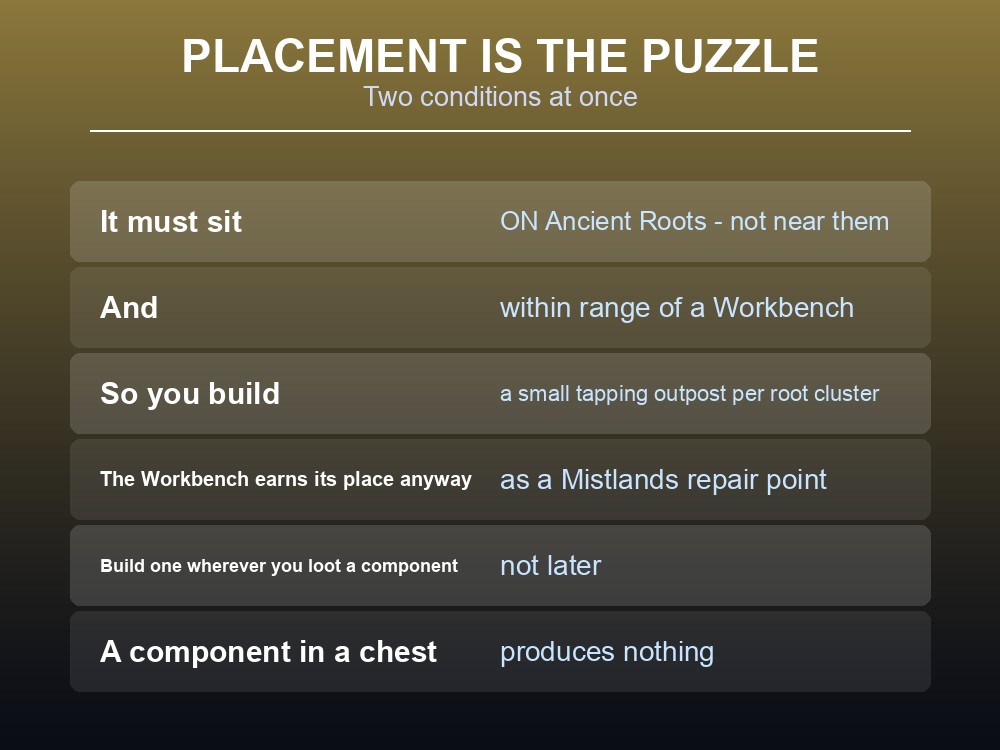
Two conditions must hold simultaneously:
- The extractor sits on Ancient Roots. Not near them — on them.
- The spot is within range of a Workbench.
That means you are building a Workbench in the Mistlands, and building it close enough to reach the roots you want to tap. Since Ancient Roots are scattered rather than clustered, one Workbench rarely covers several extractors, and the practical layout is a small tapping outpost per root cluster.
The upside is that a Workbench in the Mistlands is worth having anyway — it is the repair point for your gear in a biome where Seekers, Gjall and Dvergr all do serious durability damage. (For the step-by-step build, see How to Make Sap Extractor in Valheim; this page is about the structure's properties and what they cost you.)
What It Produces, and Why That Matters
Sap is the Mistlands' distinctive crafting fluid, and the Extractor is the passive route to it — the structure collects on its own once placed, rather than requiring you to harvest.
That makes it one of the small number of Valheim buildings that work while you are away, alongside the kiln, smelter and windmill. In a biome as hostile as the Mistlands, a structure that produces without you standing in it is worth more than its output rate suggests.
The constraint is that you cannot scale it freely. Every unit costs a Dvergr extractor, and those come one at a time out of crates. The right approach is to build one wherever you loot a component rather than saving them for a single site — an extractor sitting in a chest produces nothing.
Fitting It Into a Mistlands Trip
- Loot Dvergr component crates on sight. The extractor is the gate, not the metal.
- Carry Yggdrasil wood and Black metal with you. Ten and five per unit is light enough to keep spares in the pack.
- Build the Workbench first, then place extractors on whatever roots fall inside its radius.
- Do not worry about Seekers wrecking it. Chop and Pickaxe are both immune, and rain does nothing.
- Build them as you go. A component in a chest is production you are not getting.
- The Workbench pays for itself as a Mistlands repair point regardless of the sap.
Running your own Valheim server
Passive production is the clearest argument for a persistent world — a structure that collects while nobody is logged in only exists on a server that does not stop. A gamever Valheim server keeps it running for up to 10 players, with one-click backups.
Conclusion
The Sap Extractor costs Yggdrasil wood ×10, Black metal ×5 and a Dvergr extractor ×1, and that last item is the real constraint — it cannot be crafted and comes only from Dvergr component crates, so your extractor count is capped by looting rather than by materials. It must be placed on Ancient Roots and within Workbench range simultaneously, which in practice means a small tapping outpost per root cluster — though the Workbench earns its place anyway as a Mistlands repair point. Its durability profile is unusually good for unattended infrastructure: 100 durability, no rain damage, and immunity to Poison, Spirit, Chop and Pickaxe — the last two being the anti-wood and anti-stone damage types that a Seeker Soldier's 100 Chop and 100 Pickaxe ram would otherwise deliver. And since it collects Sap passively, it belongs with the kiln, smelter and windmill among the handful of Valheim buildings that work while you are away — which is why the right move is to build one wherever you loot a component, rather than banking components for later.
Want production that runs while you are offline? Rent a Valheim server at gamever.io — instant setup, up to 10 players, one-click backups and updates, and 24/7 uptime. Start with a free trial and use promo code WELCOME.