
The Grindstone in Dragonwilds: Eight Ground Materials, and Two Yield Five Times Less
The grindstone turns rock into powder, and the ratios are not uniform. Stone, sandstone, granite and clay each give five ground units per input. Gypsum and limestone give one. That five-to-one gap decides which of your building materials is cheap and which is a genuine expedition.
It also has two rules people discover the hard way: it must not have a roof above it, and it processes very slowly.
Every Ground Material
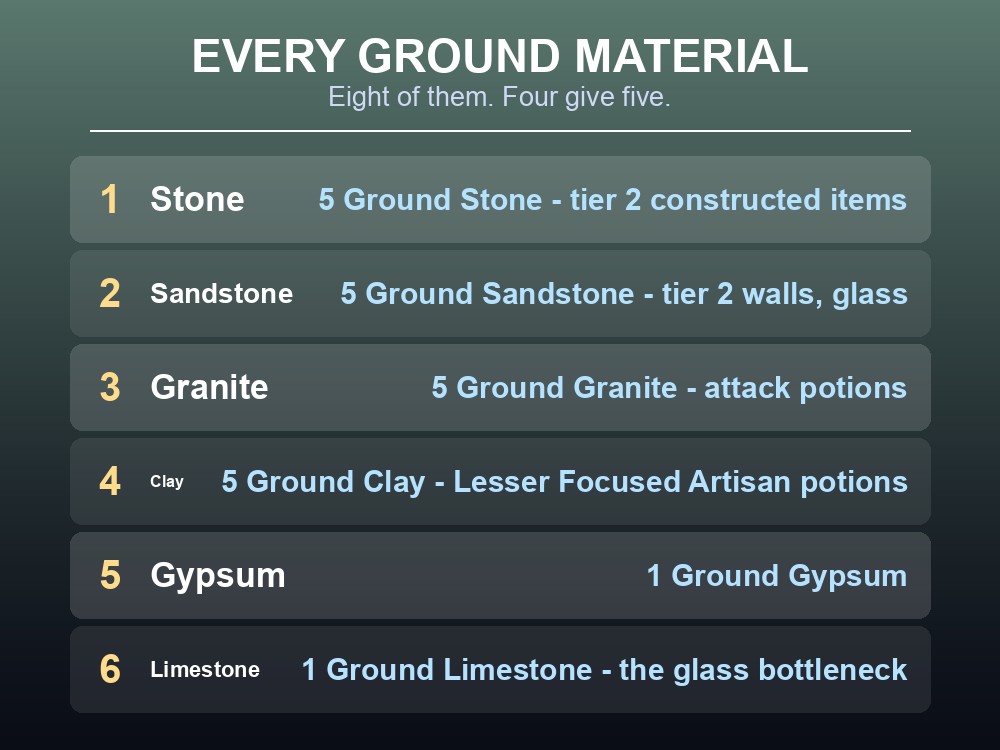
| Input | Output | Per input | Weight | What it is for |
|---|---|---|---|---|
| Stone | Ground Stone | 5 | 0.2 | Tier 2 constructed items |
| Sandstone | Ground Sandstone | 5 | 0.3 | Tier 2 walls, and molten glass |
| Granite | Ground Granite | 5 | 0.3 | Attack potions |
| Clay | Ground Clay | 5 | 1.5 | Lesser Focused Artisan potions |
| Gypsum | Ground Gypsum | 1 | 0.2 | Reflects light and heat |
| Limestone | Ground Limestone | 1 | 0.3 | Molten glass |
| Elder Curiosities | Ground Obsidian | 1 | 2.0 | — |
| Obsidian Device | Ground Obsidian | 3 | 2.0 | — |
| Dried Tea Leaves | Ground Tea Leaves | 1 | 0.0 | Strong tea and strong sweet tea |
The 5:1 split is the number to plan around. A stack of sandstone becomes five stacks of powder; a stack of limestone becomes one. If a recipe wants both, limestone is what you will run out of.
Ground obsidian has two sources with different rates. One Elder Curiosity grinds into one ground obsidian; one Obsidian Device grinds into three — and both pay 20 Artisan XP. Grinding devices is three times as efficient per input.
One output is not a stone at all. Ground Tea Leaves comes from Dried Tea Leaves for 20 Artisan XP — the only grindstone recipe that pays experience — and it feeds the cooking range, making strong tea and strong sweet tea. It is the reason the station is not purely a masonry tool.
Half of the rest are potion ingredients, not building materials. Ground granite makes attack potions and ground clay makes Lesser Focused Artisan potions, which is why a builder and a brewer end up competing for the same grindstone.
Ground stone's description promises herblore use "in future updates" — that is flavour text describing an unshipped plan, not a current recipe.
The Station Itself
| Field | Detail |
|---|---|
| Recipe | 18 Stone, 12 Oak Logs, 6 Iron Bars, 12 Granite |
| Construction XP | 12 |
| Unlocked by | Receiving granite in your inventory |
| Grinds | Stone, sandstone, granite — plus clay, gypsum, limestone and obsidian sources |
| Roof | Must not have one above it |
| Speed | Very slow |
The unlock is a pickup, not a quest. The first granite that lands in your inventory unlocks the recipe.
The slow processing is a feature you can exploit. The wiki's own advice is to keep it filled while doing other tasks, or to fill it just before sleeping — which processes a whole stack instantly. That turns an overnight sleep into a free batch job.
Both ground stone and ground sandstone are required for power level 2 house parts, so the grindstone is not optional if you intend to build past the first tier.
The Open-Sky Rule
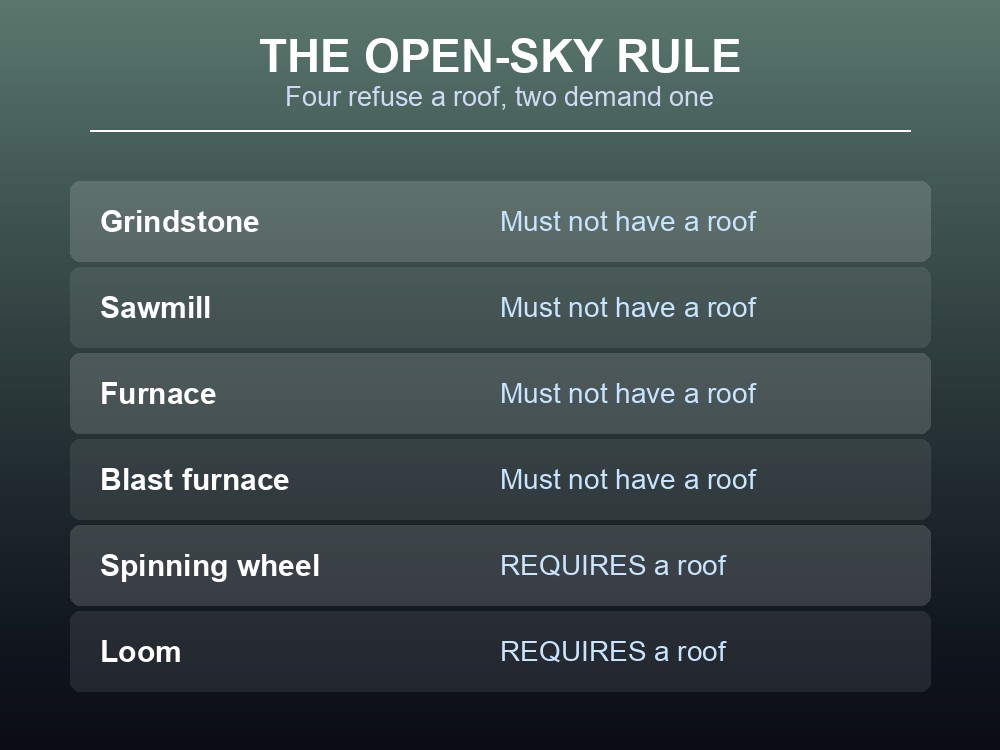
The grindstone's roof restriction is not unique, and the pattern is worth knowing before you lay out a workshop:
| Station | Roof rule |
|---|---|
| Grindstone | Must not have a roof |
| Sawmill | Must not have a roof |
| Furnace | Must not have a roof |
| Blast furnace | Must not have a roof |
| Spinning wheel | Requires a roof |
| Loom | Requires a roof |
That is a base-layout constraint, not a detail. The heavy material processing wants a courtyard; the textile work wants a room. A single enclosed workshop building cannot hold both halves of your production.
Plan the courtyard first. It is far easier to roof a textile room later than to unroof a hall you have already built around a sawmill.
Using It Well
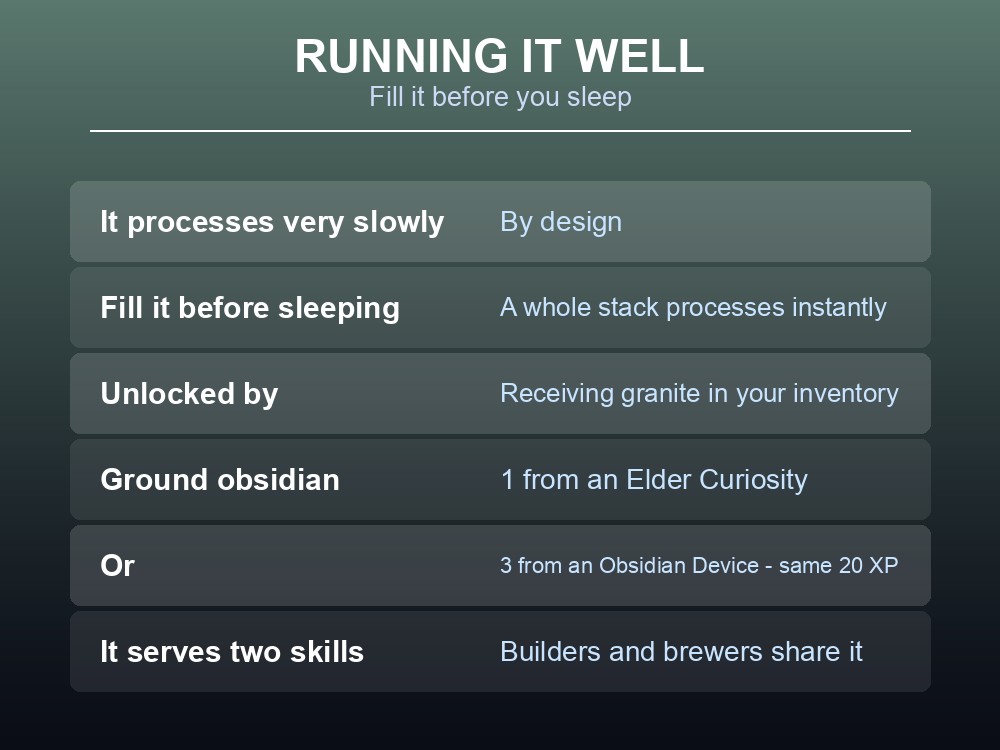
- Fill it before sleeping. A full stack processes instantly across the sleep, which is the single biggest time saving the station offers.
- Mine limestone in bulk. At one ground unit per rock it is five times less generous than sandstone, and the glass chain wants three per molten glass.
- Grind obsidian devices, not curiosities, when you have the choice — three ground obsidian against one, for the same 20 Artisan XP.
- Leave it under open sky, and keep the spinning wheel and loom indoors.
- Remember it feeds two skills. Ground granite and ground clay are potion reagents, so a shared grindstone serves the builder and the brewer alike.
Running your own Dragonwilds server
A station whose best mode is "fill it and go to sleep" only pays off on a world that is still there in the morning. A gamever Dragonwilds server keeps Ashenfall persistent with automatic updates and one-click backups.
Conclusion
The Dragonwilds grindstone produces eight ground materials on two very different ratios: stone, sandstone, granite and clay each yield five per input, while gypsum and limestone yield one — a five-to-one gap that makes limestone the bottleneck in any recipe needing both, the glass chain included. Ground obsidian has two sources at different rates — one from an Elder Curiosity, three from an Obsidian Device, both paying 20 Artisan XP. Three of the eight are not building materials at all: ground granite makes attack potions, ground clay makes Lesser Focused Artisan potions, and ground tea leaves — the only recipe on the station that pays Artisan experience, at 20 — goes to the cooking range for strong tea. The station costs 18 Stone, 12 Oak Logs, 6 Iron Bars and 12 Granite, unlocks simply by receiving granite, and processes very slowly — which the wiki turns into an advantage: fill it before sleeping and a whole stack processes instantly. Finally, it must not have a roof above it, a rule it shares with the sawmill, furnace and blast furnace, while the spinning wheel and loom require one — so heavy processing belongs in a courtyard and textiles belong indoors.
Want a world that keeps its clock running? Rent a RuneScape: Dragonwilds server at gamever.io — instant setup, one-click backups and updates, and 24/7 uptime. Start with a free trial and use promo code WELCOME.