
The Allay in Minecraft: Item Collecting, Note Blocks, and Duplication
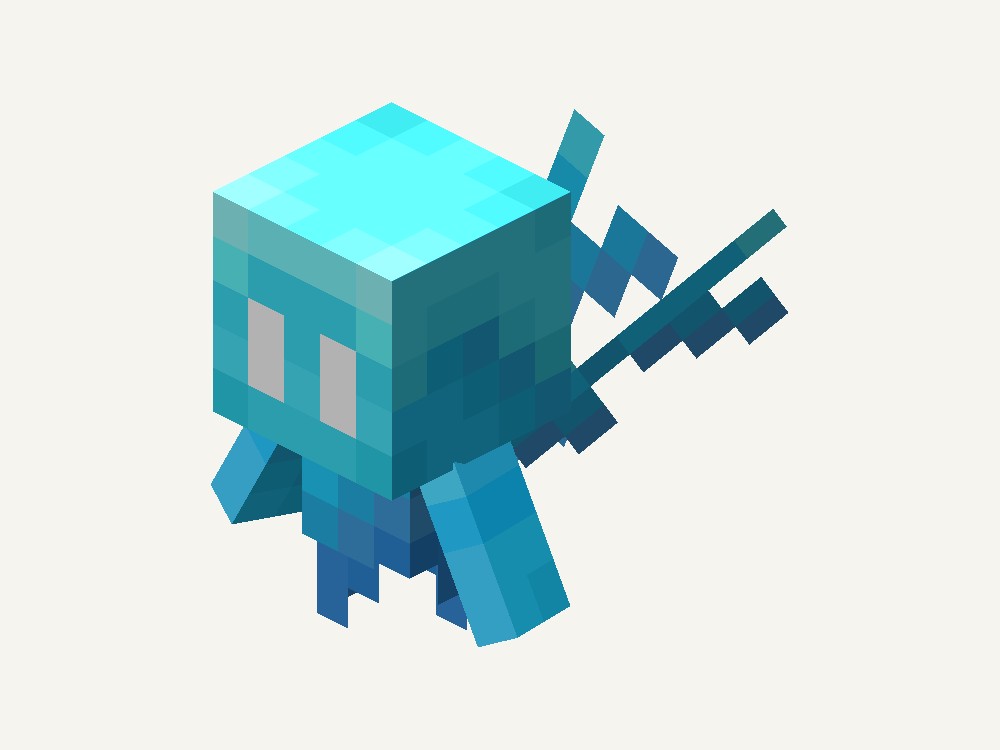
The allay is a small flying mob defined entirely by what it fetches. Per the wiki, it's "a small flying passive mob that follows the player who has given it an item, or any note block it has heard in the last 30 seconds. It searches for and collects dropped instances of its held item and drops them near the player or note block it is currently following." That single sentence covers the whole loop — give it an item, it finds more of that item — but the wiki also documents exact numbers behind the behavior: follow range, pickup range, how it splits into two, and how tough it is to kill by accident.
What the Allay Is and Where It Spawns
The allay's health is listed at 20 HP in its infobox, and the wiki notes that figure "was increased from 10 to 20 in 22w16a during 1.19 development" — meaning the mob shipped at a different, lower health value earlier in its own development snapshots before settling at 20. It also regenerates 2 HP per second if damaged, per the wiki's exact wording: "Allays naturally regenerate 2 [hp] per second if damaged." Worked out from those two figures, an allay regenerating from 0 HP back to full would take 20 ÷ 2 = 10 seconds.
Allays don't spawn on demand — the wiki states they spawn only during world generation, in two structure types: a "50% chance of spawning in dark oak cages" near pillager outposts, and a separate "50% chance to spawn inside jail cells" in woodland mansions, both "in groups of 1-3." These are independent 50% rolls per structure — the facts here don't say how many outposts or mansions a world generates, so total allay counts are undocumented.
How the Allay Collects and Delivers Items
An allay starts out doing nothing useful: it "flies aimlessly until a player gives it an item with their use key." Once given an item, per the wiki, "the allay starts following the player and seeks out dropped versions of the same item to deliver them to the player." Taking the item back releases it: "the allay returns to wandering around if any player takes its item back by using an empty hand on it."
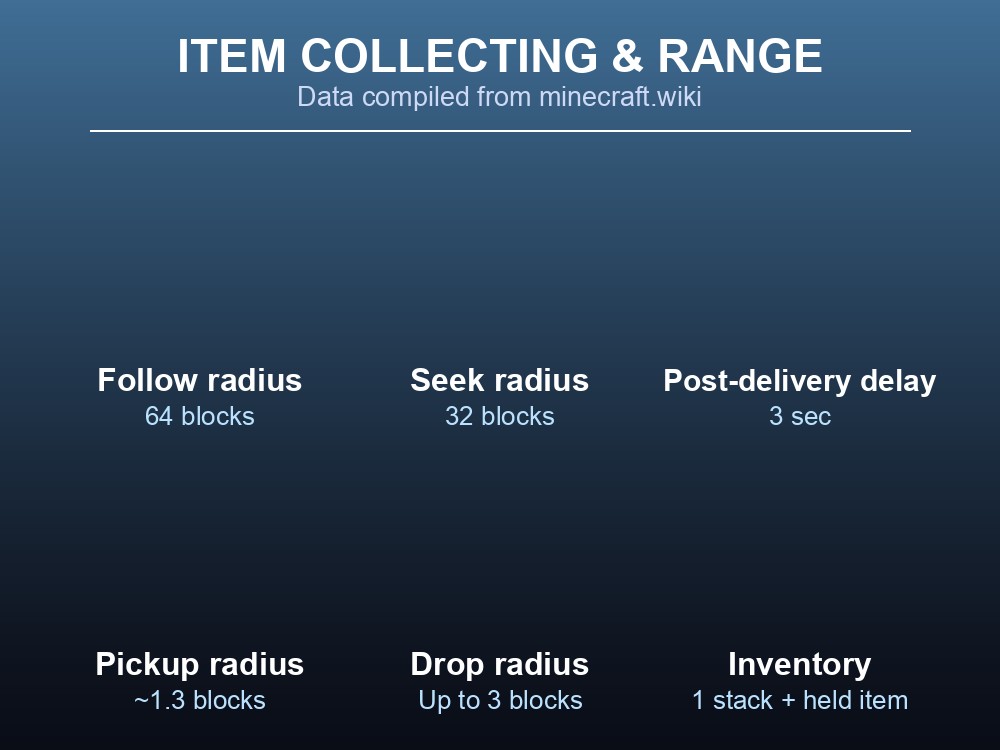
The ranges involved are specific. The wiki states the allay "follows the player from within a 64-block radius sphere and seeks items within a 32-block radius sphere from the player," and that "after delivering items, the allay has a delay of three seconds until it can seek items again." So the follow leash is twice the radius of its active search zone, and every successful delivery is followed by a fixed 3-second pause before the next hunt starts.
Pickup and drop-off happen at much shorter range: "the allay can pick up items within a radius of about 1.3 blocks from itself and drop items up to 3 blocks away from its player or note block." It carries a single inventory slot that holds up to a stack (usually 64 items), on top of the specific item it was originally handed.
Note Blocks: Redirecting the Allay's Deliveries
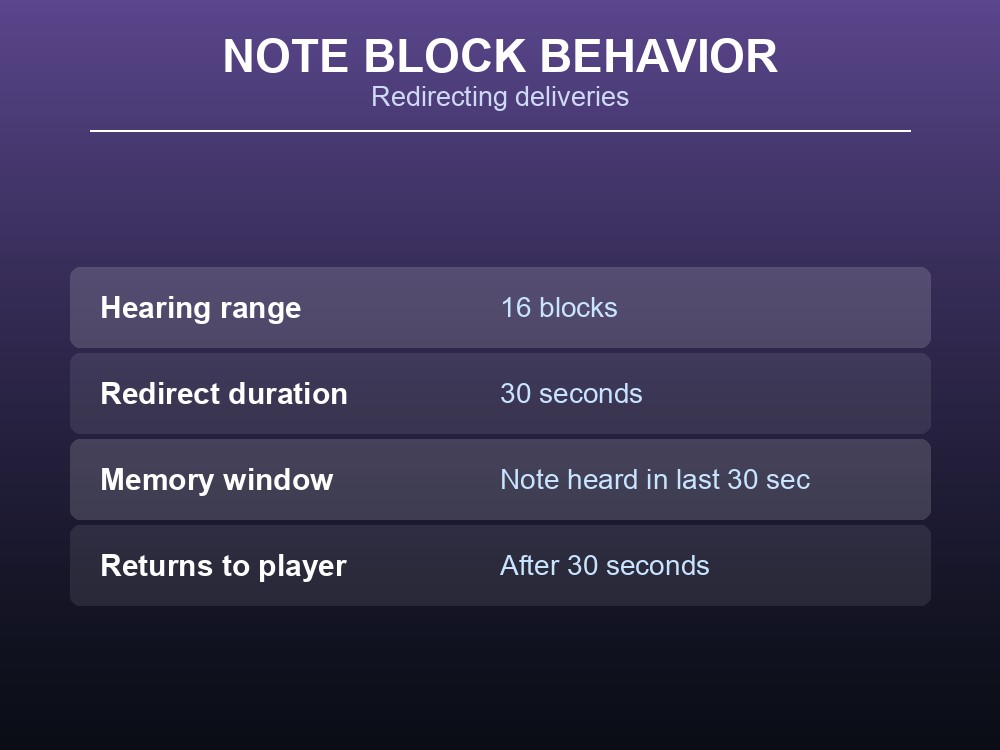
A note block changes where an allay's items go, without needing another player interaction. Quoting the wiki directly: "If the allay hears a note block play within 16 blocks of its location while delivering items, it instead delivers its items to the note block. Then it spends 30 seconds around that particular note block, seeking items around it and returning them to it instead of its player. The allay returns to targeting its player after 30 seconds."
So the trigger has a fixed hearing range of 16 blocks, and the redirect itself lasts exactly 30 seconds before the allay reverts to its player. This lines up with the mob's own definition quoted at the top of this article — the "or any note block it has heard in the last 30 seconds" clause is the same 30-second window described here, just from the other direction.
Duplication, Flight, and Owner Immunity
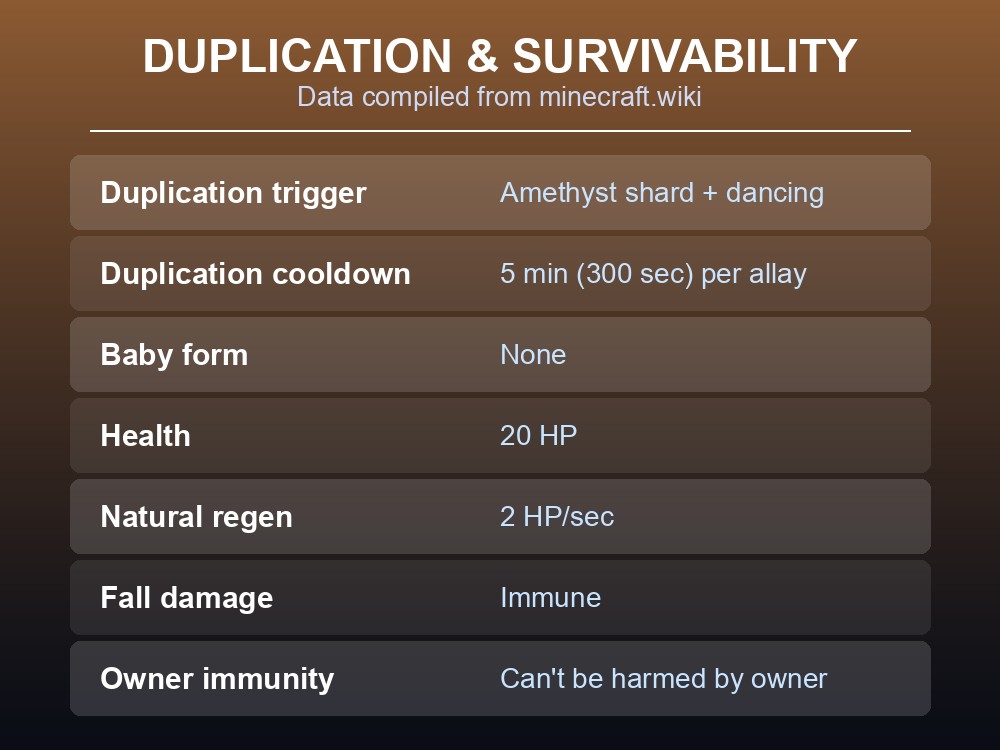
Allays don't breed in the normal sense — the facts here confirm they cannot be bred normally, spawning only during world generation and otherwise multiplying through duplication. The wiki is explicit that "allays do not have a baby form."
Duplication has a specific trigger and cost: "if an allay is given an amethyst shard while it is dancing due to a nearby jukebox playing any music disc, it splits into two allays (itself and a new allay) and the amethyst shard is consumed. After duplication, both allays have a five-minute cooldown before being able to duplicate again." That cooldown applies per allay, so both halves of a split individually wait 5 × 60 = 300 seconds before duplicating again.
Two more survivability details: it's a flying mob carrying the "fall_damage_immune" entity tag, so it takes no fall damage, though it cannot enter water. It's also protected from its own owner — "allays cannot be harmed by their interacting owners. If they are harmed by another source, they fly away for a few seconds" — and on death it drops the item it was holding and grants no experience.
Version history is also on record in the source: allays were added to Java Edition in 1.19 (snapshot 22w13a) and to Bedrock Edition in Preview 1.18.30.23 / release 1.19.0. Duplication followed slightly later, added in Java 1.19.1 (22w24a), with the five-minute cooldown specifically set in 1.19.1 pre-release 1.
Practical tips
- Give an item, get a courier: hand an allay any item and it will hunt down dropped copies within a 32-block seek radius, while following you within a 64-block leash.
- A 3-second delay follows every delivery — don't expect back-to-back drop-offs faster than that.
- Point deliveries at a note block instead of yourself: any note block heard within 16 blocks redirects the allay for 30 seconds.
- Duplication costs one amethyst shard, requires a dancing allay near a playing jukebox, and locks each resulting allay out of duplicating again for 5 minutes (300 seconds).
- Allays regen 2 HP/sec and have 20 HP total — a full regen from empty is 10 seconds, worked out from those two numbers.
- They're immune to fall damage and can't be hurt by their own owner, so transport and note-block farms don't risk losing them to a fall or a stray hit.
Running your own Minecraft server
Allay farms — note-block sorting setups, item-duplication rooms, automated delivery chains — tend to grow into some of the more elaborate redstone builds on a world, and that means a server that stays up and keeps world data intact matters more than usual. A gamever Minecraft server gives you one-click backups before you touch a new build, plus the console access to manage it without touching anything you shouldn't.
Conclusion
The allay runs on precise, documented numbers: 20 HP with 2 HP/sec regen (a computed 10-second full regen), a 64-block follow radius against a 32-block seek radius, a 16-block note-block hearing range with a 30-second redirect, and duplication via an amethyst shard on a 5-minute (300-second) per-allay cooldown. It spawns only at world generation — a 50% chance, groups of 1-3, near pillager outposts and inside woodland mansions — never breeds normally, and never takes fall damage. Anything beyond what's listed here, like total allays per world, is left undocumented rather than guessed at.
Ready to build an allay farm that actually stays up? Rent a Minecraft server at gamever.io — instant setup, one-click backups, and 24/7 uptime. Start with a free trial and use promo code WELCOME.