
Poplar: Minecraft's New Autumn Wood Set in Wilderness Bound
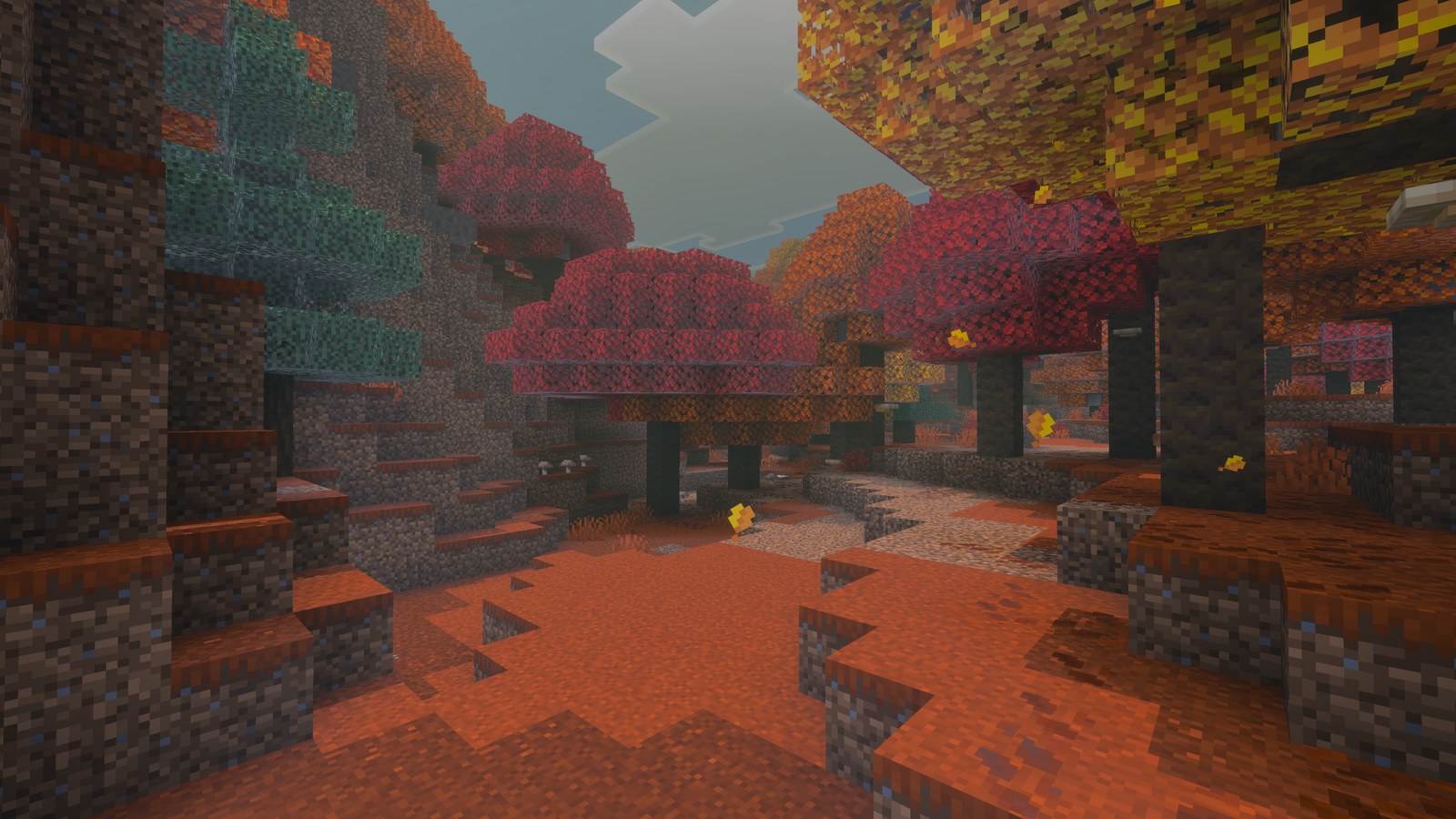
Minecraft's Wilderness Bound (Drop 3) brings a brand-new autumn-themed wood type to the game: Poplar. According to the drop's own page, Wilderness Bound ships as Java Edition 26.3 and Bedrock Edition 26.50, releasing 2026-09-15, with poplar having already appeared as an experimental feature in Bedrock 26.40. Unlike every other wood type, Poplar only spawns in one biome, comes in three randomized leaf colors, and adds a new decorative trunk growth alongside its full building-block kit. Here's the complete set, where it grows, and — because this is still an upcoming drop — exactly what the wiki hasn't nailed down yet.
The Full Poplar Block and Item Set
The Poplar page lists 20 distinct blocks. Grouped by function:
- Sapling & leaves (4): Poplar Sapling, Red Poplar Leaves, Orange Poplar Leaves, Yellow Poplar Leaves
- Logs & wood (4): Poplar Log, Stripped Poplar Log, Poplar Wood, Stripped Poplar Wood
- Planks & building (3): Poplar Planks, Poplar Stairs, Poplar Slab
- Signage (2): Poplar Sign, Poplar Hanging Sign
- Functional/redstone (4): Poplar Button, Poplar Pressure Plate, Poplar Door, Poplar Trapdoor
- Fences (2): Poplar Fence, Poplar Fence Gate
- Decorative (1): Poplar Shelf
On top of those 20 blocks, the same page lists 2 craftable items: the Poplar Boat and the Poplar Boat with Chest. That's 20 blocks + 2 items = 22 total poplar pieces documented so far — a full wood-type kit, on par with any existing Minecraft wood.
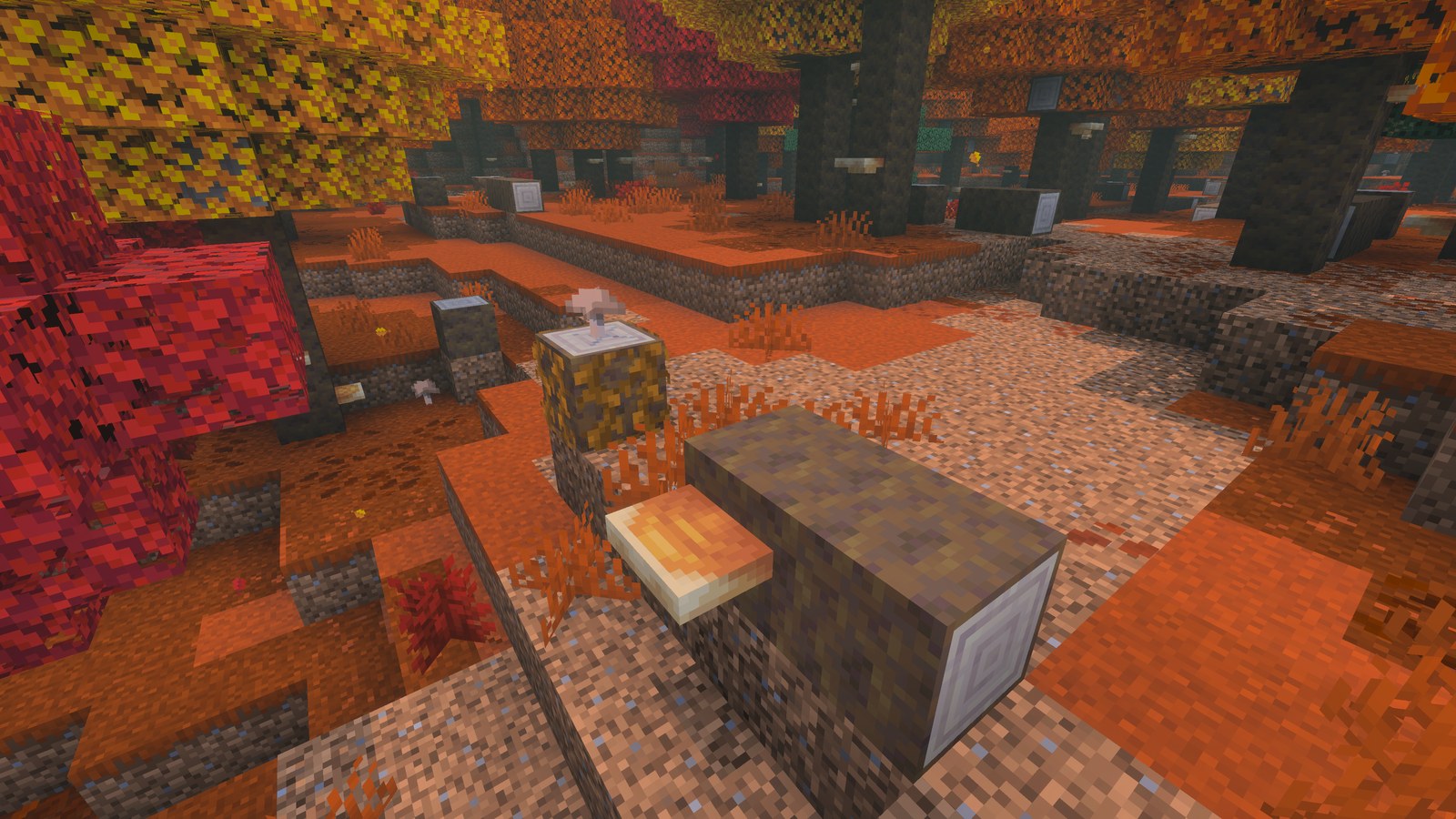
Separately, Wilderness Bound's own patch page describes a "shelf mushroom (small and large)" as a new decorative growth that can appear on poplar trunks, calling it "a separate new block in this drop." Whether that's the same entry as the "Poplar Shelf" block listed on the Poplar page, or an additional block on top of it, isn't spelled out in either source — treat it as at least one new trunk-decoration block, confirmed to exist in small and large forms.
Where Poplar Grows: The Dappled Forest
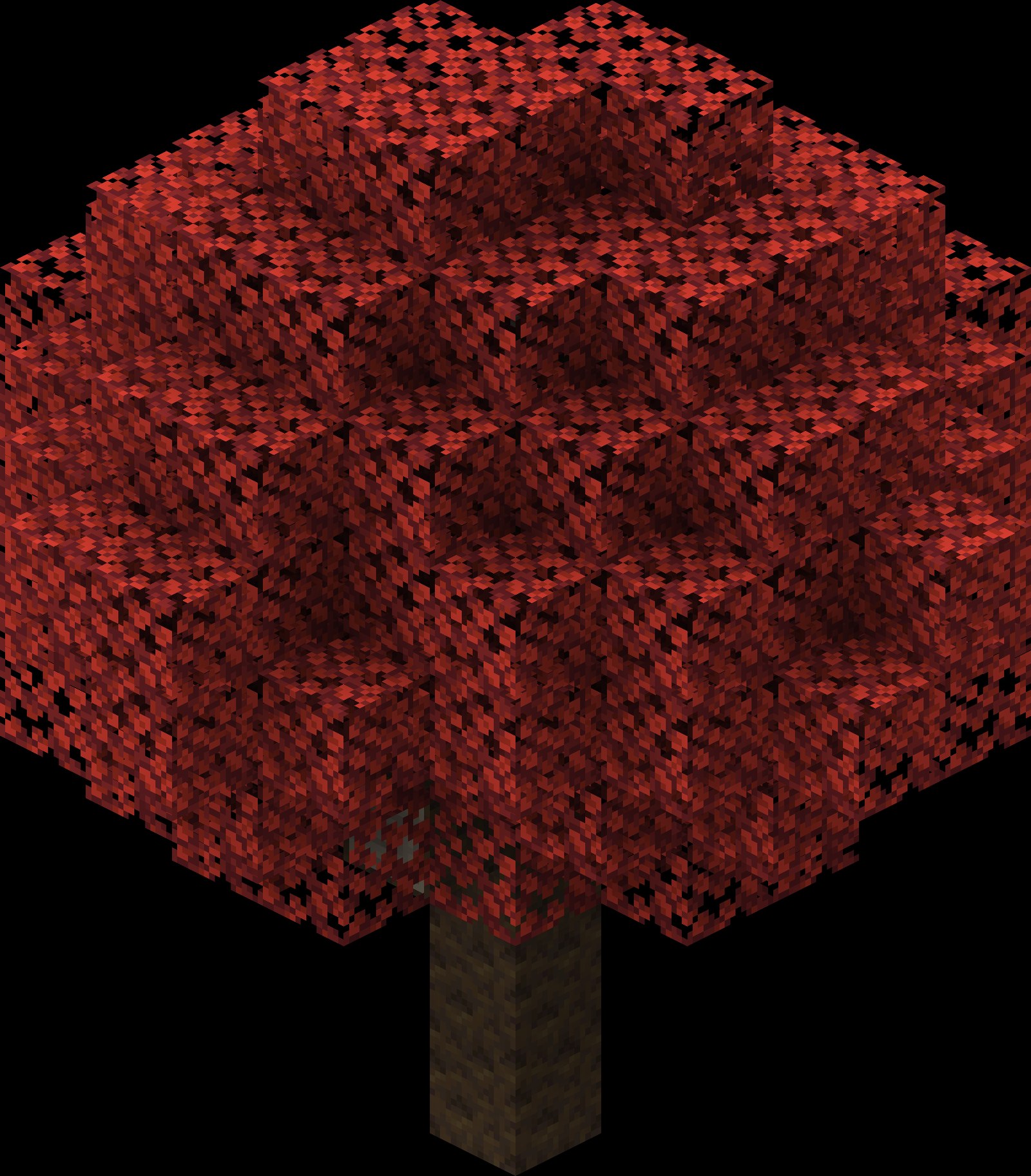
Poplar trees generate naturally in exactly one biome. Per the source: "Poplars generate naturally only in the dappled forest biome; they grow more densely in Bedrock Edition than in Java Edition." That's a real cross-platform difference worth planning around if you're hunting poplar specifically — Bedrock players should find denser stands than Java players in the same biome.
Naturally generated poplar trees have a distinctive shape: "one trunk topped by an especially large canopy," and wild specimens "can have shelf mushrooms on the trunk" — the decorative growth mentioned above. Not every dappled forest tree is a standing, growable tree, either: poplar trees are "sometimes replaced by fallen poplar trees, which cannot be grown," and the source notes this happens "more commonly than any other type of fallen tree." So expect more downed, non-regrowable poplar logs scattered through a dappled forest than you'd see for any other wood type's fallen-tree variant.
Three Leaf Colors and How Saplings Grow
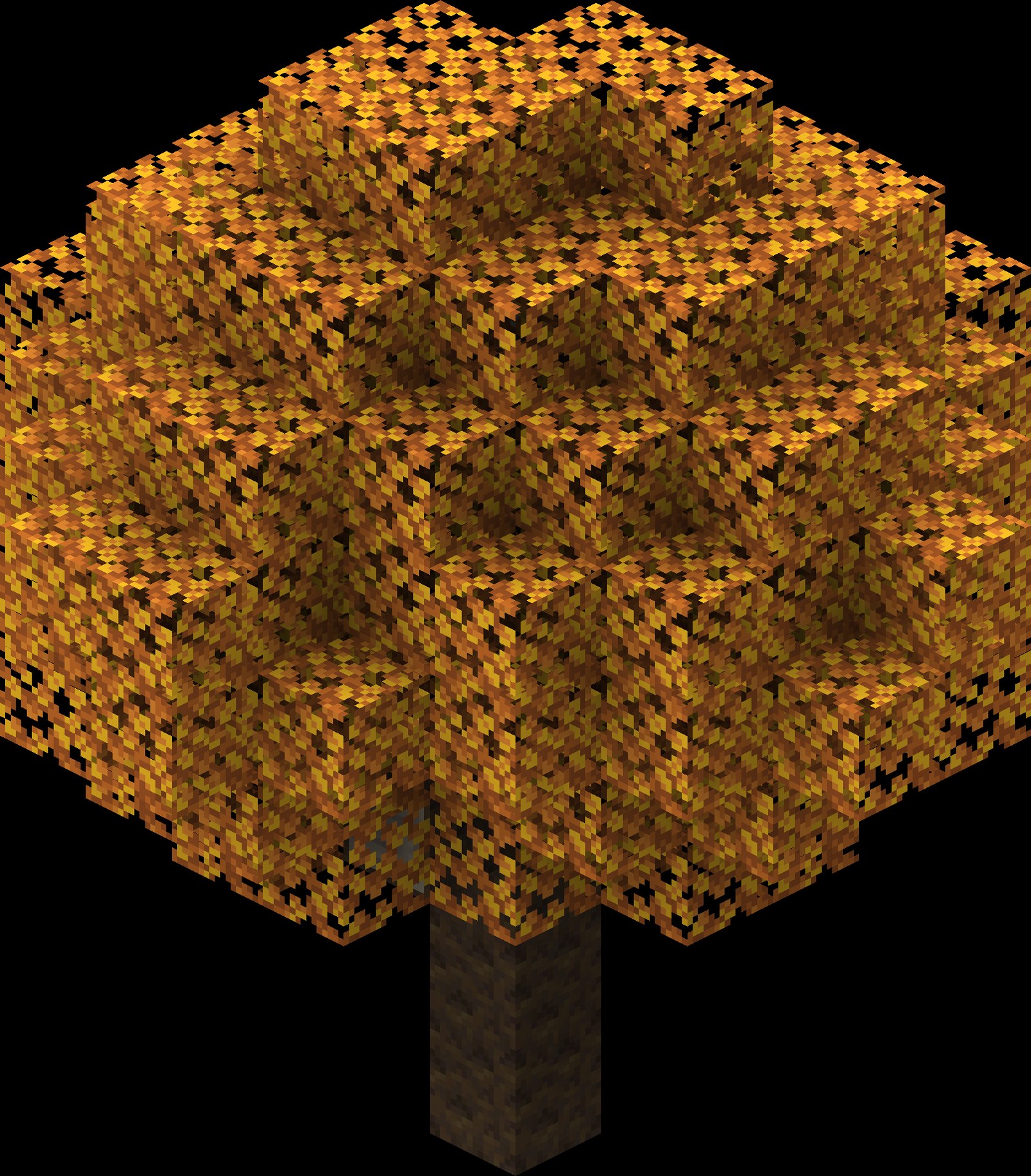
Poplar is the only wood type with built-in random leaf coloring: "When a poplar sapling grows, it randomly selects one of three leaf color variants: red, orange, or yellow (autumn-themed)." Plant a row of saplings and you should get a mix of all three colors — there's no way to choose one in advance, based on what's documented.
Growing one yourself has one hard requirement beyond space: saplings "need a light level of at least 9 in the sapling block and an empty space above to grow into a poplar tree." That's the same style of light-level gate as vanilla saplings, so keep torches or another light source near any poplar sapling farm.
Poplar saplings aren't picky about what they're planted on. The documented list of valid planting surfaces runs to 11 block types: dirt, grass block, coarse dirt, podzol, mycelium, rooted dirt, moss block, pale moss block, farmland, mud, and muddy mangrove roots. That's a wider surface list than most Minecraft saplings support, which should make transplanting poplar into a builder's base straightforward once the drop ships.
Poplar Boats and What's Still Unconfirmed
The Poplar Boat and Poplar Boat with Chest round out the set as the only non-block items, giving poplar wood the same boat/chest-boat pair every other wood type has for water travel and portable storage.
Because Wilderness Bound is still an upcoming drop — Java 26.3 and Bedrock 26.50 release 2026-09-15, with poplar having only been experimental in Bedrock 26.40 — several numbers simply aren't published yet. The source used for this article is explicit that hardness values, stack sizes, flammability, fuel values, and exact crafting recipes for the poplar blocks are undocumented, and that "several recipes/values on the wiki are marked WIP." None of those figures are stated here for that reason — don't treat any unlisted number as "probably the same as oak," since that's exactly the kind of assumption the source itself warns against.
Tips: Look specifically for the dappled forest biome — poplar won't spawn anywhere else. Keep a light source (torch or better) within reach of any sapling you plant, since below light level 9 it simply won't grow. Expect more fallen, non-regrowable poplar logs than standing trees in a given patch. And because crafting recipes are still WIP ahead of the 2026-09-15 release, don't bank on a specific plank-to-item ratio until the drop is live.
Running your own Minecraft server
If you and your group want to explore a freshly generated dappled forest together the moment Wilderness Bound ships, a private server is the easiest way to coordinate — everyone spawns into the same world instead of trading seeds and screenshots. A few server-side settings are worth knowing for a brand-new wood type like this: locating the dappled forest biome by command helps a group find the nearest stand without wandering blind, and toggling experimental features on in your world/server settings is what let Bedrock players test poplar early, in 26.40, before Java caught up. Keep an allowlist or a small trusted roster while you're testing WIP content like this, so recipe or generation changes between snapshots don't get spread to a public server by accident.
Renting a server also means your whole group keeps a shared save of poplar landmarks — first dappled forest found, first shelf-mushroom tree, first full set of red/orange/yellow saplings — instead of everyone hunting solo. Get your own Minecraft server running in minutes with code WELCOME for a discount on your first month.
Conclusion
Poplar is a complete, 22-piece wood set — 20 blocks and 2 boats — built entirely around one gimmick no other Minecraft wood has: three random leaf colors, generated only in the dappled forest biome, with a denser Bedrock spawn rate, trunk-side shelf mushrooms, and an unusually high rate of non-growable fallen trees. The mechanics that are documented (light level 9 to grow, 11 valid planting surfaces) are solid; the ones that aren't (hardness, stack sizes, flammability, fuel, exact recipes) are worth re-checking once Wilderness Bound actually ships on 2026-09-15, since the wiki itself flags them as WIP.