
How to use ULTRAKILL weapons and armor in Palworld v0.7
Palworld v0.7, Home Sweet Home, is not a headline-grabbing content drop in the traditional sense, but its collaboration with ULTRAKILL introduces a sharply different combat philosophy into Pocketpair’s creature-driven sandbox. The V1 and V2 armor sets, alongside the Marksman Revolver and Core Eject Shotgun, are less about raw numerical dominance and more about injecting mechanical identity into Palworld’s mid-to-late game combat loop. Understanding how these items function, where they fit, and where they fall short is essential to using them effectively rather than treating them as novelty gear.
Locate the ULTRAKILL equipment
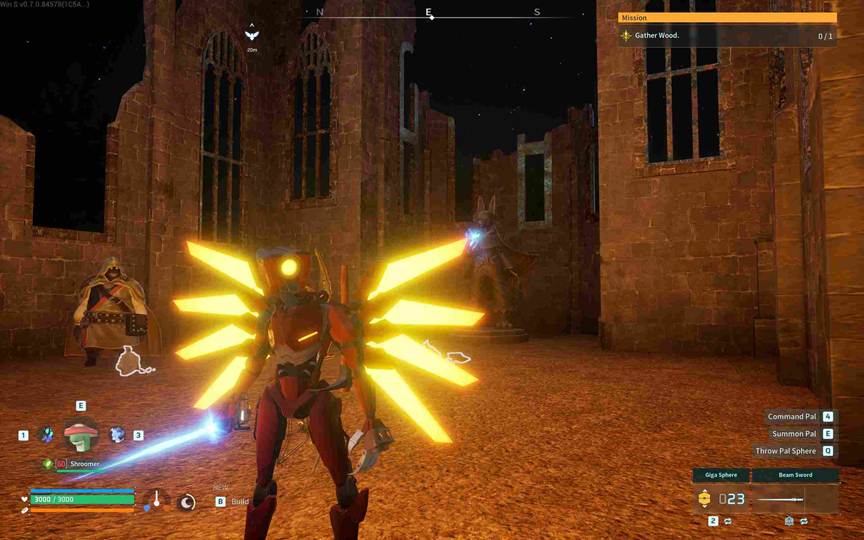
The ULTRAKILL armor sets are obtained through the Medal Merchant found in ruined church locations scattered across the Palpagos Islands. These merchants sell both the V1 Armor and V2 Armor directly, making them accessible without relying on rare drops or boss RNG, but at a noticeable resource cost that reinforces their midgame positioning. Unlike many late-game items, the armor does not require raid clears, but players are expected to already be economically stable enough to afford them.
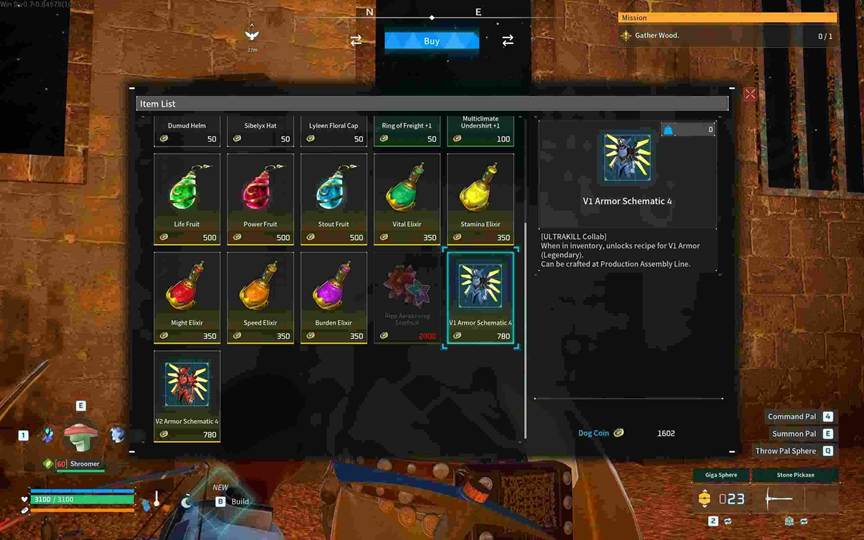
The two ULTRAKILL weapons follow a different acquisition path and are tied to the Arena Merchant. This vendor sells schematics rather than finished weapons, pushing players back into Palworld’s crafting economy. The Marksman Revolver and Core Eject Shotgun schematics sit deep in the merchant’s inventory and demand a significant amount of Arena Tickets, effectively gating them behind repeated arena participation.
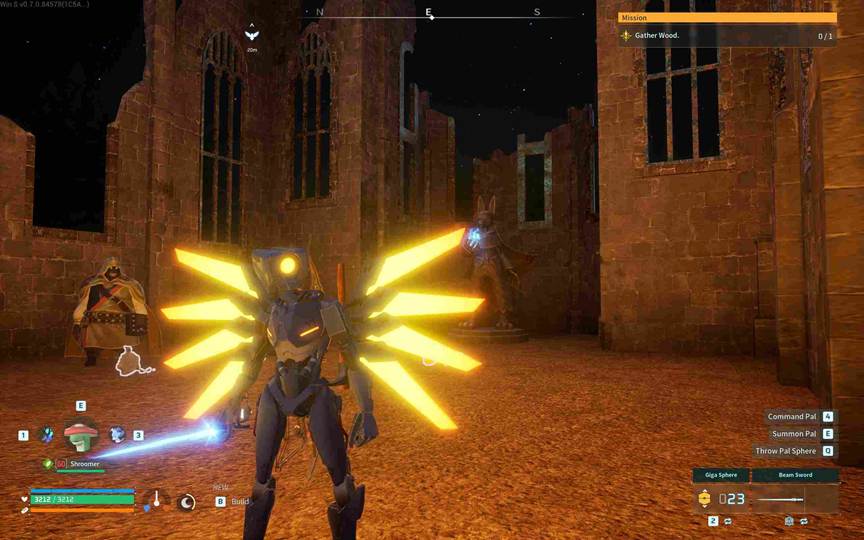
Once purchased, the schematics require assembly lines to craft, and while higher-tier lines speed up production, lower-tier stations can still be used. This reinforces the update’s broader emphasis on base refinement rather than strictly vertical power progression. Players should be aware of a current edge case where carrying excessive amounts of gold in-base can prevent the Marksman Revolver from crafting correctly, a quirk that can temporarily halt production until resources are redistributed.
Understand the armor mechanics
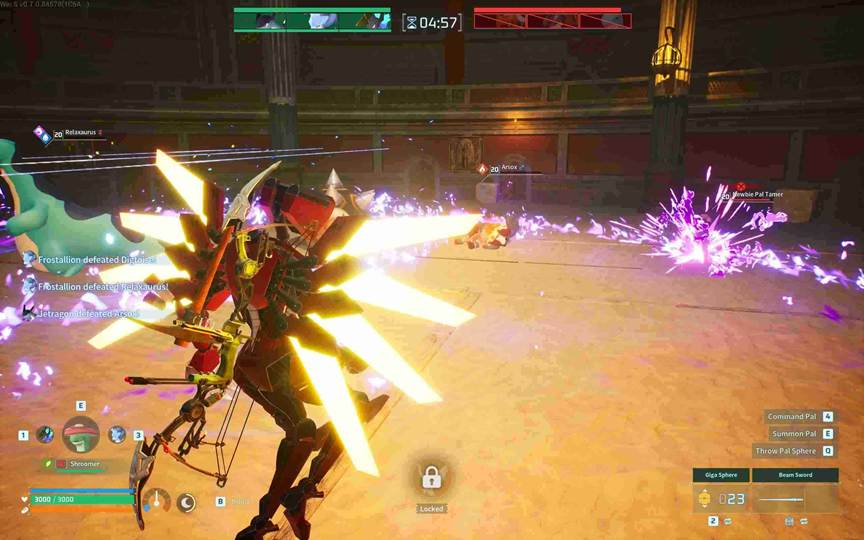
The V1 and V2 armor sets appear similar at a glance, but their functional distinction is subtle and important. The V1 Armor includes the Blood is Fuel effect, which grants a small amount of player life steal when dealing damage. Data pulled from game files suggests this value sits at approximately 1 percent, a modest figure that nonetheless scales meaningfully against high-health enemies.
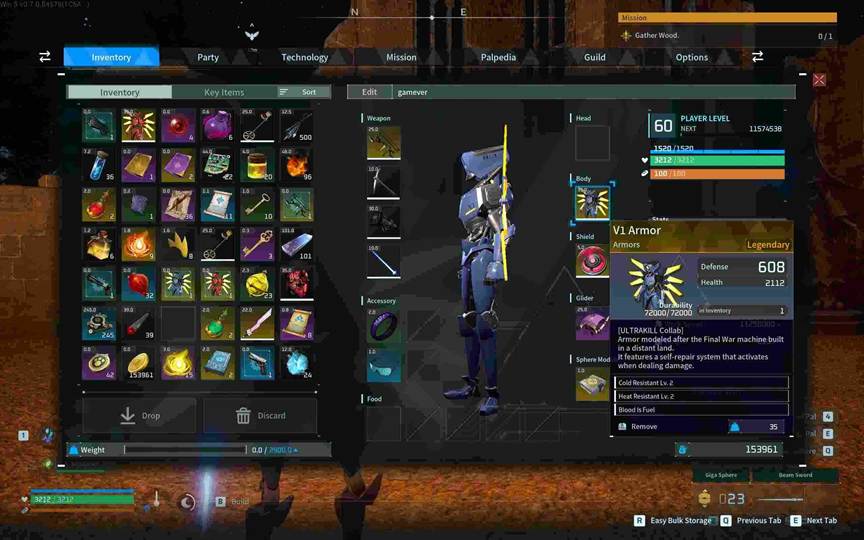
In practical terms, this life steal does not enable reckless face-tanking, but it does reduce reliance on healing Pals or consumables during prolonged encounters. Against bosses or dense enemy packs, even marginal sustain can smooth out combat flow, especially for players who prefer aggressive positioning.
The V2 Armor trades this sustain for slightly altered defensive stats, though it currently lacks an equivalent unique effect.
Exploit the weapon gimmicks
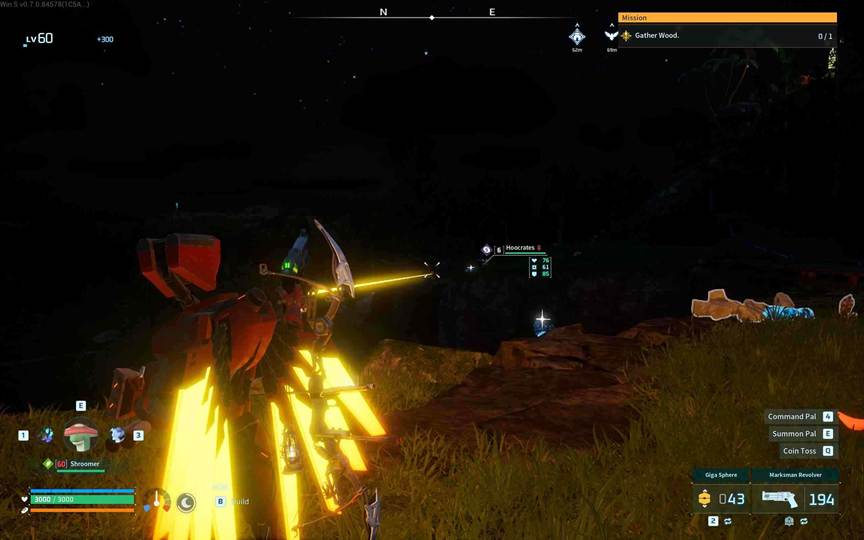
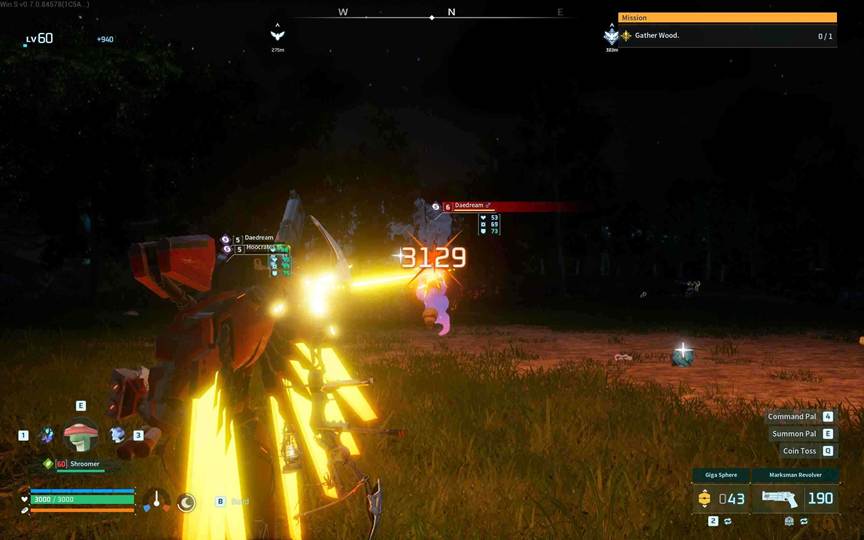
The Marksman Revolver is defined by its coin toss mechanic, a direct homage to ULTRAKILL’s signature trick shots. By throwing a coin and shooting it, players can trigger a ricochet that automatically targets enemy weak points, effectively converting positioning awareness into burst damage. The revolver has no traditional reload, encouraging rapid, rhythmic firing rather than measured pacing.
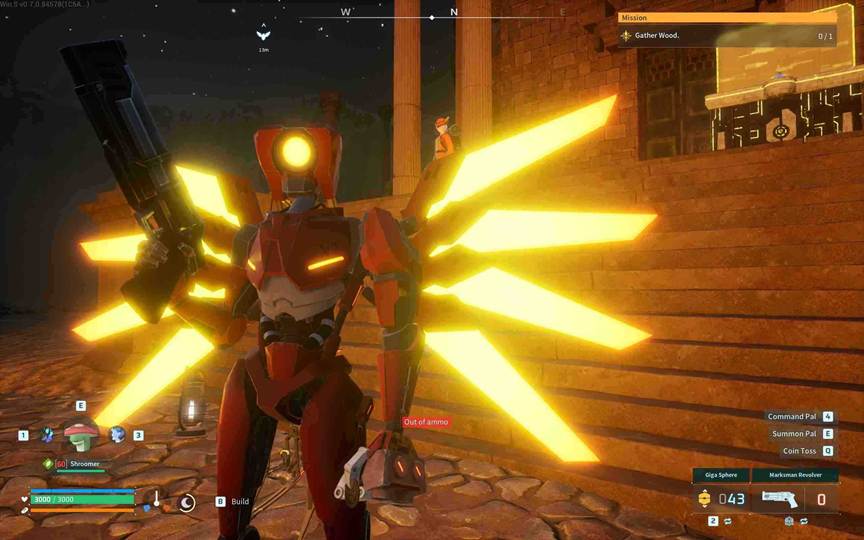
However, the mechanic is context-sensitive. Coins only interact with enemies that are already aggroed, preventing long-range sniping or pre-fight setups. While forgiving in execution once combat begins, the damage output remains lower than many late-game firearms, positioning the revolver as a skill-expression tool rather than a dominant DPS option.
The Core Eject Shotgun delivers a contrasting experience. Its standard fire produces a tight pellet spread that reliably lands all projectiles at close range, yielding damage comparable to assault rifles under optimal conditions. The weapon’s unique core eject ability launches an explosive projectile that can be manually detonated for increased damage, though testing suggests this explosion underperforms relative to a full shotgun blast.
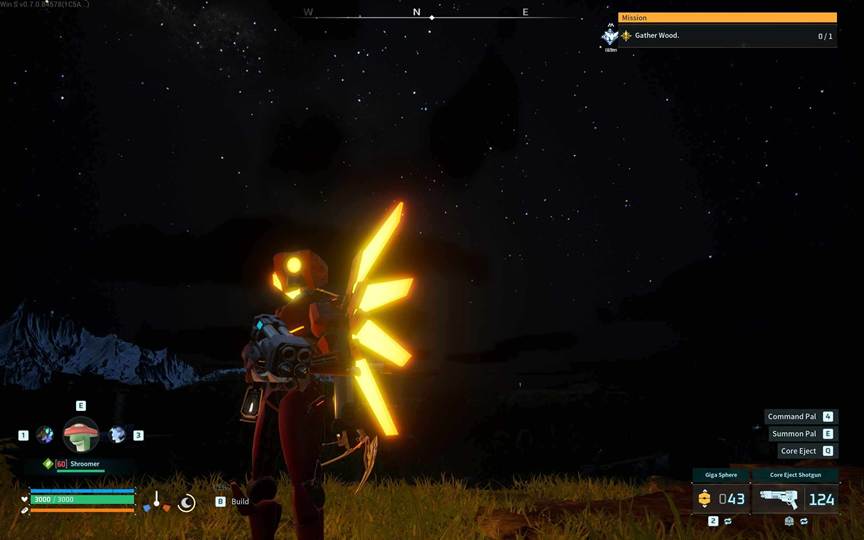
Weapon swapping is a core part of maximizing performance, as both ULTRAKILL weapons support rapid switching without reload downtime. In theory, chaining swaps can increase sustained damage, but in practice the returns are respectable rather than transformative, reinforcing the idea that these weapons reward engagement and style over efficiency.
Image caption: Quick weapon swapping between ULTRAKILL guns during a Palworld fight.
Evaluate their place in the meta
From a pure numbers perspective, neither ULTRAKILL weapon outclasses established late-game options. Their DPS sits firmly in the midgame range, and their ammunition types, handgun and shotgun ammo, are deliberately accessible rather than rare. This makes them easier to maintain but also caps their ceiling in high-end encounters.
Where the collaboration gear succeeds is in offering alternative combat expression. The coin toss mechanic provides clarity on enemy weak points, the shotgun rewards positional discipline, and the V1 Armor’s life steal subtly reshapes survivability calculations. These systems encourage active engagement rather than passive optimization.
In the broader context of Palworld v0.7, the ULTRAKILL equipment aligns with the update’s philosophy of refinement over escalation. It introduces tools that are mechanically distinct without destabilizing balance, offering players new ways to approach familiar challenges. As groundwork for Palworld 1.0, this collaboration functions less as a power spike and more as a design experiment that prioritizes identity, readability, and player agency.