
How to use the hopper in Rust The Crafting Update
Hoppers have finally arrived in Rust, and they’re changing the game in some surprising ways.
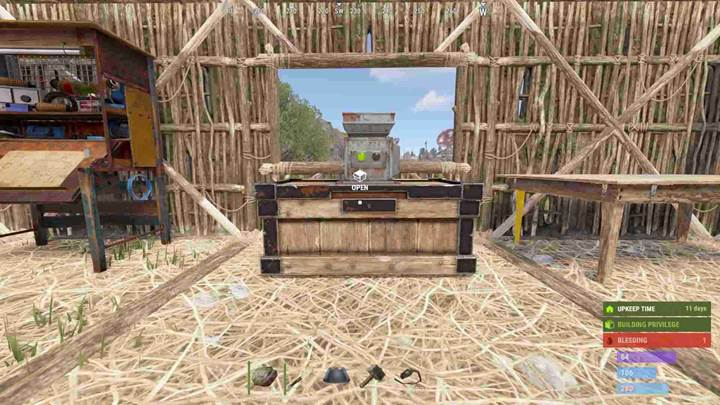
The hopper is essentially a vacuum system for Rust. Once powered, it automatically sucks up items within its range and deposits them into a connected container. It doesn’t work through walls or obstacles but has a one-square-foot foundation radius. It picks up anything that drops within this range, including weapons, player loot, animal carcasses, and even random junk left on the ground. It can help with sorting systems, trap bases, and even raid defense.
Crafting
Crafting a hopper requires Workbench Level 1, making it relatively accessible for most players. However, before obtaining a hopper, you must first unlock and build an Engineering Workbench and research a long chain of technologies.
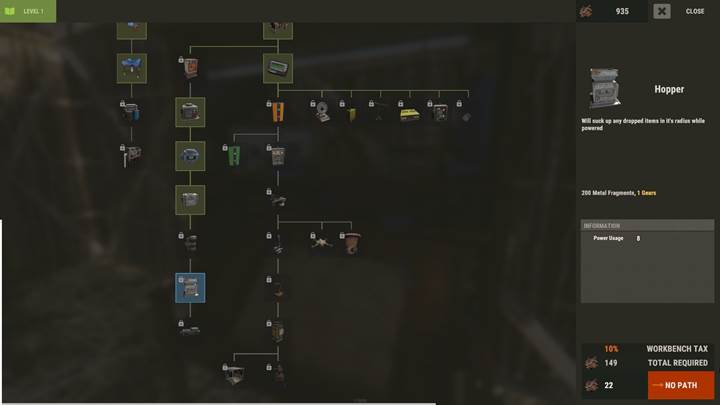
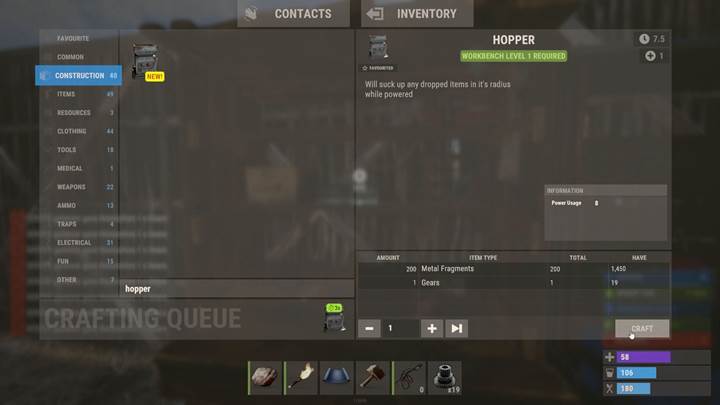
You’ll need 200 metal fragments and 1 gear to craft it. Once crafted, you can research it for 20 scraps at a research bench, allowing you to replicate it on demand. The crafting cost may change in future updates, but it’s an affordable addition to any base for now.
Placement and powering
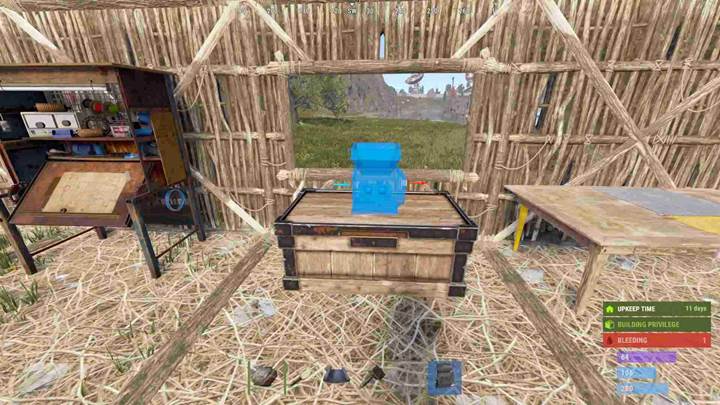
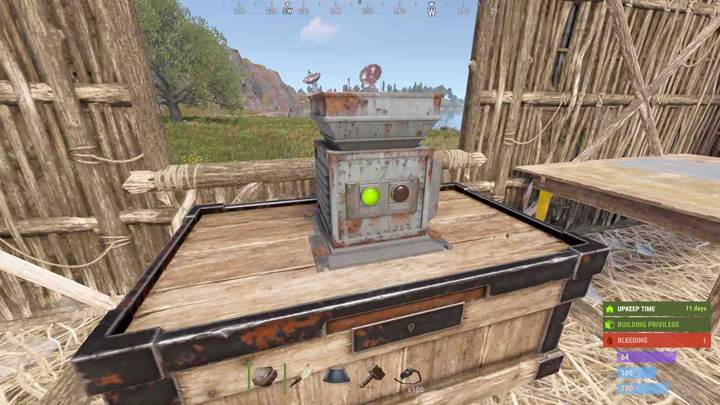
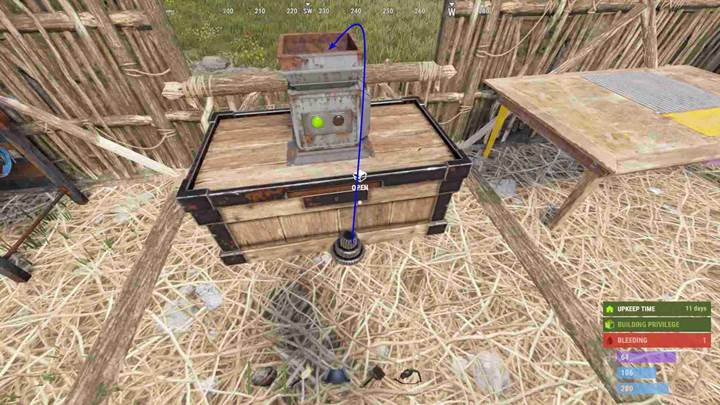
To use a hopper, place it directly on top of a large wooden box or other storage container. It must be powered by an electrical source, using just 1 unit of power. Once powered, it immediately pulls in items that drop within its collection area. If the storage container below fills up, the hopper stops collecting.
One of the best uses for the hopper is automatic loot collection. If you’re in a PvP-heavy server, you can place hoppers near your base entrances or roof camping spots to collect loot from fallen enemies. This prevents raiders from retrieving their lost items and secures valuable resources for you. Combining it with Rust’s industrial system lets you set up a fully automated storage and sorting solution.
Trap bases
Trap bases just got a massive upgrade. With a hopper in place, you no longer have to loot fallen players manually. The hopper will instantly collect their items and store them in a secure chest. Pairing this with an industrial combiner can transfer loot to another hidden storage area, making it nearly impossible for enemies to recover their gear.
Raid defense
Imagine being raided, and enemies just blew through your loot room. Normally, they’d start grabbing your gear, but with a hopper, you can set up a system where it automatically sucks up loot as soon as it drops. If raiders don’t realize what’s happening, they might destroy chests expecting loot to fall to the ground - only to find that it’s already been vacuumed elsewhere.
Animal farming
One of the hopper's more unexpected but useful features is its ability to collect animal resources. If an animal dies within the collection range, the hopper will grab the bones, meat, and fat, making it perfect for automatic animal farms. If Facepunch expands farming mechanics, this could be even more useful for collecting eggs or other materials.
While the hopper is an incredible tool, it does have limitations. It cannot pick up items through walls, and its collection range is limited to one foundation square. It also won’t sort items independently - you’ll need to use industrial sorters. If the connected chest fills up, items will stop being collected until space is made.
For the best results, combine the hopper with Rust’s industrial system. You can use an industrial combiner to move loot from one chest to another.
The hopper is one of Rust's most exciting new additions, offering automation and security like never before. As more players experiment with it, expect even more creative uses to emerge. Now that you know how to craft, place, and use the hopper, it’s time to integrate this powerful tool into your base and see how it changes how you play Rust.