
How to use oxidized lightning rods effectively in Minecraft The Copper Age
The Copper Age update deepens Minecraft’s copper ecosystem by allowing lightning rods to oxidize naturally over time. Once a purely functional device for redirecting lightning strikes, the lightning rod now evolves into a living material that reflects the passage of in-game time. With oxidation stages ranging from raw copper to weathered turquoise, these rods blend utility with environmental storytelling, offering both engineers and builders new creative possibilities. Beyond their visual transformation, oxidized lightning rods remain fully functional conductors, capable of emitting redstone signals, channeling lightning energy, and triggering controlled oxidation cycles across nearby copper builds.
Place your lightning with purpose
Effective lightning rod deployment begins with understanding its strike mechanics. In Java Edition, each rod controls a radius of 128 blocks, while Bedrock Edition halves that to 64. During a thunderstorm, any eligible lightning event within this radius is redirected to the rod, preventing random strikes on flammable builds or vulnerable entities. This makes the block indispensable for wooden structures, village centers, or open plains where fire spread can devastate unprotected terrain. For optimal coverage, rods should occupy the highest point within a vertical column, free of overhanging blocks that might intercept lightning arcs.
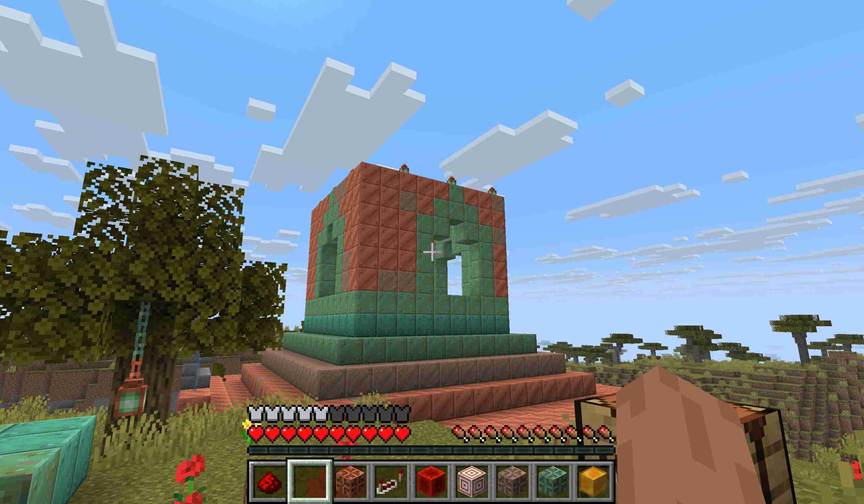
Placement orientation introduces additional flexibility. Lightning rods can attach to any block face - top, side, or bottom - though only exposed rods function as attractors. Builders often integrate them into spires, towers, or antenna-like extensions that emphasize architectural silhouettes while ensuring consistent storm protection. When placed underground or beneath solid blocks, rods lose conductivity, serving purely aesthetic purposes. Understanding this distinction between exposed and embedded placement is essential for designing both practical lightning grids and ornamental installations that react to weather events in real time.
Control oxidation through environment
Oxidation in the Copper Age follows the same four-stage progression applied to all copper-based blocks: exposed, weathered, and finally fully oxidized. The process depends on random ticks and proximity to other oxidizing copper materials, allowing entire constructions to age organically. Lightning rods, once static in texture, now participate in this visual evolution, developing a patina that marks time and exposure. For builders seeking long-term realism, arranging multiple rods at different oxidation stages can simulate decades of environmental wear across a structure.
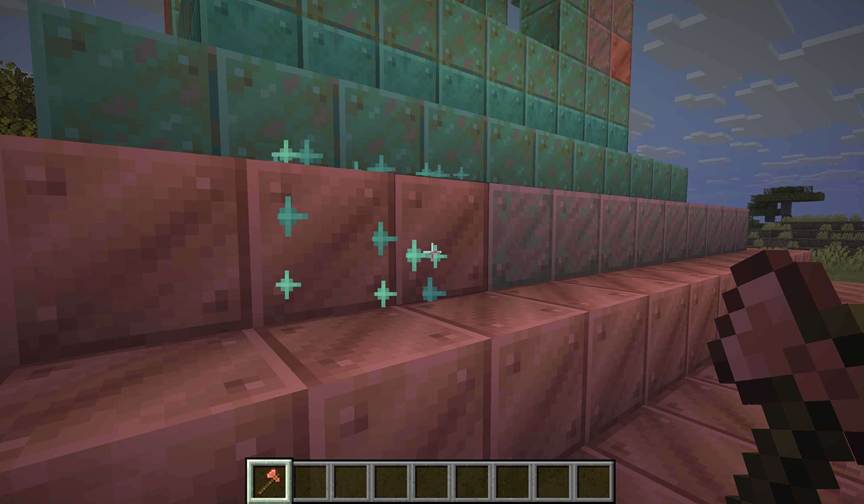
Waxing and deoxidizing introduce new layers of control. Applying honeycomb to a lightning rod freezes its appearance, preserving a desired tone indefinitely. Conversely, using an axe scrapes away oxidation one stage at a time, restoring its earlier hue. The mechanical interaction between lightning and oxidation also creates cyclical maintenance systems: when an unwaxed lightning rod is struck, it may partially deoxidize, returning to an earlier copper stage. Builders can exploit this feedback loop by designing exposed rods that naturally maintain their brightness through repeated lightning activity, achieving both function and aesthetic renewal.
Harness redstone power from storms
When lightning strikes a rod, it emits a redstone pulse of full strength - level 15 - for approximately 0.44 seconds. This property transforms rods into weather-responsive triggers capable of powering mechanisms without manual input. By connecting a rod to a conductive block or comparator circuit, players can build storm detectors, automated lighting systems, or event-driven traps. The rod’s brief, high-intensity output supports precise activation timing, ideal for synchronization with dispensers, pistons, or note blocks.
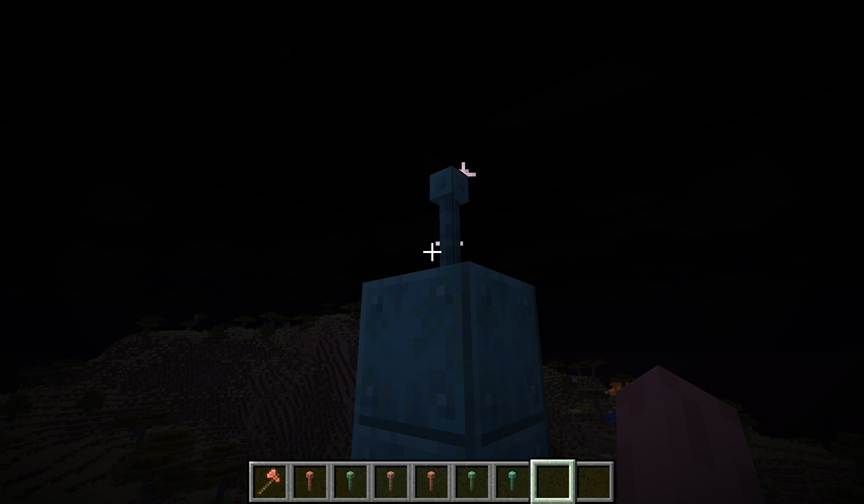
Environmental integration is key to stability. Conductive blocks like stone, copper, and terracotta safely transmit the pulse, while flammable materials risk ignition. Non-conductive blocks such as glass or slabs interrupt signal flow, useful when isolating circuits. The combination of conductive surfaces and oxidized rods can produce striking visual contrasts - ancient green rods against glowing copper circuits - reinforcing the thematic blend of natural decay and technological precision central to the Copper Age’s design ethos.
Channel lightning for transformation
Beyond fire prevention and signal generation, oxidized lightning rods enable controlled transformation of entities and materials. By strategically positioning rods above mob pens or transformation chambers, players can induce lightning strikes that alter mob types: pigs become zombified piglins, villagers turn into witches, and creepers charge explosively. The rod’s fixed targeting prevents collateral damage while preserving environmental safety. Pairing these mechanisms with redstone detection systems allows full automation of rare mob farming, including the production of charged creepers for mob head collection.
Oxidized rods add a further dimension by influencing the surrounding copper network. When struck, their deoxidation can cascade to adjacent unwaxed copper blocks, producing dynamic shifts in color and texture during active storms. This phenomenon can be exploited to design reactive sculptures or monuments that visually respond to weather - gradually brightening through lightning or fading when storms subside. The result is an environmental storytelling tool: a build that literally changes with the world’s climate cycles, blurring the line between redstone engineering and natural art.
Design for function and symbolism
The oxidized lightning rod embodies the Copper Age’s philosophy - merging mechanical function with visual storytelling. Its evolving surface texture invites interpretation as both a scientific instrument and a symbol of endurance. Builders increasingly use it not only for weather protection but also as architectural punctuation, capping towers, ships, and ruins to convey technological history. In large-scale projects, gradient oxidation patterns provide narrative depth, visually linking early industrial expansion with the slow reclamation of nature.
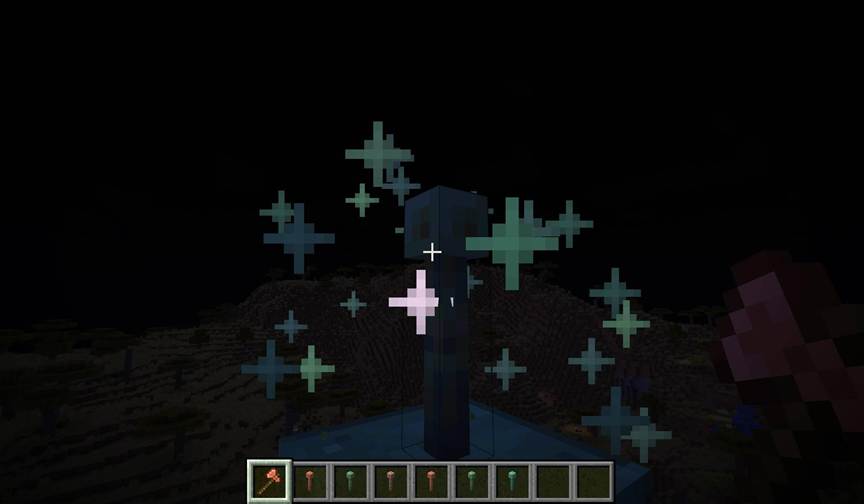
Functionally, rods continue to serve as essential lightning anchors, redstone conduits, and decorative spires. Their oxidation does not diminish performance, enabling builders to design systems that remain operational regardless of visual state. In combining utility, automation, and evolving texture, the oxidized lightning rod exemplifies Minecraft’s design progression - where aesthetic decay and engineering precision coexist, creating a world that feels alive, unpredictable, and beautifully imperfect.