
How to use Horses in Rust Primitive Update
Horses have always been useful in Rust, but in the Primitive Update, they’ve become indispensable. Without modern vehicles, players now rely entirely on these animals for traversing the vast map, chasing down enemies, and transporting siege weapons.
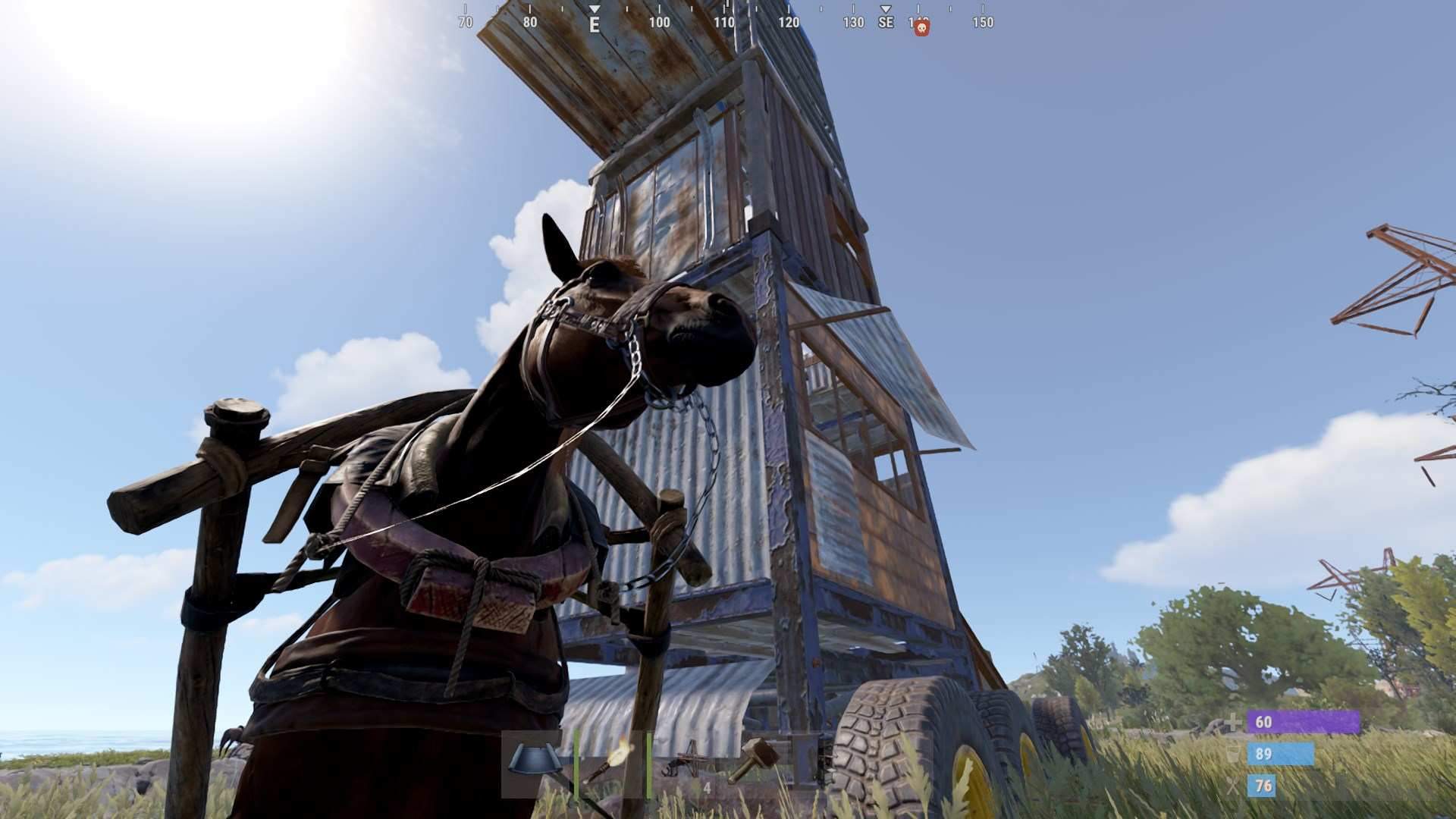
This update has significantly changed how horse mechanics work. They can now tow siege weapons, automatically avoid trees, swim short distances, and even skid to a stop when needed. These additions make them more dynamic and realistic, bringing a new level of strategy to Rust’s survival experience. But keeping a horse is not as simple as hopping on and riding away. You need to know where to find them, how to care for them, and the best ways to use them for combat, raiding, and survival.
Finding and Claiming a Horse
Horses are naturally found roaming the landscape, making them one of the few resources available to all players. They tend to spawn most frequently in the Temperate and Desert biomes, but they are completely absent in the Arctic, forcing players in snowy regions to import them from elsewhere. If you’re lucky, you might stumble upon a horse early in the game, but if not, there’s always the option of purchasing one at the Large Barn or Ranch monuments.
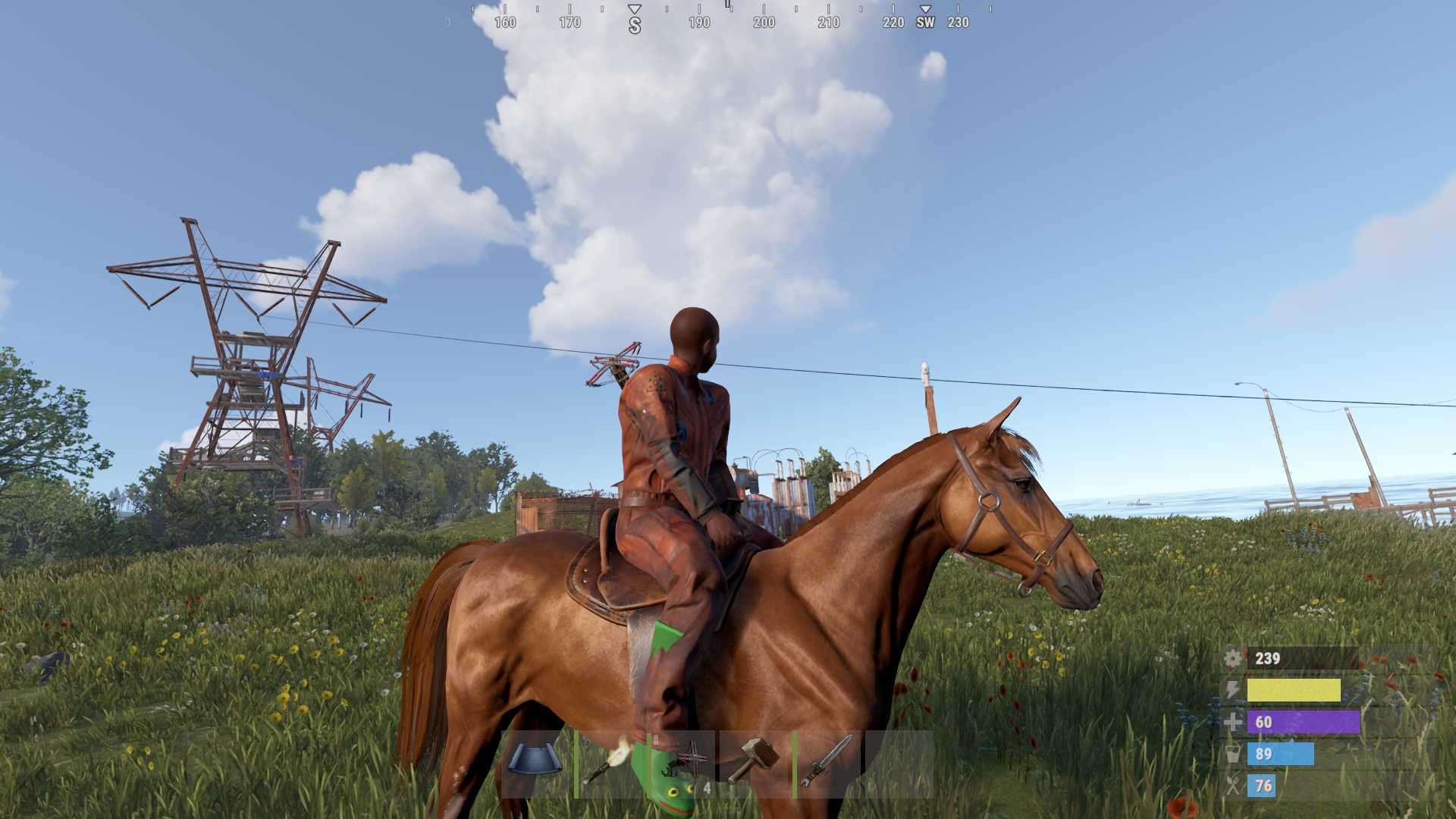
For those with spare Scrap, a visit to the Stable Shopkeeper provides an easy way to secure a reliable horse. You’ll have the choice between a Single Horse Saddle, allowing only one rider, or a Double Horse Saddle, which accommodates two players. The difference in price isn’t too significant, and if you plan to ride with a teammate, the two-seater is a worthwhile investment.
Of course, in true Rust fashion, stealing a horse is always an option. Because horses don’t have locks, any player can claim one simply by mounting it. If you leave your horse unattended, you might return to find it gone, making secure storage essential.
Riding and Controlling Your Horse
Once you’ve found or purchased a horse, controlling it is fairly intuitive. Pressing E will mount the animal, and from there, basic movement works much like walking. WASD controls direction, while Shift makes the horse gallop at full speed. But riding isn’t just about moving forward. Rust’s new horse mechanics add depth to the experience, giving you more control over speed, stopping, and avoiding obstacles.
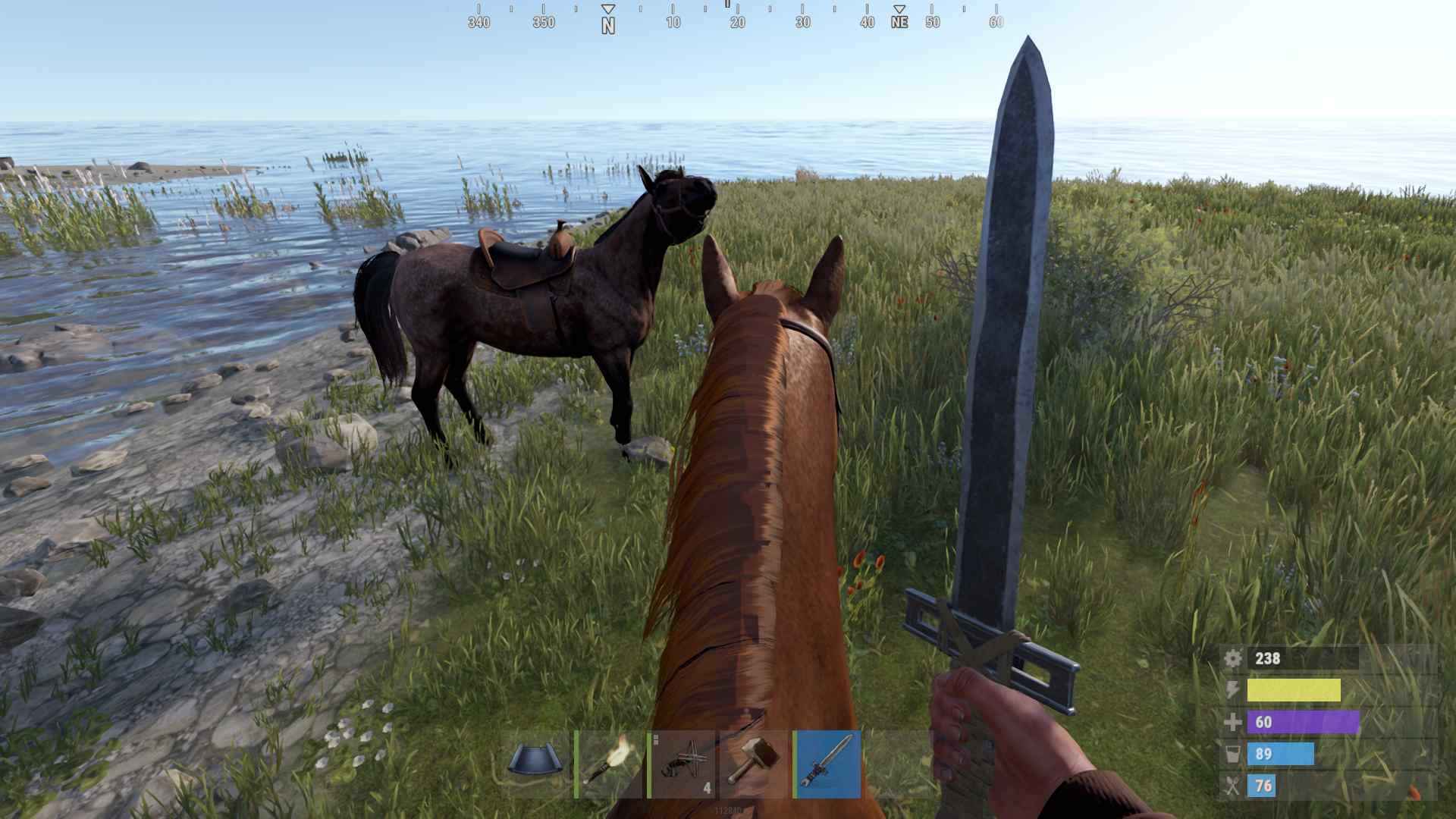
One of the biggest frustrations with old horses was the constant problem of crashing into trees. With this update, horses now auto-avoid trees, making navigation through forests and dense terrain much smoother. This small change prevents unnecessary delays and helps riders stay mobile in combat situations.
Stopping quickly is just as important as galloping at full speed. By holding CTRL, the horse will skid to a stop, a useful technique for sudden turns or emergency halts. The new swimming mechanics also allow horses to wade through shallow water, but stamina is key - if a horse runs out of stamina in deep water, it will drown, so be mindful when crossing rivers or lakes.
Feeding and Maintaining Your Horse
A good rider knows that a horse needs care, and in Rust, horses don’t live forever without proper maintenance. Unlike vehicles that can be repaired with tools, horses rely on food for health and stamina regeneration. The best sources of food include pumpkins, corn, potatoes, and even their own dung, which can be surprisingly useful in an emergency.
To feed a horse, you can either place food directly on the ground in front of it or tie it to a Hitch & Trough, which will ensure automatic feeding over time. This method is particularly useful for long-term horse stabling, as it keeps them alive and healthy without constant attention.

But food isn’t just for healing. Horses in Rust have a three-hour decay timer, meaning if they are left unfed and unattended, they will die. Keeping them properly fed at a trough extends their lifespan dramatically, allowing you to hold onto a valuable horse for several in-game days.
Using Horses for Combat and Escape
In the heat of battle, mobility is everything, and horses provide the perfect combination of speed, maneuverability, and unpredictability. Players can shoot weapons while riding, making mounted combat a viable tactic, especially when using bows, crossbows, or revolvers. However, firing accurately while moving requires practice, and a well-timed shot can be the deciding factor in a fight.
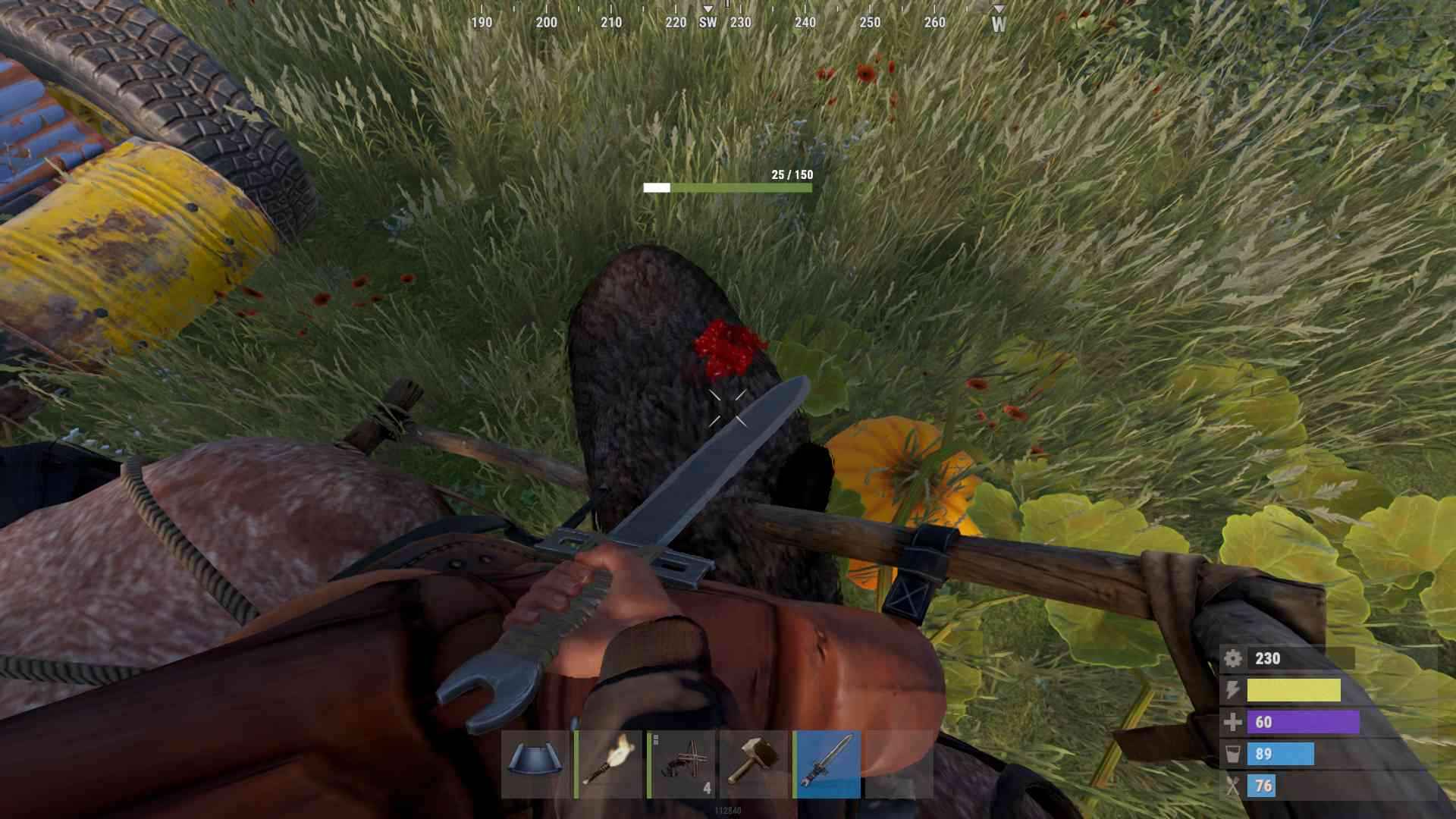
For those looking to avoid combat altogether, horses offer one of the best escape options. Sprinting while weaving through trees, using the new skid stop mechanic to change direction, or diving into water can help players evade pursuers. Since Auto Turrets don’t shoot at horses, you can even use them as a sneaky way to bypass turret defenses.
Equipping a horse with Roadsign Horse Armor provides additional protection, reducing incoming damage and increasing survivability in battle. While this comes at the cost of speed, it’s an excellent choice for players who use horses for raiding or high-risk travel.
Towing Siege Weapons with Horses
One of the most exciting changes in the Primitive Update is the ability to tow siege weapons. Horses are now essential for transporting battering rams, ballistas, and siege towers to raid locations, making them a critical part of offensive strategies.
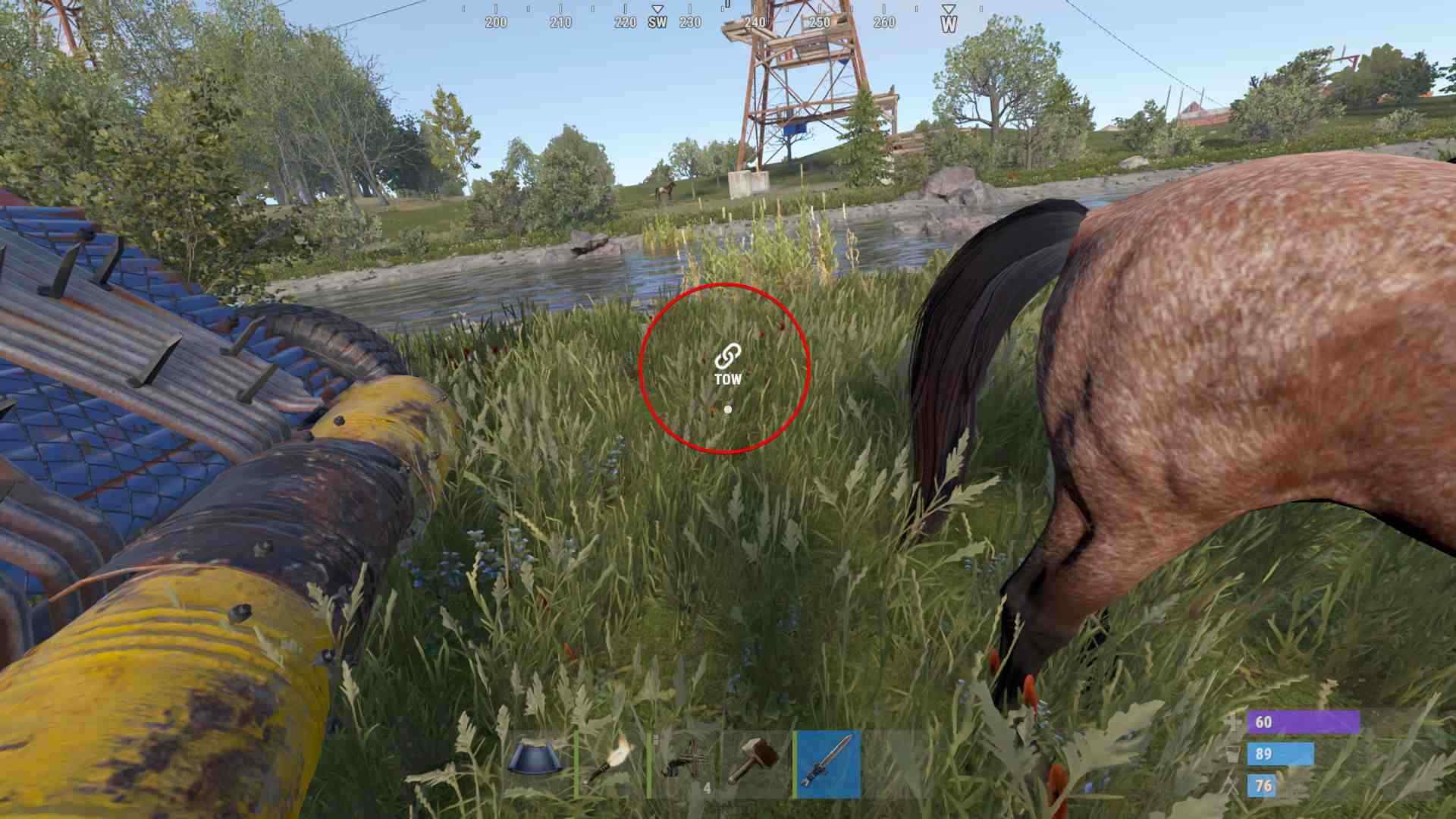
Attaching a siege weapon is simple. By backing a horse up to the front of a siege weapon, you’ll see a Towing prompt appear. Pressing E will hitch the weapon to the horse, allowing you to move it wherever needed. Once in position, pressing E again will detach the siege weapon, preparing it for use.
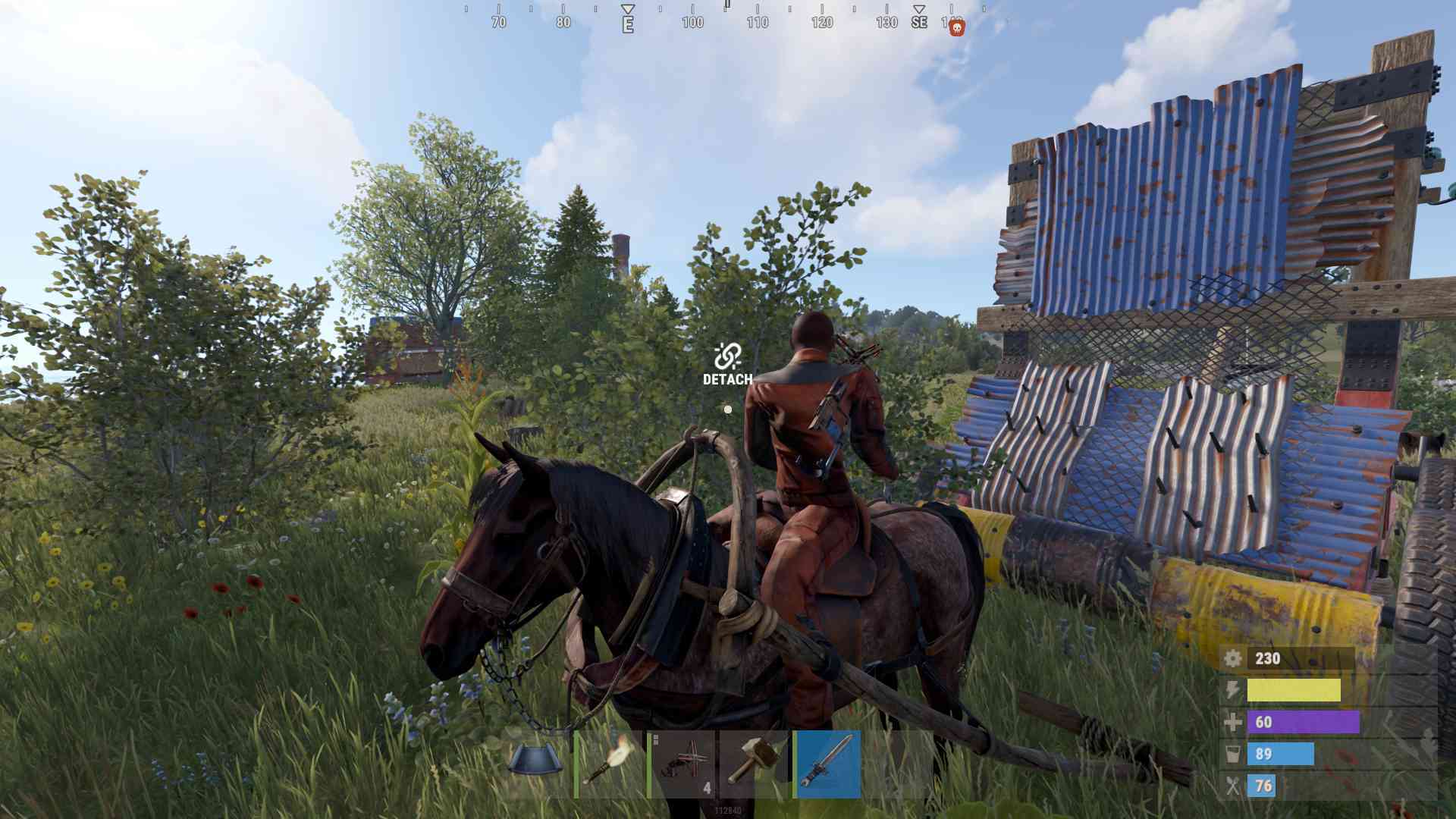
This new mechanic adds a tactical layer to raiding, requiring careful planning and execution. Positioning a battering ram or ballista in the right spot at the right time can mean the difference between a successful base raid and a complete failure.
Keeping Your Horse Safe
Since horses are now one of the most valuable resources in Rust, keeping them protected should be a priority. Storing them in a fenced compound, near turrets, or inside a secured base will prevent theft. Even though horses don’t have locks, an enclosed area makes it much harder for enemies to take them.
Leaving a horse outside with no protection is a risky move. If another player finds it unattended, it won’t take long before it’s gone. If you plan to log off, tie your horse to a Hitch & Trough in a safe location, ensuring it has enough food to survive until you return.
In Rust’s Primitive Update, horses have evolved from simple transportation into the most versatile tool for survival.
By understanding how to find, ride, care for, and protect these animals, you’ll gain a massive advantage over players who don’t. In a world without cars, helicopters, or electricity, horses are your fastest and most reliable means of staying ahead of the competition. So saddle up, grab some food, and hit the road—because in this new Rust, the strongest survivors ride on horseback.