
How to use Daylight Detector for time-based puzzles in Minecraft
After surviving the fiery trap room and pressing the correct button just in time, you find yourself teleported to a mysterious exit zone. In front of you lies a dusty old lectern with a cryptic book. The message hints that what happens next depends not on your choices, but on the very time of day. That’s right - in this guide, we’ll explore the secrets of the Daylight Detector.
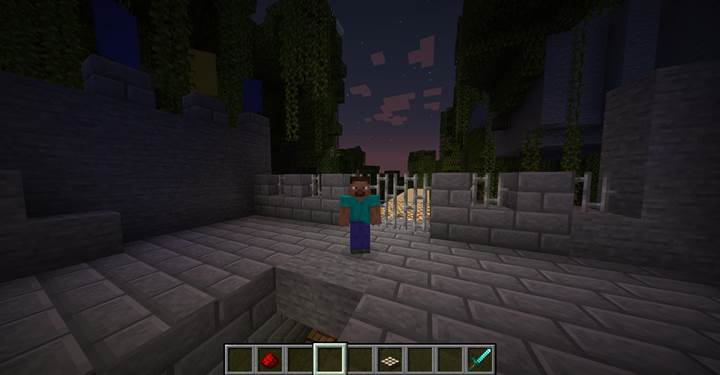
Daylight detector
The Daylight Detector is a redstone component that reads the brightness level of the world and outputs a signal strength depending on the current daylight. You can place it like any pressure plate, and it doesn't need a source block below. By default, it reacts to sunlight: during the day, it outputs stronger signals; at night, it powers down. If you right-click it, it switches to night mode - now it only outputs power during the dark hours. That’s the magic toggle you’ll use in puzzles. It works seamlessly with redstone dust, command blocks, pistons, and other components.
Nightfall bridge and the deceiving gate
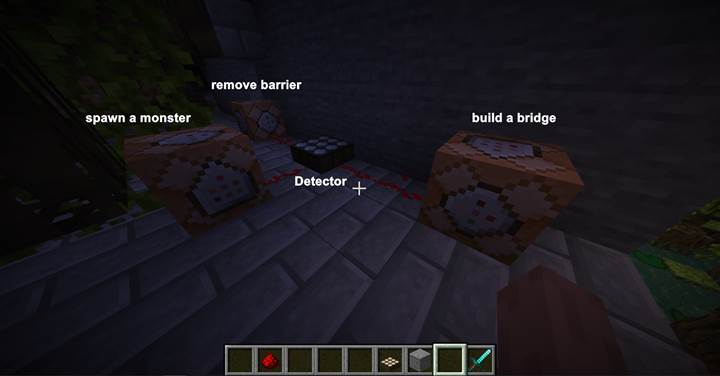
As we climb the stairs in this new area, we’re faced with a massive stone wall and an iron fence blocking the way. There’s nothing but stone pedestals ahead - but one of them hides a Daylight Detector in night mode. Once night falls (in Minecraft, that’s from 13000 to 23000 ticks), the detector becomes active and triggers a glowstone bridge across a void:
/fill -55 68 155 -35 68 155 minecraft:glowstone
The glowing path leads us forward, but there’s a twist: the same detector also triggers another command block:
/fill -35 68 154 -35 71 155 minecraft:iron_bars
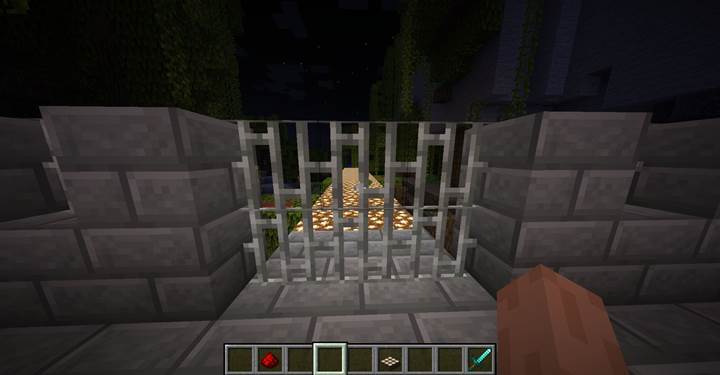
This places a new fence right in front of the bridge, locking the path. Oh, and while you're wondering what to do, another command activates:
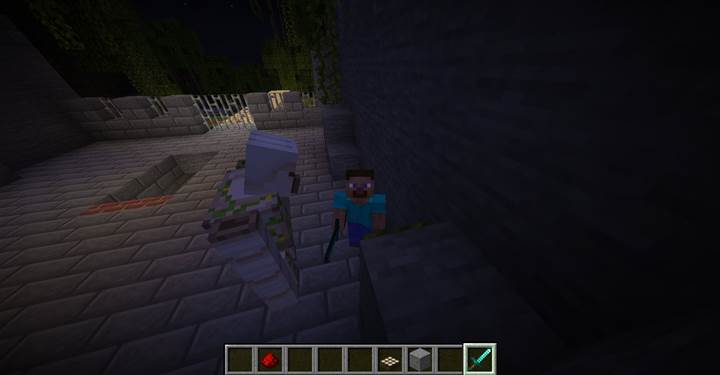
/summon iron_golem -48 68 157
That friendly-looking statue? Not so friendly in this zone. Now you must defeat the golem or outsmart it - all while planning your move for the next daylight shift.
Dawn removes barriers and adds new puzzles
When the sun rises (around tick 0–12000), a second Daylight Detector in default mode comes into play. It disables the bridge:
/fill -55 68 155 -35 68 155 air
But it also clears the iron bars:
/fill -35 68 154 -35 71 155 air
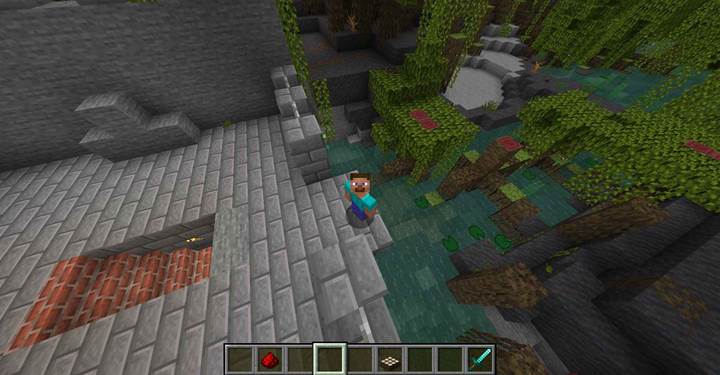
Now the path is open - but there’s no bridge. This puzzle teaches players to think in cycles, planning movement based on in-game time. Maybe they’ll wait till the next night? Or perhaps there’s a hidden solution.
One idea: use light sensors in combination with redstone comparators to read different light levels. Bright moonlight or rainy twilight may not trigger the full signal, depending on the surroundings. For advanced setups, consider creating shadow puzzles using blocks that change the brightness level.

Light levels
A daylight detector doesn't just detect time - it reads light levels. With a comparator, you can extract the exact signal strength and create even more dynamic events. Here’s a sample setup:
- Place a detector.
- Place a comparator behind it.
- Lead the signal to a redstone lamp or command block.
Redstone logic based on light levels lets you create moments like this. You can even test light level directly:
/execute if block ~ ~ ~ minecraft:daylight_detector run say It’s bright now
This could hint that something is only active around midday — not just "day" but a specific time. On multiplayer setups with Gamever, it’s easier to experiment and share moments like these with friends in real-time.
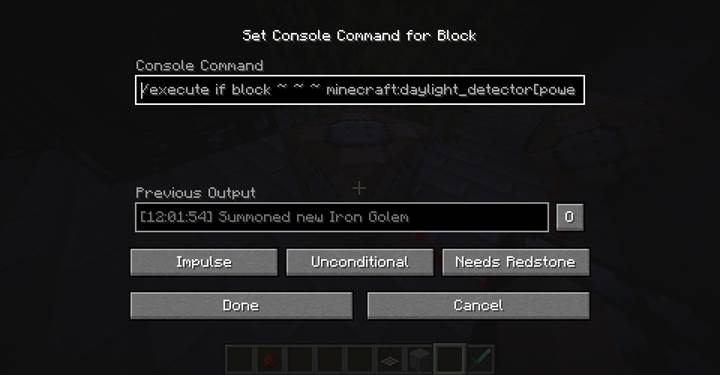
That means only at specific light levels certain events will trigger - foggy mornings, eclipses (well, not in vanilla but you can simulate it), or artificial lighting in custom maps.
From magical bridges appearing under the moon to gates vanishing at sunrise, the Daylight Detector gives you creative power over time itself. Think of tales like Cinderella, where the spell ends at midnight, or The Hobbit, where the keyhole appears only under the last light of Durin’s Day. You can recreate those ideas right here.
On Gamever, you can host their own maps, bring friends, and design redstone puzzles together. Building traps and riddles tied to time makes for memorable shared moments. Try it out, and see what surprises you can build.