
How to Swim and Dive in Enshrouded’s Wake of the Water Update
The Wake of the Water update rewrites the physical language of Enshrouded by introducing fully simulated voxel water, transforming the world into a multilayered landscape where every lake becomes a potential dungeon, every shoreline a strategic route, and every oxygen bubble a lifeline. Swimming and diving are no longer ambient interactions but core survival skills. Beneath the surface lie new resources, loot structures, traversal rules, and hazards, all governed by a physics model that rewards caution as much as curiosity. To operate effectively in this redesigned world, players must understand how the water behaves, how the Flameborn interacts with it, and how to turn aquatic environments into tactical advantages rather than silent graves.

Enter the depths
Swimming in the Wake of the Water update is fully driven by buoyancy, momentum, and active water flow. The water pushes you, pulls you through narrow gaps, and floods any space you open in the terrain. Your movement carries inertia, so when you dive or descend, you keep sliding in the direction you were moving. Entering tight underwater ruins changes the local flow and can open new paths as water fills or drains surrounding areas. Press C to start diving.
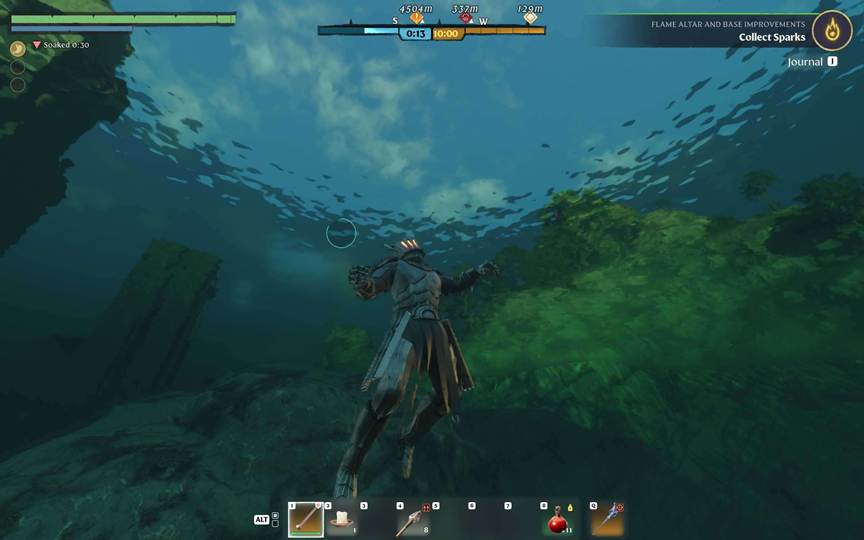
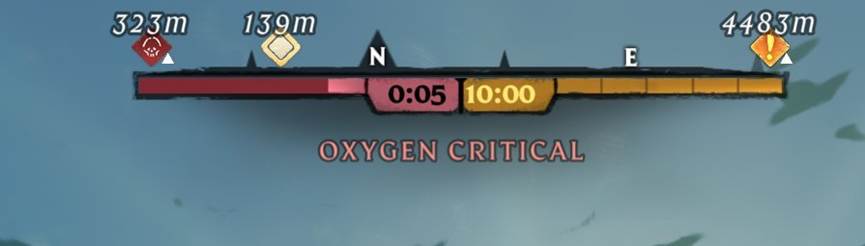
Oxygen management dictates exactly how long you can stay underwater. The oxygen bar drains as soon as you leave open air, forcing early dives to be short and precisely timed. As you progress, food buffs extend your breath, gear pieces let you dive longer, and passive perks slow oxygen loss, letting you reach deeper zones. Even with full upgrades the system keeps hard limits, creating a constant cycle of watching for air pockets, Flame Altars, and safe points to surface.
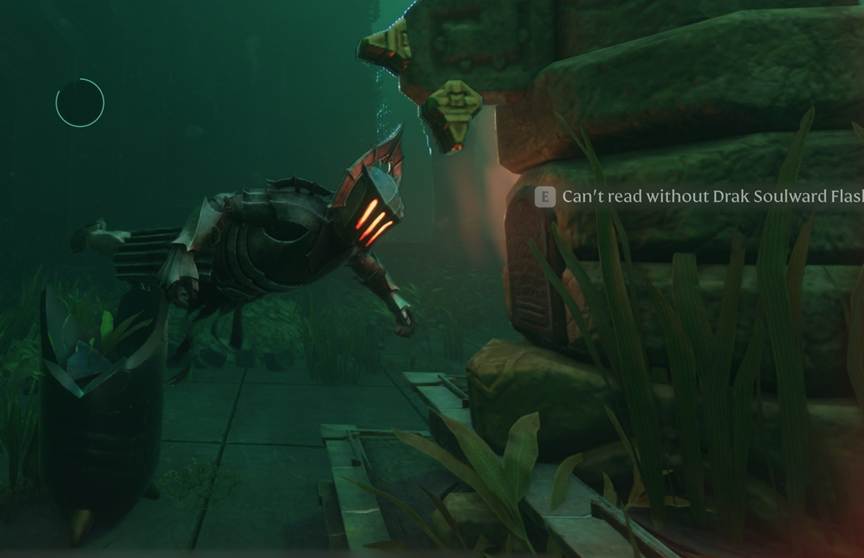
Underwater interaction follows a controlled ruleset. Players can open chests, collect plants, mine specific nodes with underwater tools, and trigger environmental mechanisms. What they cannot do is fight. Weapons simply do not function underwater, and the absence of combat options elevates spatial awareness from helpful to essential. Amphibious enemies such as the Drak exploit this vulnerability, pursuing divers with full mobility. Understanding their approach angles, escape routes, and nearby terrain becomes mandatory when navigating Veilwater Basin’s darkest pools.
Navigate the oxygen game
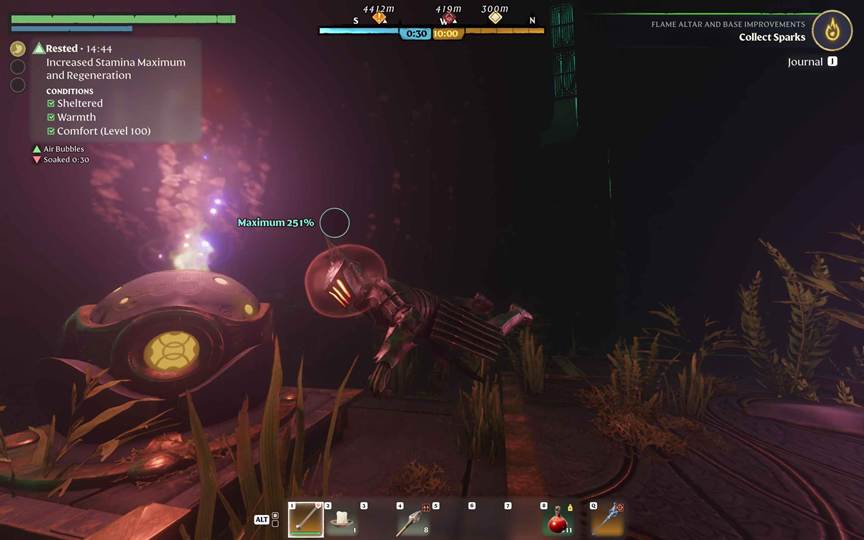
A successful dive starts with route planning. Long underwater stretches drain oxygen faster, so the first step is judging how far you need to travel and where you can resurface. Ambient oxygen bubbles around underwater Flame Altars now act as mid-route safe points, breaking long dives into segments and opening deeper paths.
Wake of the Water adds more ways to extend your breath. Fish-based foods boost stamina and mana but also increase dive duration. Aquatic-focused armor cuts movement penalties, letting you push through debris or navigate ruins faster. Higher-tier fish unlock meals built for long submersion, turning fishing progress into a direct upgrade for deep-water exploration.
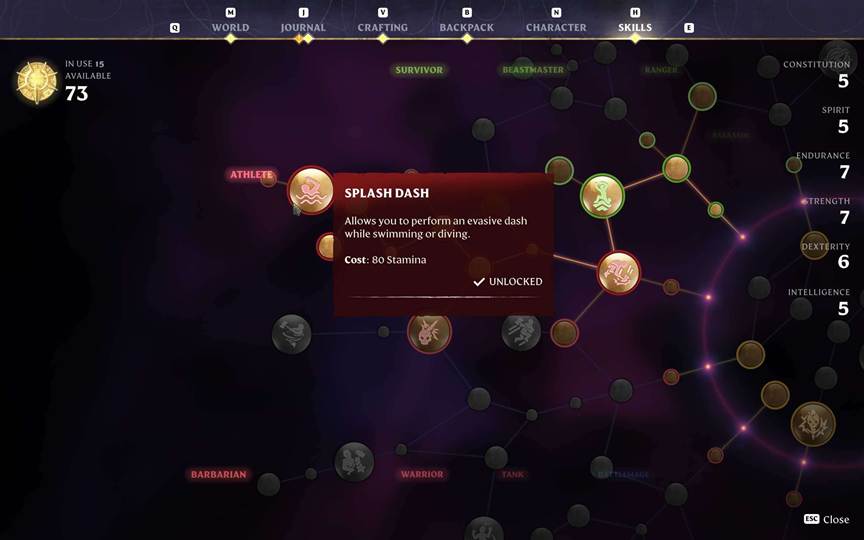
Skill upgrades also contribute to more efficient diving. Several perks improve stamina regen and water mobility, reducing wasted movement. Splash Dash gives a short underwater lunge for crossing dangerous spots or escaping tight spaces. Strong divers combine all of this—clean movement, vertical shortcuts, and every available air pocket—to stretch their oxygen as far as possible.
Use the terrain
The voxel terrain lets water fill any space you carve out, turning every excavation into a live part of the dive. Reading the terrain matters as much as swimming itself: narrow cuts slow or block enemies, vertical shafts give instant access to the surface, and stepped ruins often hide tiny air pockets that buy a few extra seconds. Because flow updates dynamically, removing even one voxel can redirect an entire stream, uncovering hidden rooms or flushing out buried loot.
Environmental puzzles rely on the same logic. Floodgates, pressure chambers, and water-driven mechanisms let you raise or lower water levels to reach deeper ruins. Sealed structures in low basins can often be drained from the inside, giving you a dry pocket to explore before heading back into open water. Small terrain edits frequently create shortcuts, safer routes, or hidden shelters away from enemy patrols.
Underwater zones like the Veilwater Basin are built around these depth tricks. Many ruins shift between flooded and dry corridors, offering spots to reset oxygen without surfacing. Draks often patrol near these transitions, making terrain awareness just as important as timing. Knowing where water settles, where currents spike, and where a single dig might trigger a sudden flood is key to moving safely through these layered structures.
Control the flow
Control of water comes from reshaping terrain and using tools, not from decorative mechanics. Carving channels redirects currents, clears debris, and opens faster routes that cut oxygen use on repeat dives. Flame Altars can momentarily purge water around them, letting you build, escape, or open blocked spaces on the lakebed. Drains lower water levels to expose loot or create breathing pockets; spouts raise levels or generate upward currents; the underwater grappling hook replaces slow swimming entirely by pulling you through gaps and ruins at high speed.
Exploration focuses on deep-placed loot, rare plants, and ore nodes hidden in tight, low-visibility passages. Many treasures are blocked by rubble that must be cleared by altering water flow or draining rooms. Because you cannot fight underwater, every dive becomes a planned run: watch Drak patrols, use terrain for cover, and time oxygen around safe pockets. Mastery of water movement, terrain shaping, and efficient traversal is what unlocks the deepest rewards.