
How to manage Pal SAN and status effects after the v0.7 balance changes
Palworld v0.7’s most important sanity change is not a new building or a flashy weapon, but a rules rewrite: combat damage no longer drains SAN, removing a hidden feedback loop that used to turn raids into post-fight workplace meltdowns. At the same time, the update reduces the severity of multiple negative status effects, lowering the punishment for imperfect logistics without eliminating the core systems that generate Hungry, Ulcer, Fracture, or Depressed states. The result is a version of Palworld where SAN is less about recovering from damage and more about keeping routines stable enough that the game’s low-SAN behavior checks rarely get a chance to roll against the player.
Reframe what drains SAN
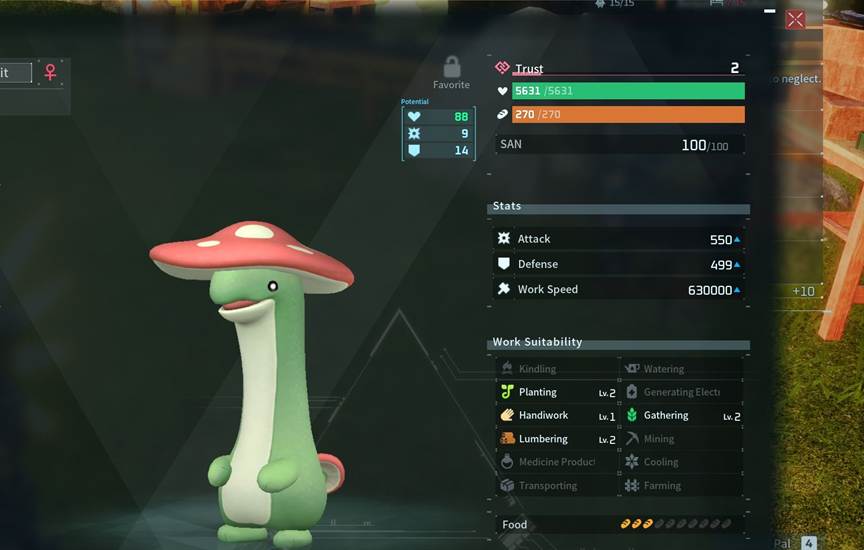
Before v0.7, a Pal could perform well in a raid and still come home on a timer toward downtime, because every hit taken quietly pushed SAN downward. v0.7 breaks that coupling by removing SAN loss from taking damage, which makes combat and morale less mechanically entangled. In practice, base defense becomes easier to sustain over long sessions because returning fighters are less likely to be immediately pushed into the low-SAN band where slacking, refusal, and sickness become more probable.
This does not make SAN irrelevant; it makes the remaining drains more important because they now account for most SAN volatility. Hunger, poor work conditions, excessive work intensity, and long travel distances inside the base become the main reasons SAN slides. With damage off the table, the game’s sanity story is clearer: SAN is an operations and routine problem first, a combat problem second.
The most useful shift in player mindset is to treat SAN as stability, not as a resource to refill. Many bases fail not because SAN cannot be restored, but because SAN repeatedly crosses risk thresholds where the game begins rolling for negative behaviors. The best management after v0.7 is preventing those crossings by removing friction from daily loops, rather than chasing perfect SAN values after the fact.
Control the workload pipeline
SAN collapses usually start as a throughput issue, not a single mistake. When a base has too many Pals competing for one bath, one feed box, or one bed cluster, travel and waiting time rise. That increases the number of “in-between” moments where a Pal is hungry, stressed, or blocked, which pushes SAN downward in waves. v0.7 improves some pathfinding behavior, but it does not compensate for layouts that force long detours or narrow chokepoints.
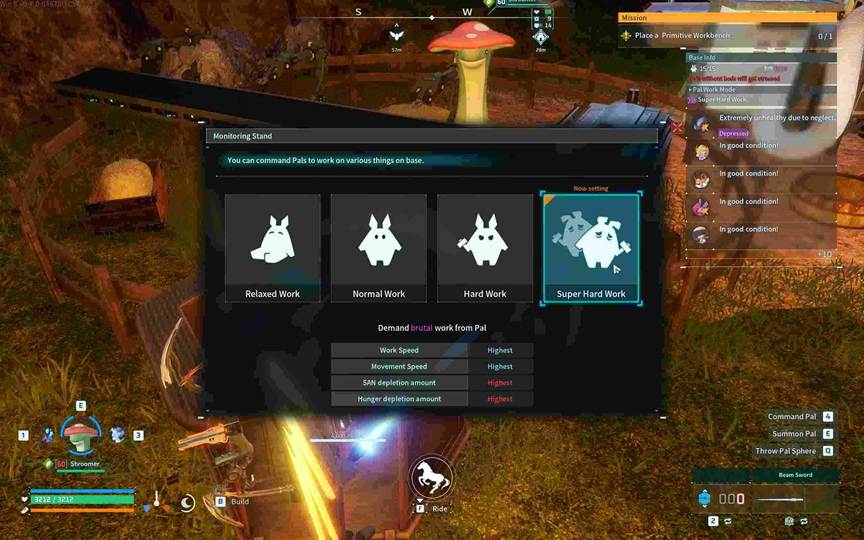
Work intensity settings amplify every weak point. The Monitoring Stand is powerful because it changes the entire base’s tempo, but that also means it changes the entire base’s failure rate. Higher intensity effectively accelerates hunger and recovery demand, which can push otherwise healthy Pals into lower SAN bands faster than the recovery loop can pull them back. If the base is already close to its capacity limits, increasing work intensity often produces short-term output followed by longer downtime, which is a net loss.
The v0.7 debuff reductions can mask a base drifting toward instability because the penalties are softer, so production degrades less dramatically at first. That is precisely why the workload pipeline matters: if “mildly bad” is tolerated for too long, several Pals can drop into the same low-SAN band at once, and the base suddenly looks like it broke “randomly.” The fix is almost always structural: reduce travel, duplicate recovery objects, and avoid permanent high-intensity modes.
Treat debuffs as performance modifiers
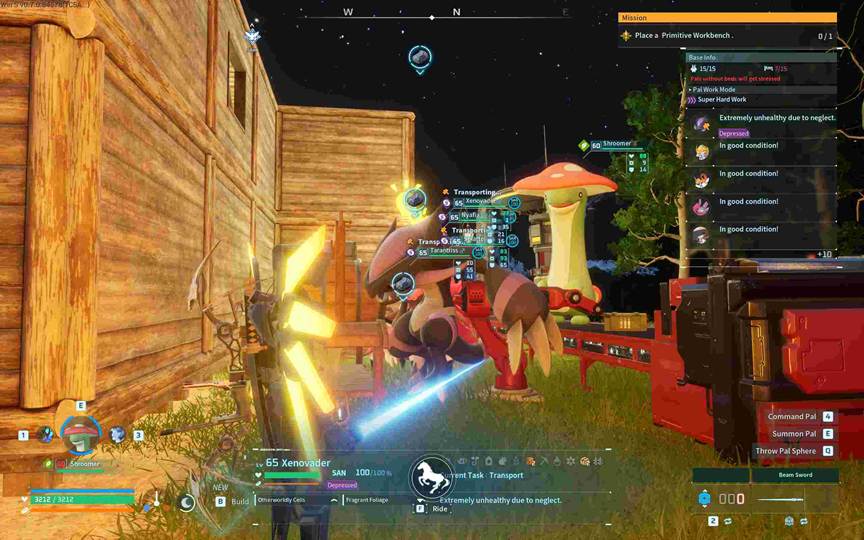
v0.7 reduces the impact of multiple bad status effects, especially the ones that used to turn hunger into a catastrophic debuff. Hungry no longer hits Attack, Defense, and Work Speed as hard, and Starving is no longer a near-halving of performance. Several injuries and ailments also take smaller penalties, particularly on Work Speed and Movement Speed. The intention is clear: mistakes should sting, but they should not instantly cascade into complete dysfunction.
The systemic consequence is that “imperfect but functional” becomes a viable operating state, particularly in midgame bases that lack top-tier recovery infrastructure. Mild debuffs are less likely to stop production entirely, and combat Pals that dip into hunger states are less likely to feel like they have been switched off. Over time, this makes specialization and redundancy more valuable than constant intervention, because one underperforming worker has less power to drag down the entire chain.
However, softer does not mean harmless. Movement Speed penalties still have a disproportionate effect on base reliability because they compound with long travel routes and congestion. A Pal that is slightly slower can miss a recovery window, arrive late to food, and spend more time in vulnerable SAN bands. Debuffs remain best understood as multipliers on existing problems: if a base is well-designed, v0.7 makes debuffs tolerable; if a base is poorly designed, v0.7 simply delays the crash.
Build a recovery loop that scales
A stable post-v0.7 base is one where recovery is not a scarce resource. SAN management becomes dramatically easier when multiple Pals can recover simultaneously without queueing. Hot springs and beds are not merely “quality of life” objects; they are throughput infrastructure, because they determine how quickly Pals can exit a low-SAN band and return to work. The most consistent bases are the ones where recovery capacity is scaled to peak load, not average load.
Food quality matters because it controls how often Pals must leave tasks and how volatile their hunger-driven behavior becomes. Better food reduces frantic short breaks and lowers the chance that a Pal oscillates between “almost fine” and “low SAN,” which is where the game’s negative behavior checks are most disruptive. A base that feeds well tends to feel quieter, not because it is more luxurious, but because it produces fewer decision points where Pals can choose unproductive behaviors.
The most v0.7-specific advantage is that combat no longer injects SAN damage into the system. That means defense can be treated as a combat tuning problem rather than a morale hazard. If Pals are still getting sick or depressed after attacks, the cause is usually the base loop that follows combat: injuries not being treated, food being insufficient for the increased activity, or work intensity being left high while the base is in recovery mode. The cleanest bases are the ones that can absorb a raid and return to normal without asking for constant manual correction.