
How to get grey dye in Minecraft
Constructing is one of the primary elements of playing Minecraft, adding a special and unique dimension to the game as players are encouraged to create their own narratives through their builds. The use of different block colors and textures is crucial, as it offers players a wide range of options to enhance the visual appeal of their Minecraft house designs. Obtaining dyes is often necessary for crafting these vibrant and colorful blocks. In this guide, we will explore how you can acquire and craft each dye in Minecraft.
How to Obtain Every Dye in Minecraft
To craft dyes in Minecraft, you'll first need specific ingredients, which are relatively easy to obtain. Additionally, wandering traders, one of the many types of Minecraft villagers, sometimes offer three pieces of any dye in exchange for one emerald. With that in mind, let's delve into how you can create each dye in Minecraft:
White Dye
You can craft white dye in Minecraft by using either one bonemeal or one lily of the valley flower. Another option is to discover white dye in a suspicious gravel block found in trail ruins.
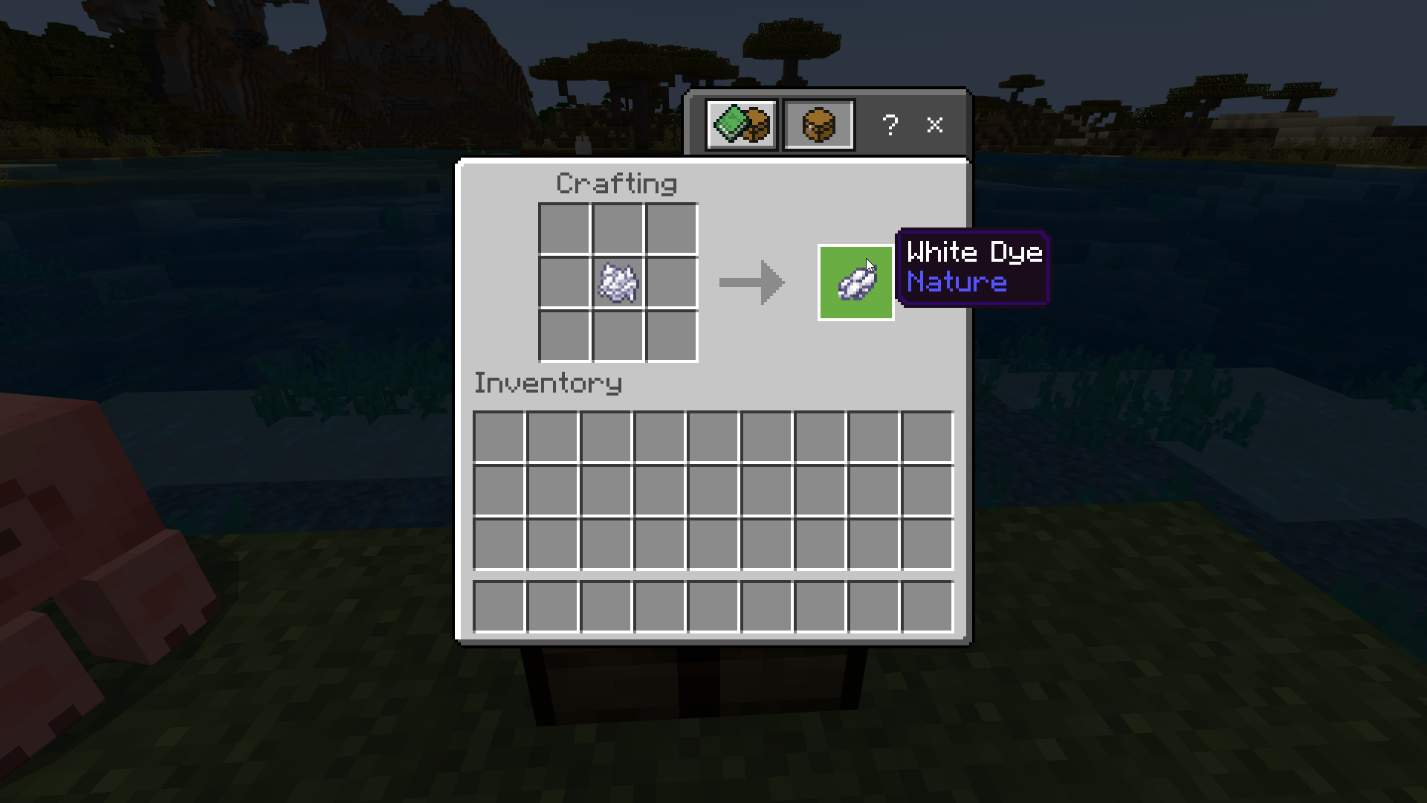
Lily of the Valley can be found in forest biomes, such as the Woodland and Cherry Blossom Grove in Minecraft. To obtain bonemeal, you'll need to defeat skeletons and then place their bones on a crafting table to create bonemeal.
Black Dye
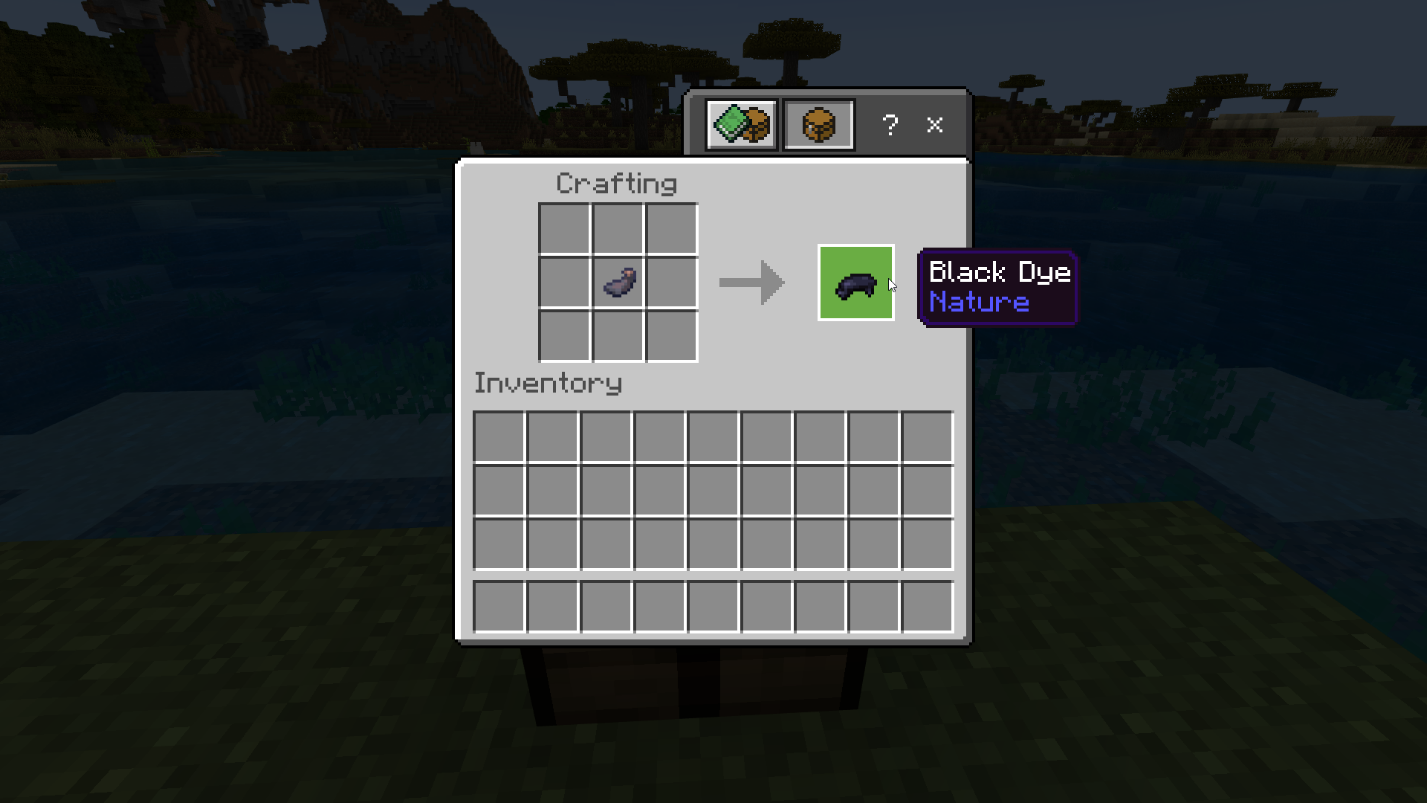
To obtain black dye, you have two options: either obtain an ink sac by defeating a squid or use a wither rose in the crafting process. Squids can be found in rivers and oceans, making them the fastest and easiest way to obtain black dye.
Gray Dye
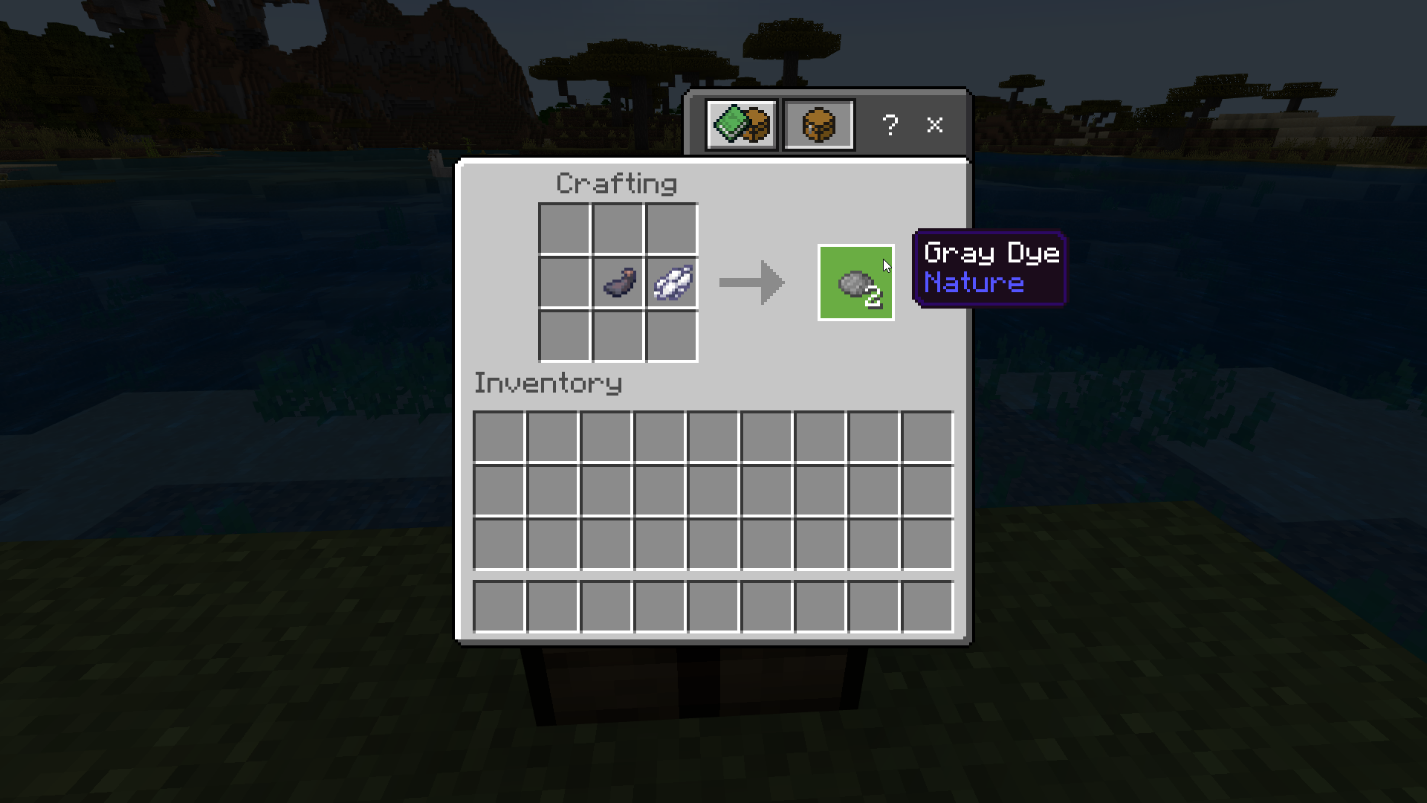
In Minecraft, you can obtain gray dye by combining black dye and white dye. This crafting recipe yields two gray dye. In the Bedrock Edition, you can also purchase gray dye from wandering traders in exchange for emeralds.
Light Gray Dye
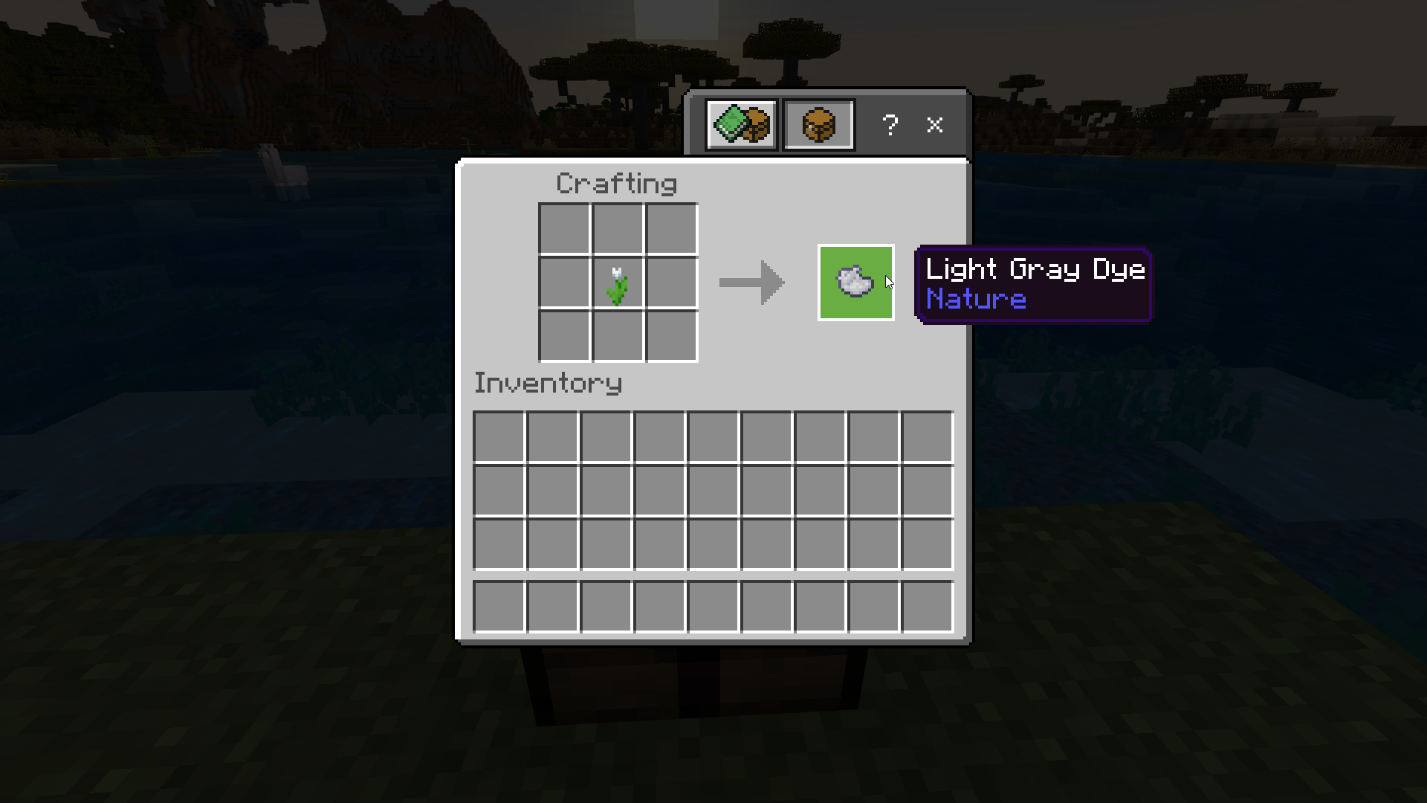
Light gray dye can be crafted from flowers such as azure bluet, oxeye daisy, or white tulip. Azure bluets can be found in most grassy biomes, while the other flowers are found in flower forest biomes. Additionally, combining one gray dye and one white dye, or one black dye and two white dyes in the crafting table will produce light gray dye.
Brown Dye
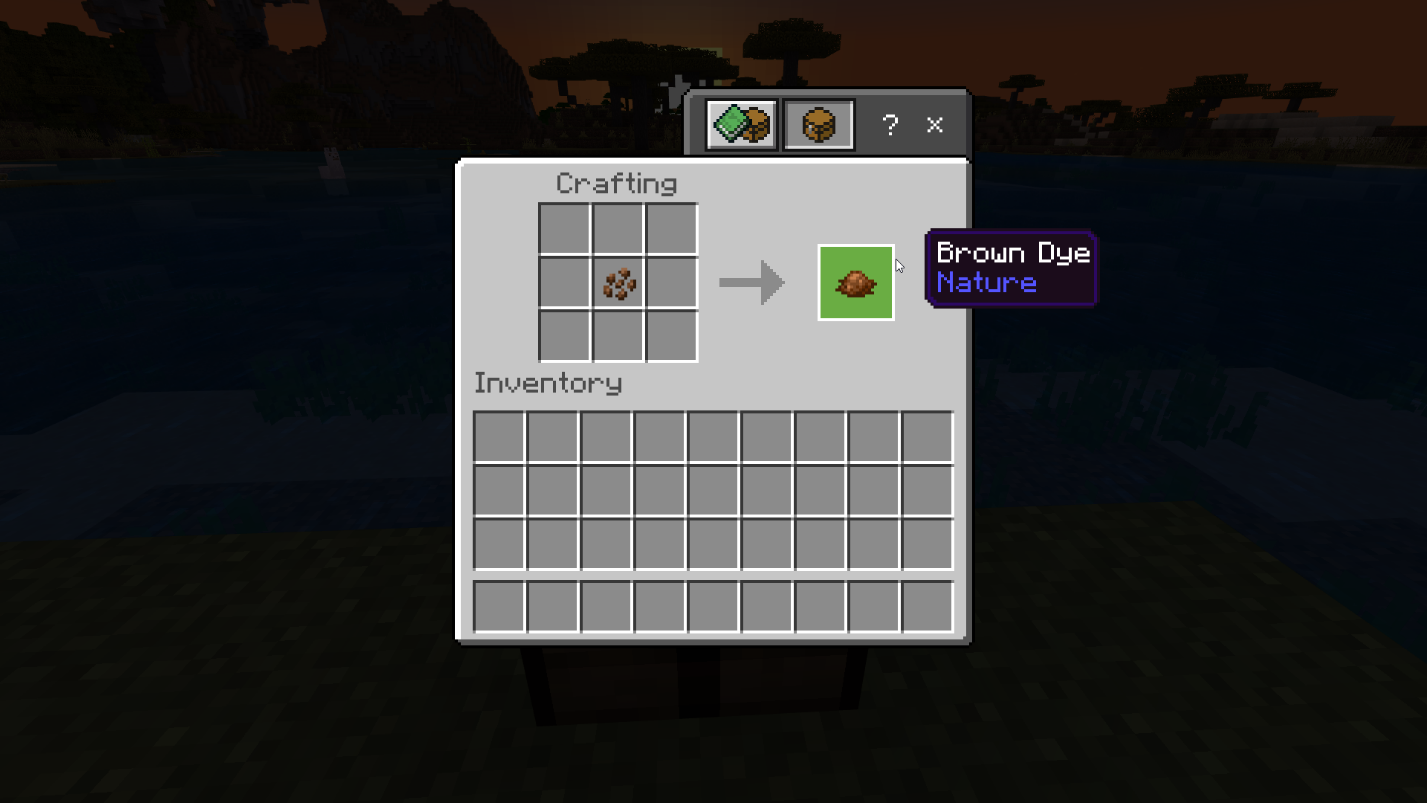
To obtain brown dye, you'll need to convert cocoa beans into dye. Cocoa beans can be found exclusively on the logs of jungle trees in jungle biomes.
Red Dye
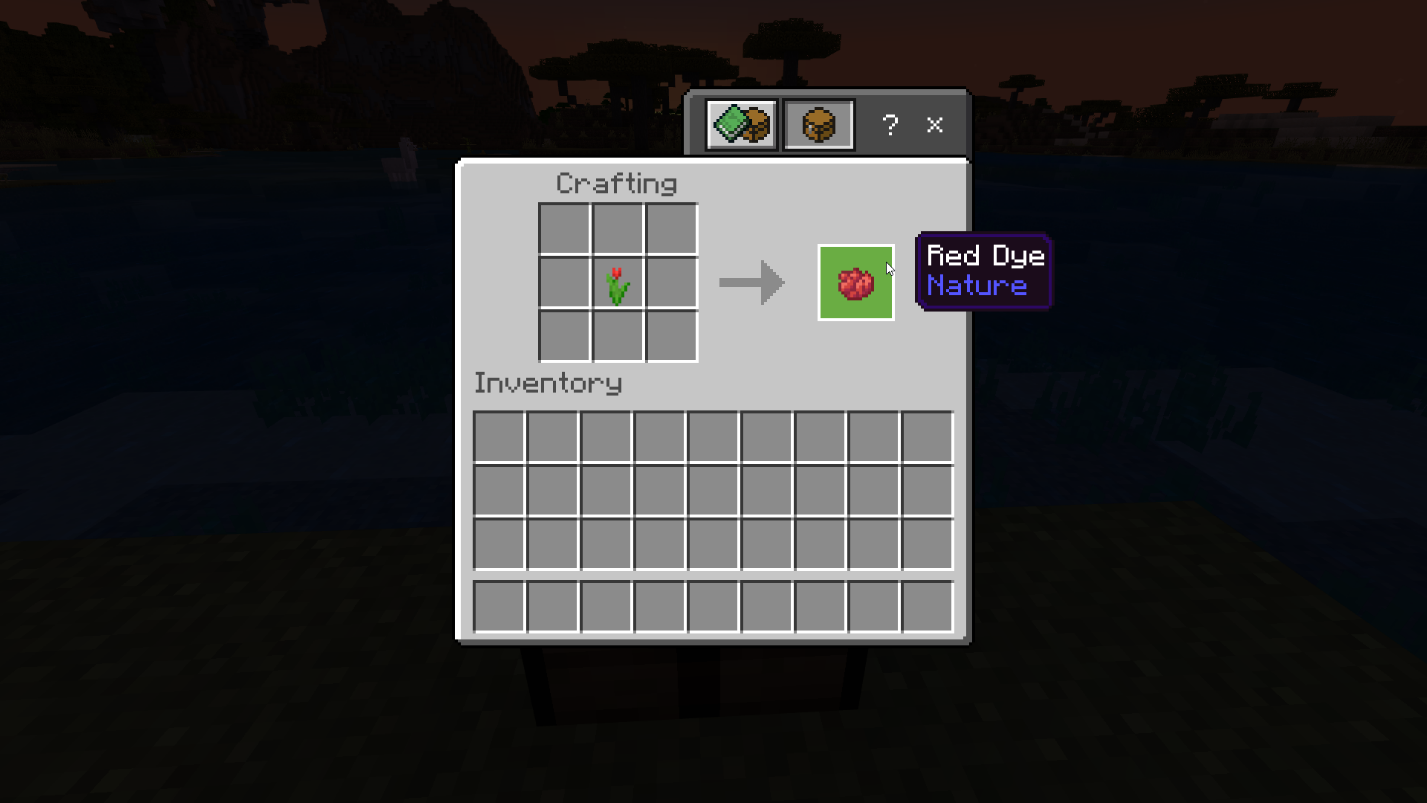
In Minecraft, you can craft red dye using a poppy, red tulip, beetroot, or a rose bush. Poppies are commonly found in grassy areas, while red tulips and rose bushes appear in flower forests. Beetroot can sometimes be found growing in village farms. Red dye or concrete of this color are often used to mark specific areas or plan builds in Minecraft.
Yellow Dye
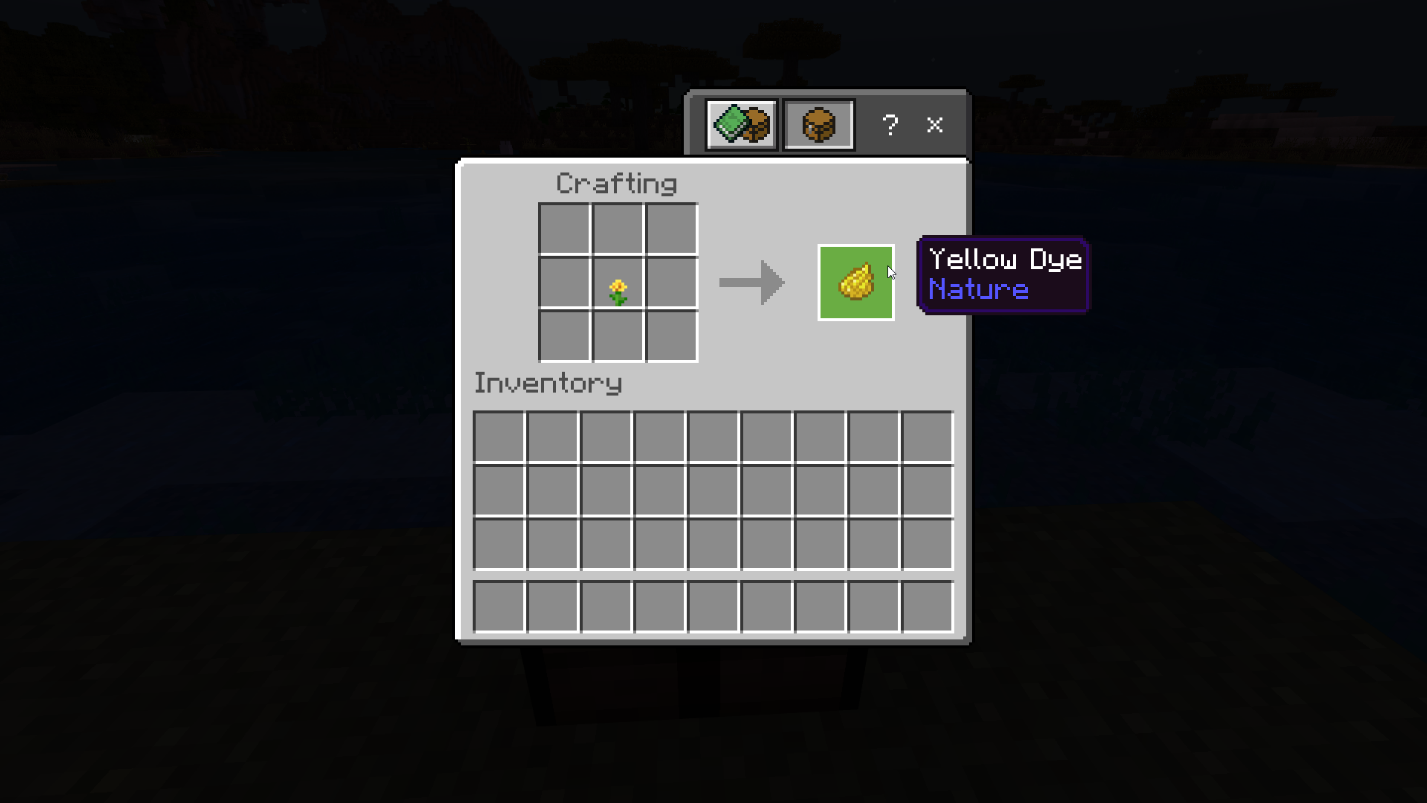
You can craft yellow dye by using a dandelion or a sunflower in the crafting grid. It can also be found in a mason's chest in villages or obtained by excavating a suspicious gravel block in trail ruins. Dandelions are quite common and generate in various biomes, while sunflowers can be found in sunflower plains biomes.
Orange Dye
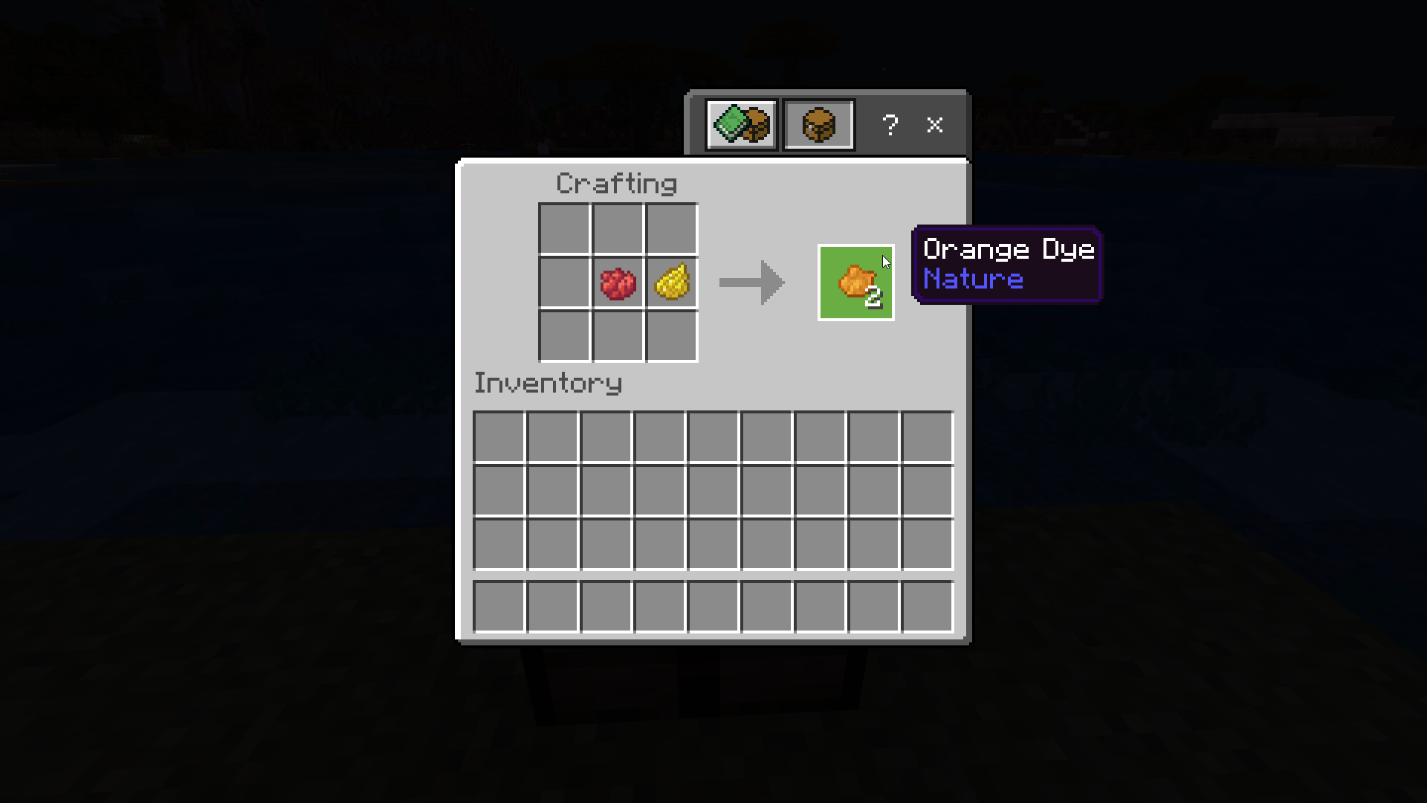
To obtain orange dye in Minecraft, you can break down an orange tulip or a torchflower. Alternatively, combining one red dye and one yellow dye in the crafting table will yield orange dye. Orange dye can also be obtained from a suspicious gravel block in trail ruins.
Orange tulips, like all tulips in Minecraft, generate in flower forest biomes. Torchflowers can only be obtained through a sniffer in Minecraft, so be sure to refer to that guide for more information.
Green Dye
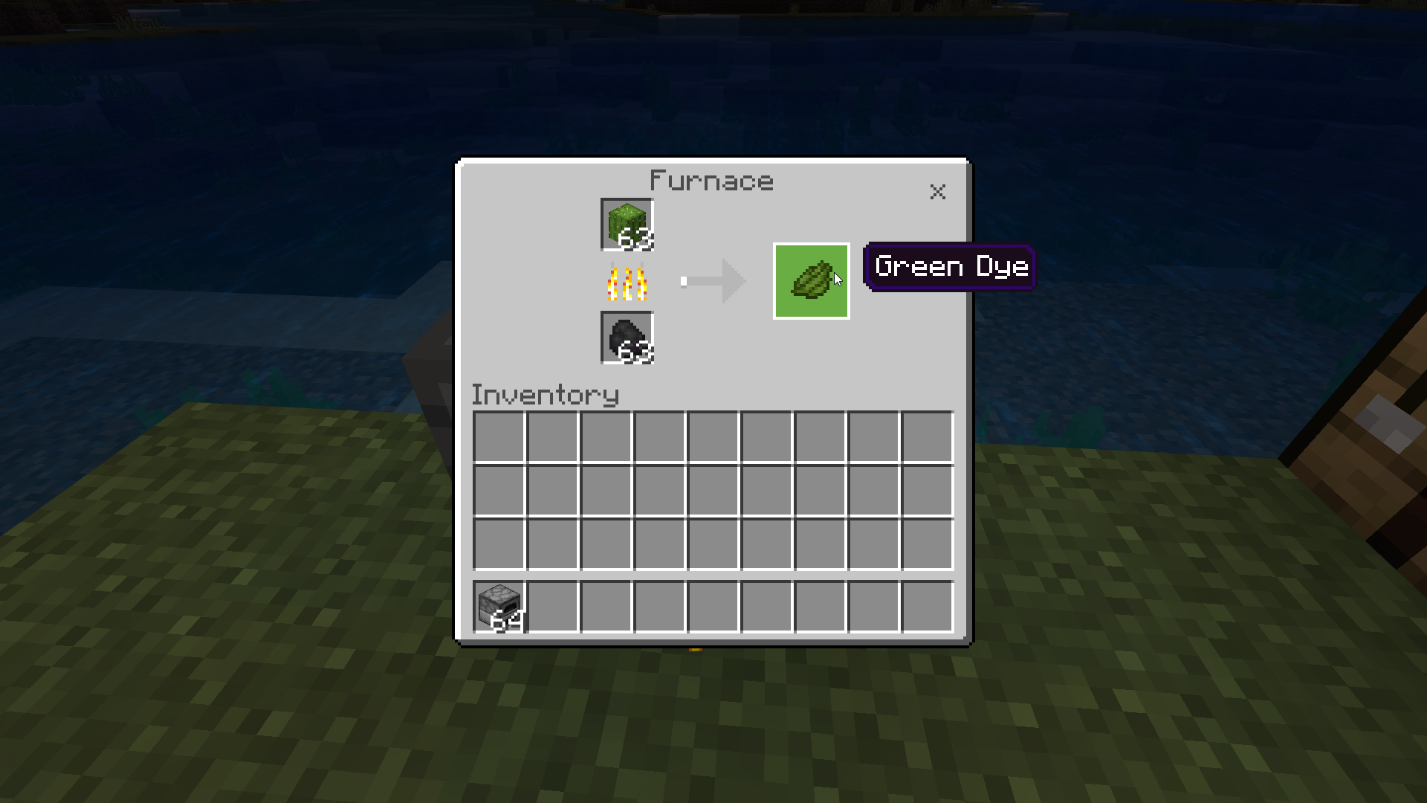
In Minecraft, you can craft green dye by cooking a cactus in a furnace or finding it in a chest in a desert village house. Cacti are commonly found in deserts and badlands biomes.
Lime Dye
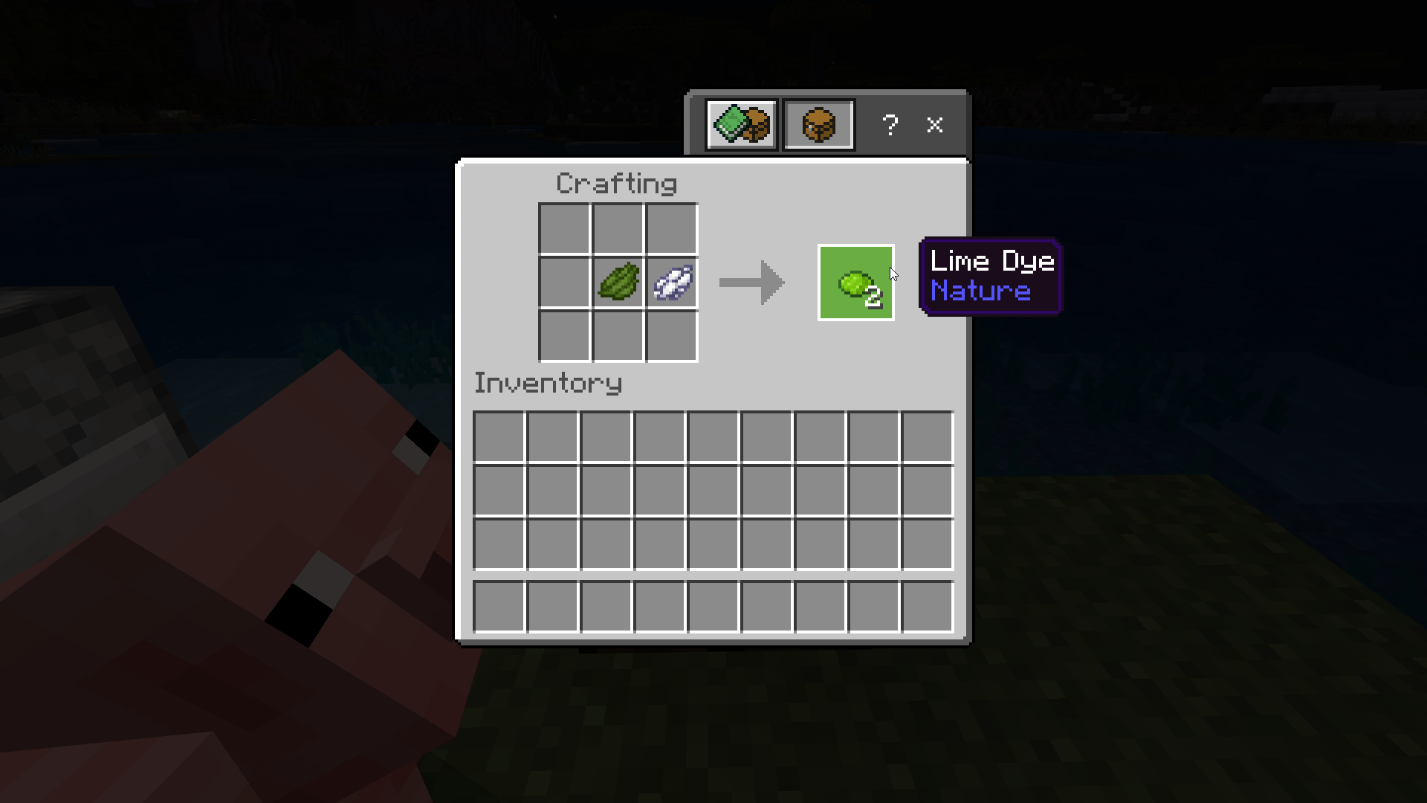
Lime dye can be obtained by combining green dye and white dye in the crafting interface, or by smelting a sea pickle in a furnace. Sea pickles can be found at the bottom of warm oceans, usually on top of coral blocks.
Blue Dye
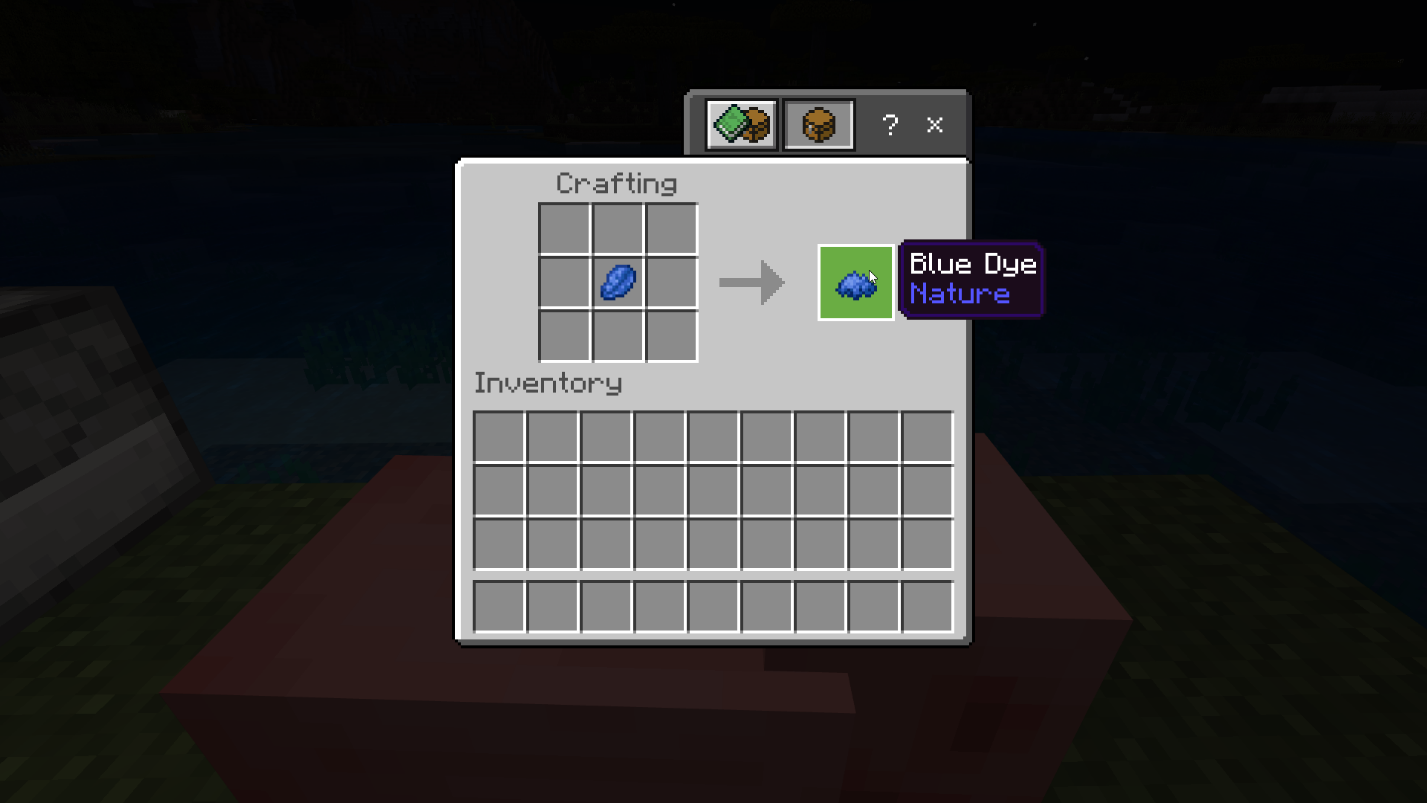
To craft blue dye in Minecraft, you can use a cornflower or a piece of lapis lazuli. It can also be found in trail ruins. Cornflowers generate in plains biomes, meadows, and flower forests. Lapis lazuli ore is easily found while exploring caves or mining at diamond levels. Additionally, apprentice-level cleric villagers sell one lapis lazuli for an emerald.
Cyan Dye
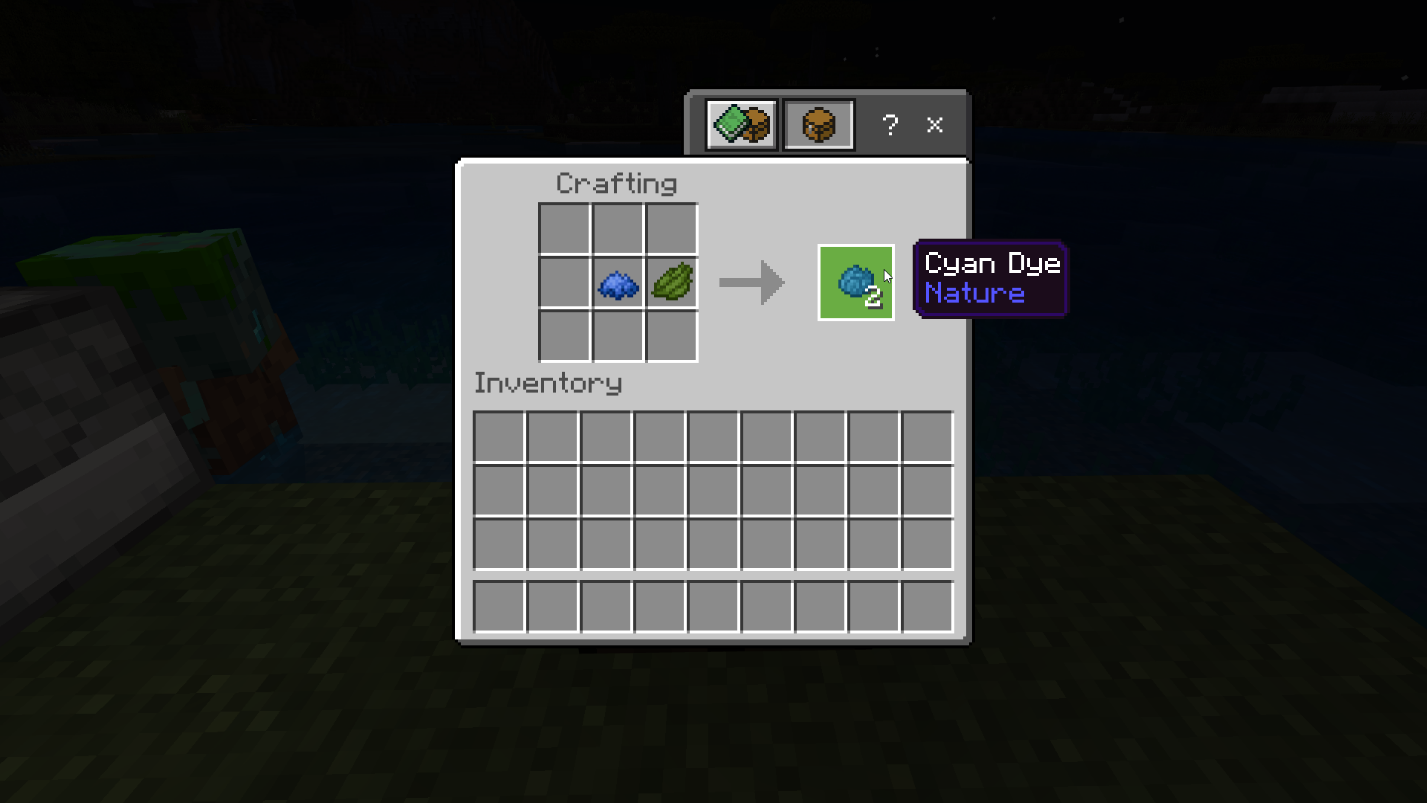
Cyan dye can be obtained by combining green dye and blue dye in the crafting grid, or by breaking down a pitcher plant. Wool of this and the following two colors can be found in Ancient cities in Minecraft. Pitcher plants can be obtained through the sniffer, similar to the torchflower.
Light Blue Dye
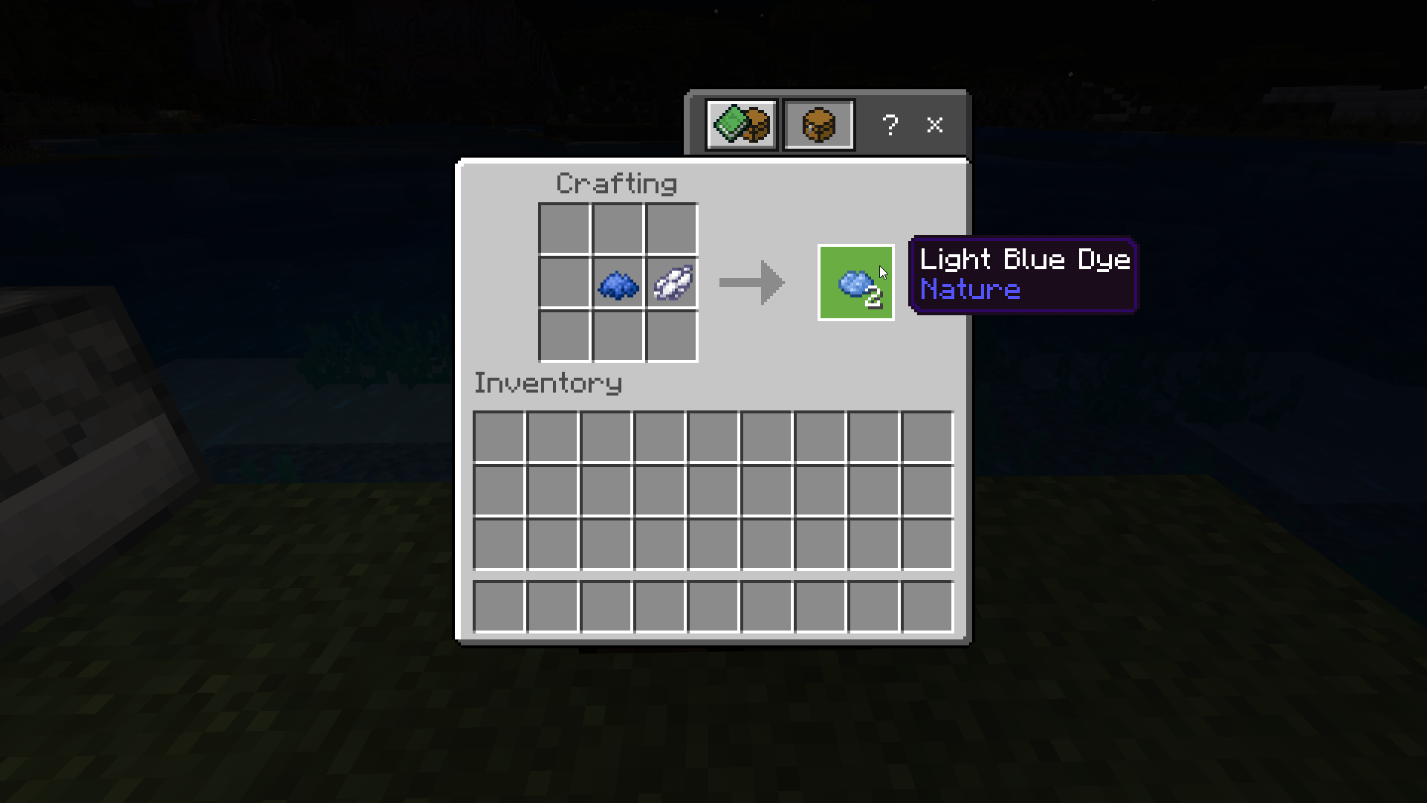
If you break down a blue orchid or combine blue dye and white dye, you will obtain light blue dye. This dye can also be found in trail ruins. Blue orchids commonly generate in swamp biomes.
Purple Dye
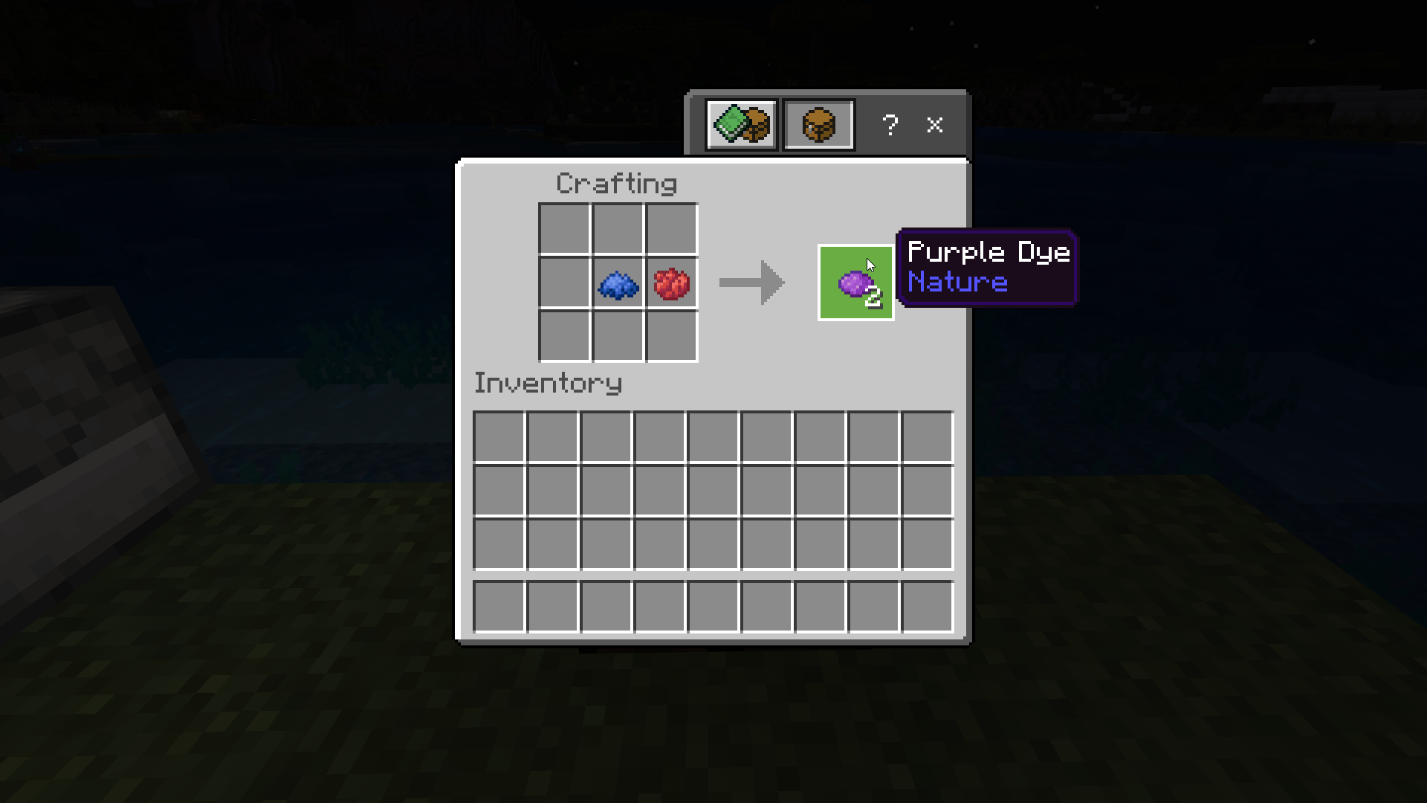
You can only craft purple dye by combining blue dye and red dye. Simply place the two dyes on a crafting table, and you'll obtain purple dye.
Pink Dye
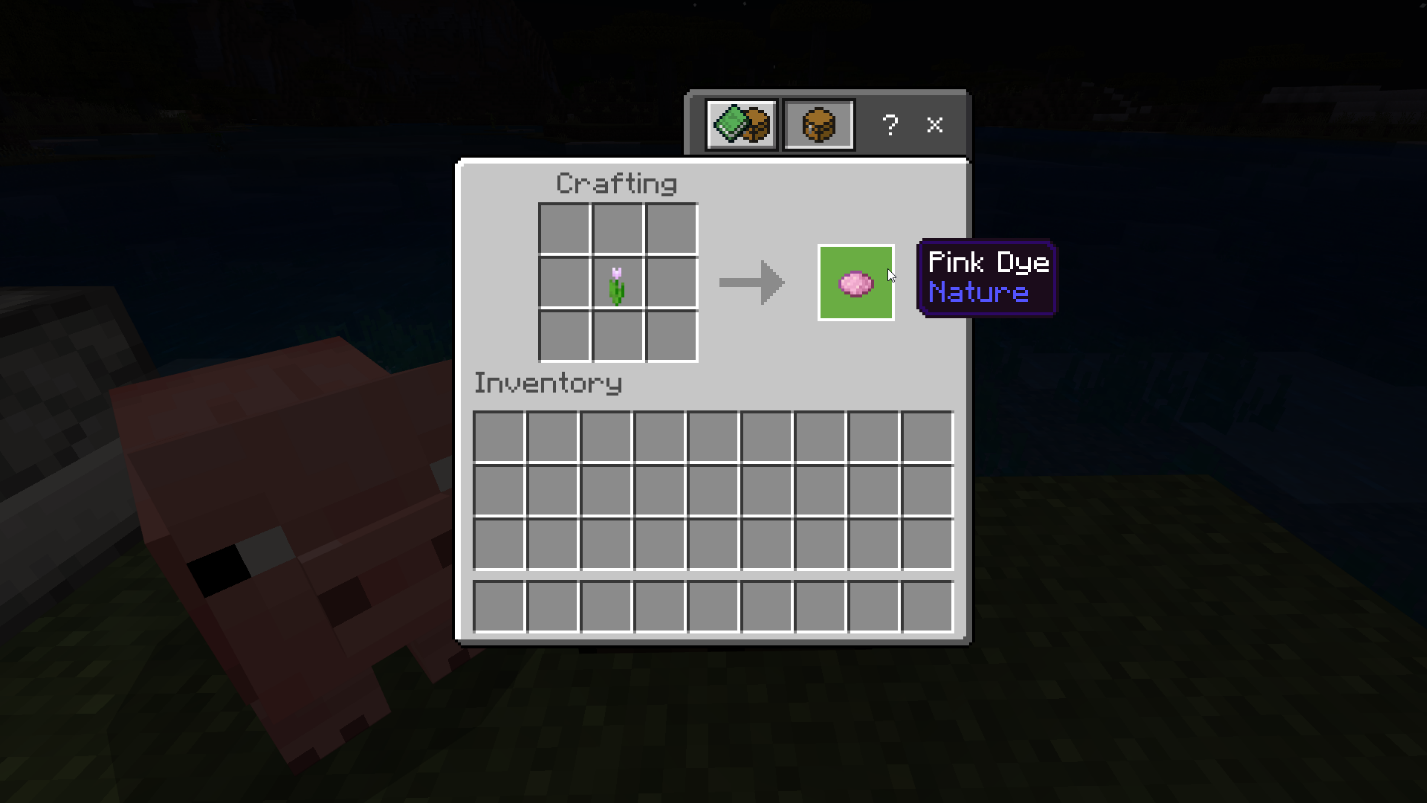
To obtain pink dye, you can break down a peony, pink tulip, or pink petals. Alternatively, combining one red dye and one white dye will yield the same dye. Peonies and pink tulips generate in flower forests, while pink petals cover the grass in Cherry Grove biomes.
Magenta Dye
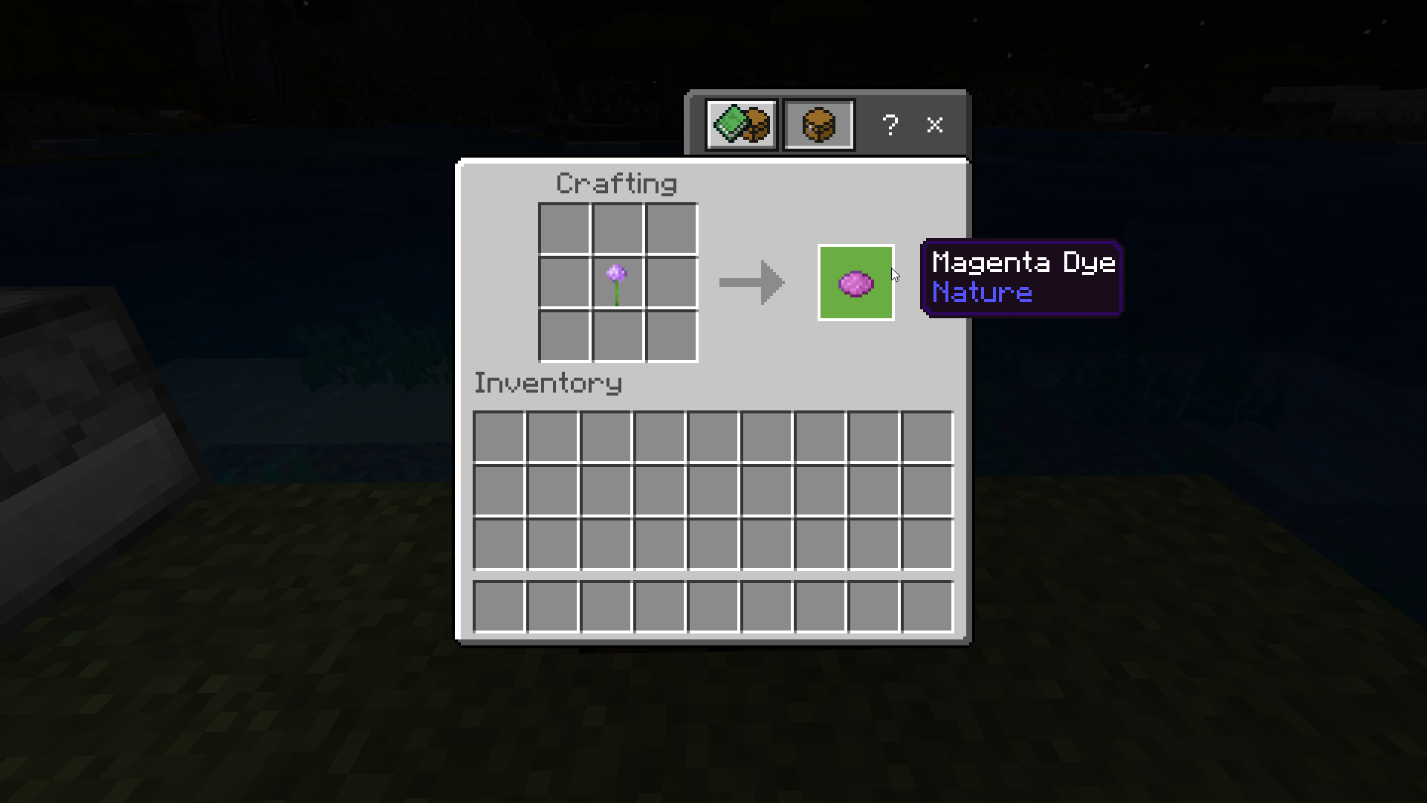
Magenta dye can be obtained by breaking down an allium or lilac in the crafting grid. Alliums can be found in flower forests and meadows, while lilacs appear in forest biomes.
Additionally, combining purple and pink dyes, or blue, red, and pink dyes, or blue, two red dyes, and one white dye will also yield magenta dye.
Uses of Dyes in Minecraft
As you might have guessed, dyes serve various purposes in Minecraft, allowing you to color different items, blocks, and even mobs. Just like in the real world, colors add beauty and diversity to Minecraft worlds, enabling us to draw attention to specific locations, blend builds with the environment, and experiment with contrast. Here are all the uses for dyes in Minecraft:
Dying Items, Blocks, and Mobs
- Dying Wool: If you'd like to learn more about dyeing wool in Minecraft, refer to our linked guide.
- Dying Sheep: You can directly dye a sheep's wool any color you desire, minimizing the number of dyes required.
- Dying Terracotta: By combining one dye and eight regular terracotta blocks in a crafting table, you can create eight colored terracotta blocks.
- Staining Glass: Combining one dye with eight glass or glass pane blocks in a crafting table will produce eight colored glass or glass pane blocks. These colored glass blocks can be used in conjunction with beacons in Minecraft.
- Dying Armor: Leather armor can be dyed in various colors, although the process differs slightly between Java and Bedrock Editions. To learn more about dyeing leather armor, consult our guide on customizing armor in Minecraft.
- Creating Other Dyes: As mentioned earlier, certain dyes can only be obtained by combining two or more dyes.
- Dying Firework Stars: Firework stars are crafting ingredients used to create fireworks with explosive effects. By combining 1-8 dyes, you can create highly colorful fireworks.
- Dying Banner Pattern Designs: Using a loom, you can create visually appealing banner designs in the colors of your choice.
- Applying a Banner Pattern to a Banner and Changing Its Color
- Dying Shulker Boxes: Combining a shulker box and a dye in a crafting grid allows you to color the shulker box, aiding in better organization of your storage.
- Crafting Concrete Powder: Unlike other colored blocks that have a neutral-colored variant, concrete requires the use of dyes to create any concrete powder blocks. It's important to note that the color of concrete cannot be changed once it is crafted.
- Dying Beds: Since Minecraft version 1.20, you can dye any bed, regardless of its original color, to any desired color.
- Dying Candles: Placing one regular candle and a dye in a crafting grid allows you to change the color of the candle.
- Coloring Signs: By default, signs and hanging signs in Minecraft have black-colored text. While this is suitable for lighter wood types, it's not very visible on darker woods. To address this, dyes can be used to color the text on signs, making them more noticeable. Additionally, glow squid ink can be utilized to increase the brightness of the text, making it stand out.
Trading
In addition to coloring various blocks and items, you can also trade dyes for emeralds. Shepherd villagers at apprentice, journeyman, and expert levels occasionally sell 12 pieces of any of the 16 dyes for a single emerald. If you have already established an iron farm in Minecraft and have no immediate need for poppies, trading them for emeralds can be a profitable option. The loom serves as the workstation for this Minecraft villager job.
By following these guidelines, you'll have a comprehensive understanding of how to obtain and craft every dye in Minecraft. Unleash your creativity and enjoy the boundless possibilities that arise from coloring your world!
Conclusion
In conclusion, the use of dyes in Minecraft adds a whole new level of creativity and customization to the game. By acquiring and crafting different dyes, players can transform their builds, items, and even mobs with vibrant colors. Whether you're dyeing wool, terracotta, glass, armor, or creating custom banners and fireworks, the possibilities are endless.
To enhance your Minecraft experience even further, we recommend playing on Gamever servers. Gamever servers provide a seamless multiplayer experience, allowing you to connect and collaborate with other players from around the world. You can showcase your colorful creations, participate in community events, and explore unique builds by other players. The collaborative environment of Gamever servers fosters creativity and provides endless inspiration for your Minecraft adventures.
So, if you're looking to take your Minecraft gameplay to the next level, join the Gamever community and immerse yourself in a world of color, creativity, and endless possibilities. Let your imagination run wild and create a masterpiece that will leave a lasting impact on the Minecraft universe. Play on Gamever servers and unlock the true potential of your Minecraft journey.