
How to find copper ore efficiently in The Copper Age update
The Copper Age update redefines the early-game mining loop in Minecraft, transforming copper from a decorative novelty into a fundamental resource. As players chase new armor sets, tools, and the intricate network of oxidizing building blocks, understanding how to locate and mine copper efficiently has become essential. The ore’s revised generation algorithm rewards precision, planning, and biome awareness - making efficiency not about luck, but about strategy.
Locate the most productive layers
Copper ore spawns abundantly throughout the overworld, stretching from Y-level 112 down to -16, but its distribution is far from uniform. Statistical analysis and in-game testing consistently identify Y-levels 47 and 48 as the richest copper strata. These mid-depth bands intersect the transitional stone layers between surface terrain and cave networks, offering the best ratio of ore density to excavation effort. Players mining between these layers encounter frequent copper clusters, especially when tunneling through stone, granite, or tuff formations.
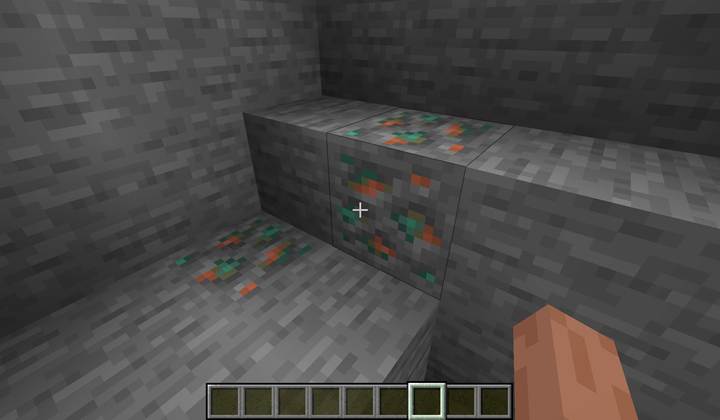
Unlike deep resources such as diamonds or redstone, copper remains accessible without specialized mining setups. The presence of copper across nearly every biome ensures universal availability, but certain regions outperform others. Beach and stony shore biomes demonstrate a notably higher spawn frequency, likely due to their shallow subsoil composition. Dripstone caves, however, remain the ultimate jackpot, often combining high cluster density with the potential to intersect rare ore veins.
Seek out the giant ore veins
Among The Copper Age update’s most significant geological additions are copper ore veins - sprawling underground formations that intertwine copper ore with raw copper blocks and granite. These veins represent the pinnacle of efficiency, capable of yielding thousands of raw copper units when fully mined. Unlike typical clusters, which cap at around 52 blocks per deposit, veins can extend for dozens of chunks, forming winding tunnels of mineral-rich material.

These veins typically appear near Y-level 0, often within or adjacent to dripstone cave systems. Their identification is straightforward: the unmistakable combination of granite and embedded raw copper blocks. Once located, they can serve as long-term excavation hubs, providing a sustainable resource source without extensive exploration. Many players design dedicated mining bases around a single vein, effectively turning one discovery into a lifetime copper supply.
Equip tools for maximum yield
Mining copper efficiently requires balancing tool selection with enchantment optimization. At minimum, a stone pickaxe is required to extract copper ore, but higher-tier tools such as iron or diamond picks increase speed and durability during large-scale excavation. The enchantment Fortune III dramatically improves yield, raising the drop range from the default two-to-five raw copper to a theoretical maximum of twenty per block. Empirical averages place the real-world return around 7.7 raw copper per ore when Fortune III is applied.
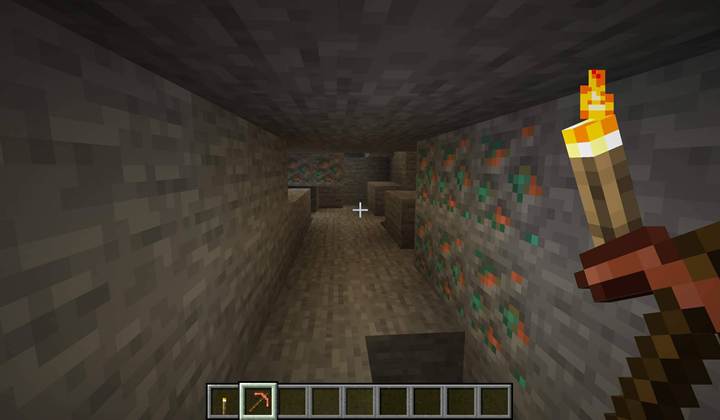
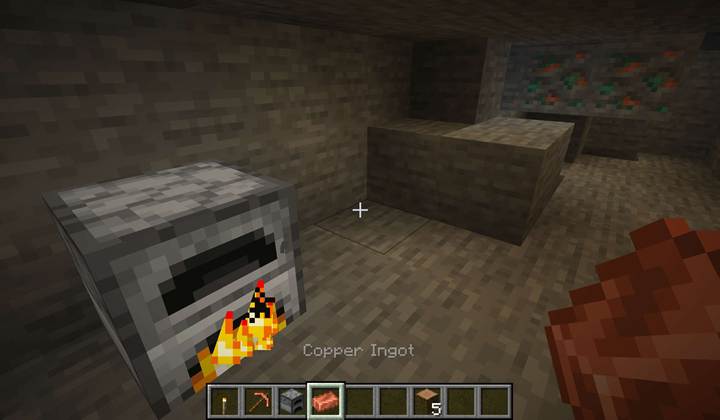
Silk Touch, by contrast, should be avoided unless raw ore blocks are needed for aesthetic builds, as it forfeits the exponential yield advantage of Fortune. Once mined, raw copper can be smelted into copper ingots at a one-to-one ratio, though most efficiency-focused players prefer storing surplus ore as raw copper blocks for compact storage. These blocks convert back into nine raw copper each, making them an ideal method of managing overflow from vein-based operations.
Explore biome-specific mining strategies
Not all biomes offer equal copper access. Empirical mapping during the 1.21.9 release cycle shows that biomes with minimal surface vegetation - such as stony shores, beaches, and mountains - generate higher concentrations of exposed ore. Their erosion patterns often reveal copper veins directly on cliff faces or in shallow caves, allowing players to harvest without extensive tunneling. This makes them ideal for resource runs early in a survival world, where limited tools restrict deep excavation.
In contrast, lush caves and forested areas tend to yield lower concentrations due to biome-specific stone distribution. However, dripstone caves provide both quantity and accessibility, hosting dense ore clusters embedded in vertical pillars and cavern walls. The visual cue of granite mixed with copper is often the fastest indicator of an upcoming large vein, and experienced players treat this as a reliable signal to expand the excavation perimeter.
Refine your mining workflow
Mining efficiency in The Copper Age is no longer defined by speed alone but by sustainable extraction cycles. A structured approach - identifying optimal Y-levels, leveraging Fortune enchantments, and strategically targeting high-yield biomes - produces exponential returns compared to random exploration. The combination of vein mining and block storage ensures continuous supply lines for crafting copper armor, decorative blocks, and the newly introduced mechanical components such as copper chests, chains, and lanterns.
Ultimately, efficient copper mining embodies the balance at the heart of Minecraft’s evolving survival design: transforming abundance into mastery. By learning how to read the underground terrain and align mining routes with copper’s geological logic, players not only gain faster access to The Copper Age’s new technologies but also rediscover the art of intelligent excavation - the core rhythm that has always defined Minecraft’s most rewarding adventures.