
How to craft and use the copper lantern in Minecraft The Copper Age
The Copper Age update reshapes Minecraft’s approach to lighting, transforming a once-simple utility block into a piece of living art. The copper lantern stands out as both a decorative and functional item that extends copper’s ecosystem beyond construction materials and redstone components. Unlike the classic iron lantern, the copper variant introduces oxidation dynamics and color evolution over time, merging illumination with environmental storytelling.
Craft your source of light
To create a copper lantern, players must combine one copper torch with eight copper nuggets in the crafting table, placing the torch at the center. The crafting recipe symbolizes Minecraft’s deepening synergy between functional design and material progression. Copper nuggets, obtained from smelting or crafting copper ingots, provide the metallic frame, while the torch adds the green flame that distinguishes this variant from its predecessors. The resulting item emits a soft, mint-tinted light and showcases the aesthetic richness that copper continues to bring into the game’s visual palette.
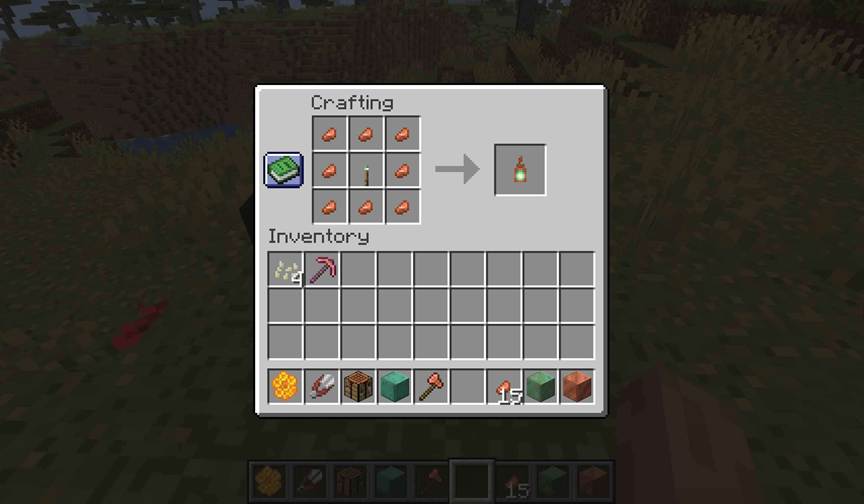
Once crafted, the lantern can be upgraded through waxing. Combining it with a honeycomb in the crafting grid creates a waxed copper lantern - a preserved version that will not oxidize. This option allows builders to maintain the lantern’s original orange tone indefinitely, ideal for modern or industrial builds. Players seeking a more organic look, however, may prefer to leave the lantern unwaxed and let it evolve naturally through oxidation. The inclusion of waxing and deoxidizing mechanics ensures that even a simple light source offers meaningful choices tied to maintenance, aesthetics, and environmental storytelling.
Control the power of oxidation
Copper lanterns pass through four oxidation stages: unoxidized, exposed, weathered, and oxidized. The transition happens gradually, mirroring the real-world patina effect seen on copper surfaces. Each stage introduces subtle color shifts - from orange to green, then teal - reflecting environmental interaction and the passage of time. The progression does not affect brightness; all copper lanterns, regardless of oxidation, emit a constant light level of fifteen, equal to the standard lantern. This decision preserves gameplay clarity while emphasizing aesthetic change rather than functional degradation.
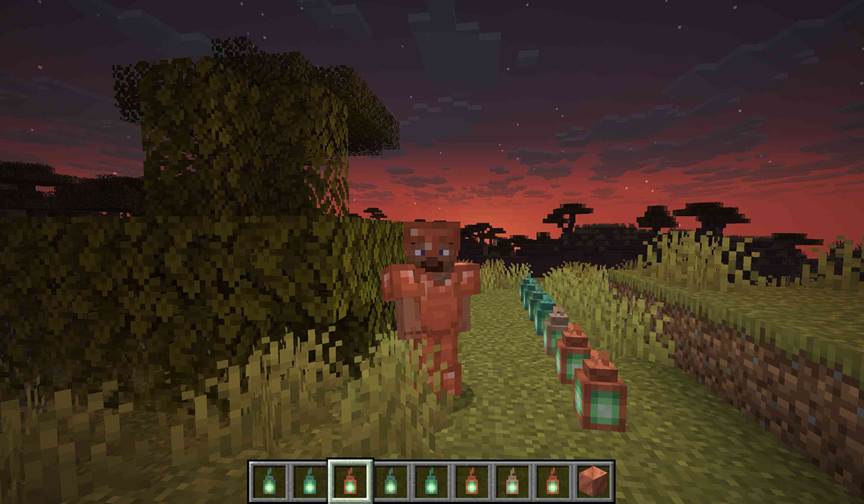
Players can intervene in this natural process at any point. Applying honeycomb directly to a lantern freezes its current oxidation stage, while using an axe reverses oxidation one level at a time. Lightning strikes can also remove oxidation from nearby lanterns, restoring them to earlier states. This multi-layered system creates a delicate balance between control and entropy, offering players agency over how their builds age within the world. A medieval castle illuminated by oxidized lanterns tells a story of centuries gone by, while a modern city frozen in bright copper reflects technological mastery and preservation.
Place and integrate the lantern
Copper lanterns are remarkably flexible in placement. They can be set atop solid blocks, fences, or walls, or hung beneath blocks, chains, or trapdoors. This versatility allows them to function in virtually any architectural context - from dungeons and corridors to underwater bases. Their ability to waterlog distinguishes them from many other light sources, enabling submerged placement without extinguishing the flame. Builders can thus integrate them into aquariums, ocean ruins, or coral sanctuaries, extending Minecraft’s lighting design to aquatic biomes.
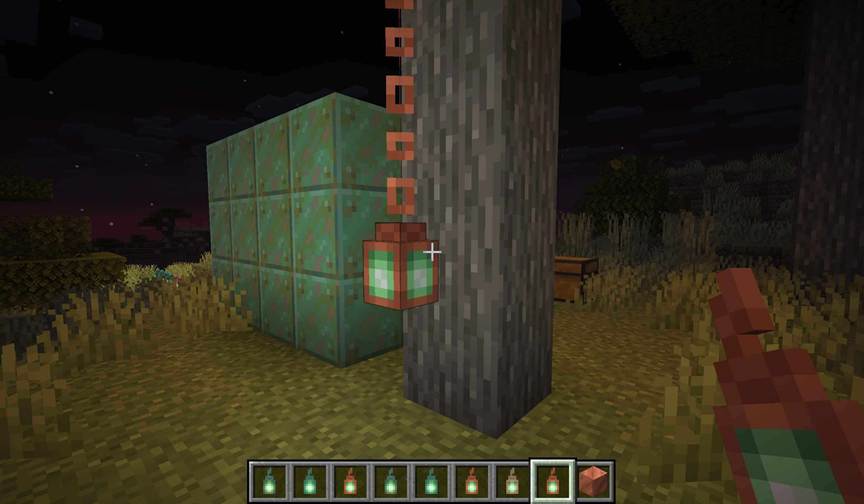
Despite its decorative flexibility, the lantern’s physical behavior remains consistent with core Minecraft physics. Removing or updating the supporting block - such as flipping a trapdoor or breaking a chain - causes the lantern to drop as an item. Pickaxes mine it most efficiently, though any tool or even bare hands will suffice. With a hardness and blast resistance of 3.5, the copper lantern stands slightly sturdier than its iron predecessor, offering both resilience and style for elaborate builds.
Illuminate your world with design intent
Beyond functionality, the copper lantern represents a shift toward living materials in Minecraft’s visual language. Its oxidation makes it one of the few light sources that evolve over time, offering an ambient sense of history to a player’s base. When combined with other copper elements - such as bars, chains, and torches - it forms cohesive design ecosystems that blend warm metallurgy with natural aging. Builders can synchronize lantern oxidation with nearby copper blocks to achieve architectural harmony, or deliberately contrast states to highlight temporal layers within their structures.
From a technical perspective, the copper lantern’s addition enhances immersion without complexity. Its consistent light output ensures gameplay clarity, while the oxidation system adds environmental storytelling that subtly reflects time, weather, and neglect. It rewards players who think not only in terms of utility but also visual narrative. In the Copper Age, every light source can tell a story - one of crafting mastery, patience, and the beauty of decay rendered in glowing green.