
How to build puzzles with redstone comparator in Minecraft
You awaken in a silent stone chamber. No windows, no doors - just smooth walls and the soft ticking of redstone somewhere nearby. After previous encounters with levers, buttons, and tripwires, now it's time to face a subtler power: the Redstone Comparator.
This block might look unassuming, but it holds the key to detecting, comparing, and interpreting the very logic of Minecraft. It's not about pressing - it's about measuring.
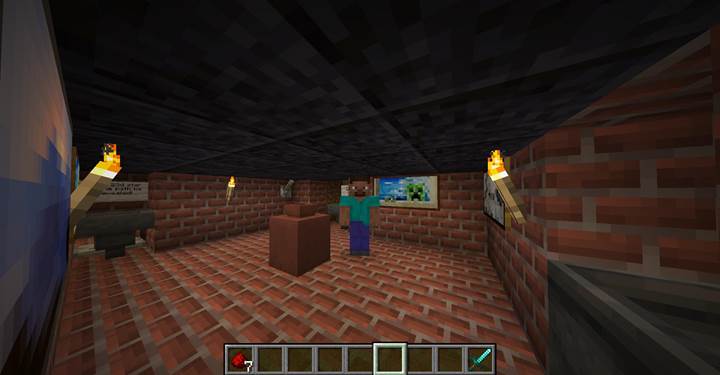
What is a Comparator?
A redstone comparator reads the state of a container or block behind it - like a barrel, hopper, cauldron, or lectern - and sends a redstone signal based on how full it is. The more filled it is, the stronger the signal. The comparator doesn't just turn on or off like a lever. It sends signal strengths from 0 to 15.
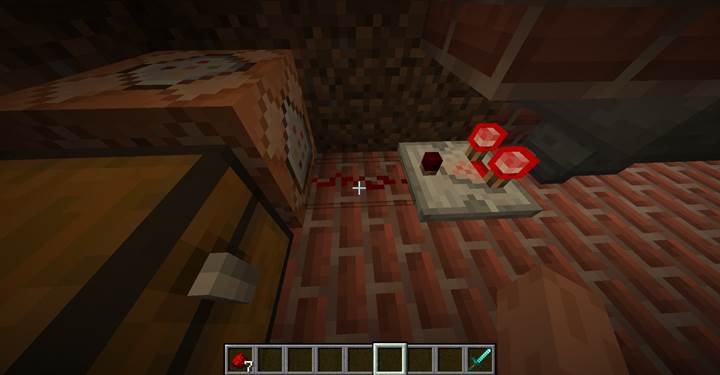
In comparison mode (default, when the front torch is off), it sends the full strength of the rear input, unless one of the side inputs is stronger - in that case, it disables output. This makes it ideal for creating puzzles that require a specific quantity of items or an exact configuration.
Puzzle 1 Hopper trigger
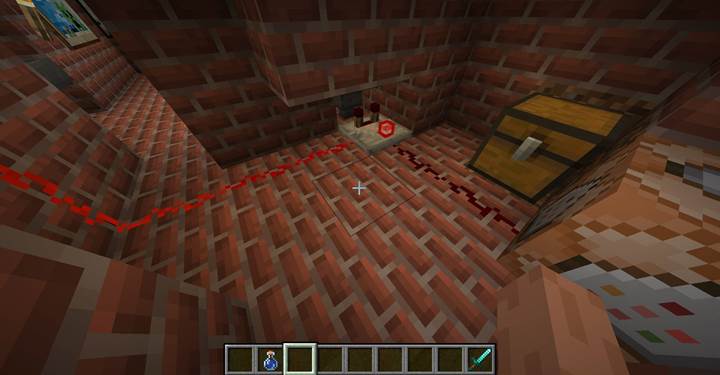
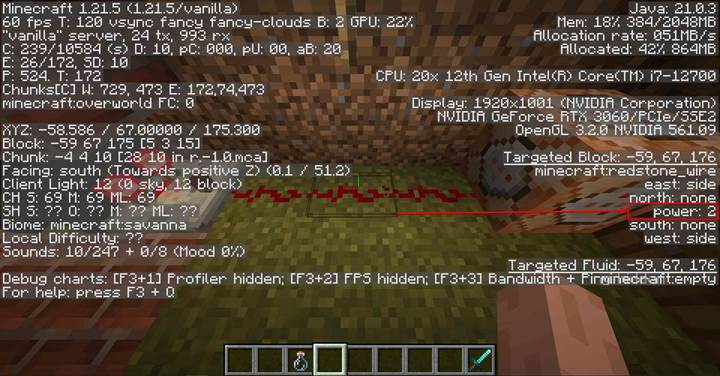
Right in front of you is a hopper. A sign says nothing. A dead end? Only visually. If you drop anything inside - even one item - the comparator attached to the hopper activates. The signal strength is just 1, but that’s enough. The redstone dust picks up the signal, powers the command block nearby, and this happens:
`/fill -50 67 180 -50 68 181 air`
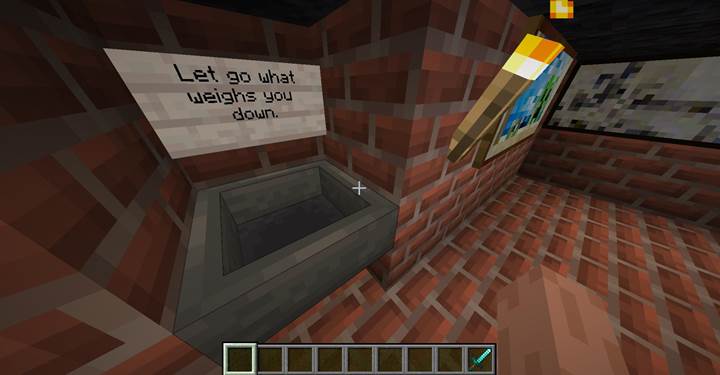
A wall vanishes, revealing a chest with diamonds. The player now learns: the comparator can read containers. And one item is enough to create a signal. It's a lesson in precision.
You can test other command examples too, depending on what you want to trigger:
- `/playsound minecraft:block.piston.extend master @p`
- `/title @p title {"text":"A path opens...","color":"gold"}`
- `/setblock ~ ~ ~ minecraft:redstone_lamp`
Puzzle 2 The 23-star signal
Next to a second hopper lies a cryptic note: "Only after the 23rd star will you see the path."
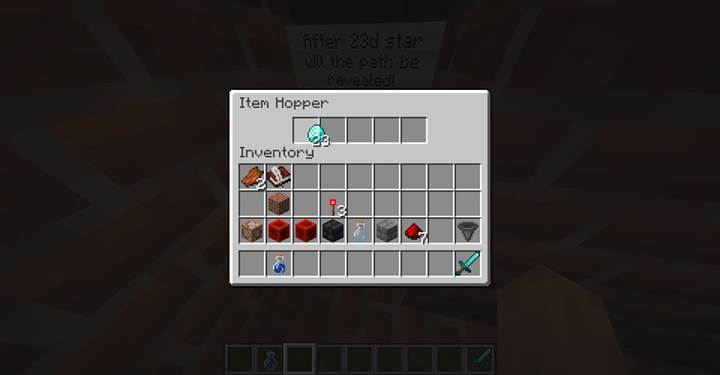
Here’s what’s happening: The comparator is in subtraction mode (front torch lit). A side redstone input - in this case a lever - provides signal strength 2. That means unless the rear signal is stronger, the output will be zero.
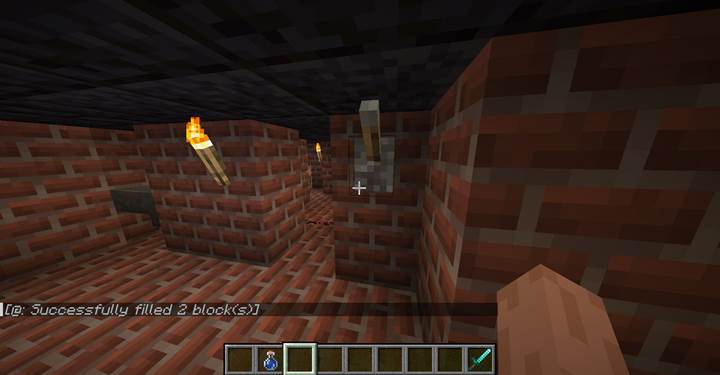
If the hopper contains 23 diamonds (which is the threshold for 2 signal strength in a 5-slot container), the comparator sends a signal of 2. Subtracting the side input (2), the output is 0. But if you flip the lever off (disabling the side input), the comparator outputs full strength and triggers the command block.
Another layer of logic. This isn’t just item counting - it’s a logic gate.
Command block could be:
- `/fill -48 67 180 -48 68 181 air`
- `/say Only when stars align, the way is clear.`
Puzzle 3 Water memory
Now you find a cauldron and a water bottle in a chest. Nothing else. What could this mean?
You fill the cauldron once - the comparator gives a signal of 1.
Fill it a second time - signal 2.
Fill it a third time - signal 3.
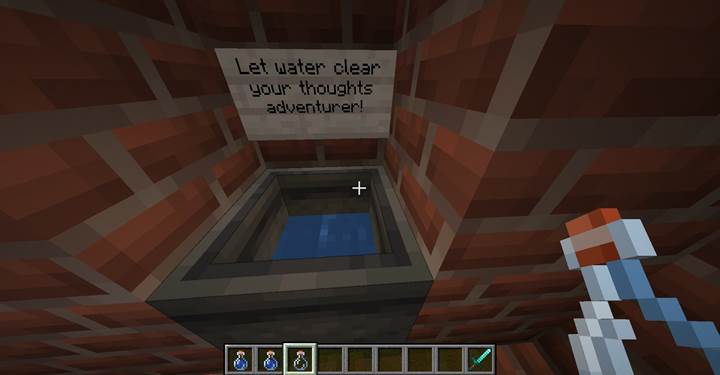
And then it happens:
`/fill -46 67 180 -46 68 181 air`
The wall opens again.
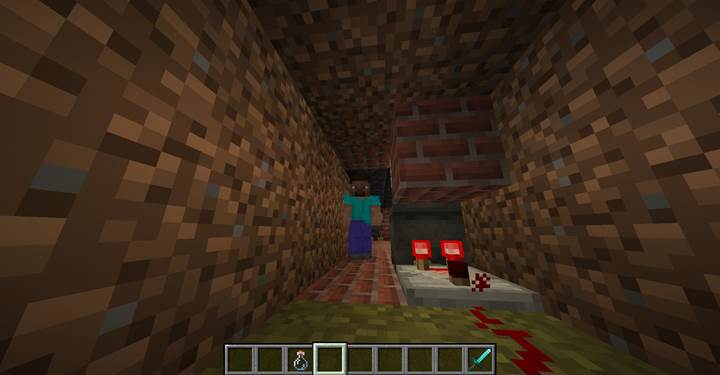
This demonstrates the comparator's ability to read exact internal states of blocks. Cauldrons have 3 fill levels. Each bottle adds one level.
Other blocks the comparator can read:
- Barrel (27 slots)
- Chest (27, or 54 for double chest)
- Hopper (5 slots)
- Furnace (3 slots)
- Composter (0–8 levels)
- Lectern (signal depends on book page)
- Item frame (rotation = signal 1–8)
Formula for signal strength:
`Signal = floor(1 + (sum of all slots’ fullnesses / number of slots) × 14)`
So with 5 items out of 64 in a 5-slot hopper:
- Fullness = 5 / 64 = 0.078
- Total = (0.078 × 14) / 5 ≈ 0.218
- Signal = floor(1 + 0.218) = 1
This gives you fine-grained control over puzzle logic.
Three extra puzzle ideas:
- Use an item frame with a rotated sword to open secret passages.
- Fill a composter step by step to open doors at exact levels.
- Have a furnace unlock a treasure only after it smelts five items.
And hey, don’t forget - with Gamever servers, you can bring your friends, create shared puzzles, and see who solves them first. Build adventures together, where redstone becomes riddles.
Redstone comparators open a whole new layer of interaction. They don’t just flip things on — they measure, compare, and react. Use them to check inventories, track player progress, detect exact conditions, and build complex chain reactions.