
How to build decorative structures with oxidized copper in Minecraft The Copper Age
The Copper Age update transforms copper from a secondary crafting resource into one of the most expressive building materials in Minecraft. For the first time, oxidation itself becomes a design mechanic rather than a maintenance issue. Builders can now use copper’s natural aging process to create structures that evolve over time, changing color, mood, and texture as they weather. From grand cathedrals lined with teal patina to industrial towers frozen mid-oxidation, copper brings a living quality to architecture that mirrors the passage of time in the game world.
Control the process of oxidation
Oxidation in Minecraft operates through a slow progression of four visual stages: copper, exposed, weathered, and oxidized. Each stage changes the block’s hue from vibrant orange to deep turquoise, forming one of the most nuanced color gradients in the game. Time is the key factor behind this transformation. On average, a copper block undergoes a random tick every sixty-eight seconds, and with a five percent chance per tick, a single stage transition may take around twenty minutes under typical conditions. However, oxidation spreads dynamically. When unoxidized and oxidized blocks are placed close together, less weathered blocks delay the aging of their neighbors. To ensure consistent oxidation, builders must separate copper blocks by at least four spaces in every direction.
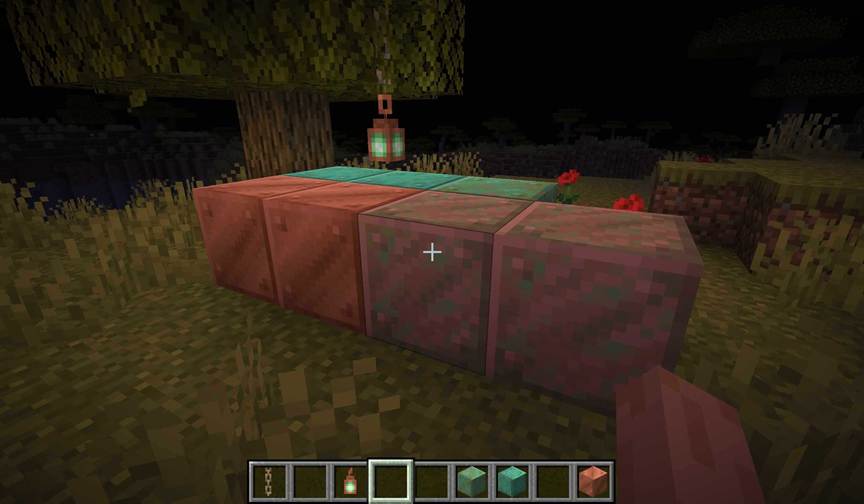
The process is unaffected by weather or light exposure. Rain, sunlight, or underground placement have no impact on oxidation rate, allowing full control over copper’s evolution in any biome. Builders seeking rapid results can temporarily isolate small copper batches to oxidize faster before integrating them into larger structures. Conversely, those wishing to freeze a block’s current state can apply honeycomb, a mechanic known as waxing. Waxed copper halts further oxidation indefinitely. Using an axe reverses both wax and oxidation, letting players fine-tune color transitions manually. This balance between automation and control allows architects to sculpt time itself into their creations.
Design with color progression in mind
Copper’s oxidation stages form a seamless natural gradient, lending themselves to advanced shading techniques across facades, roofs, and sculptures. Builders often arrange blocks in sequence - shiny copper at the base, fading into exposed and weathered tones, and culminating with oxidized copper at the top - to emulate the look of real-world aging metals. This vertical gradient works particularly well on domes, towers, or bridges, where rain exposure and height logically justify visual aging. When paired with materials like stone brick, deepslate, or warped planks, the transition accentuates contrast while maintaining visual cohesion.
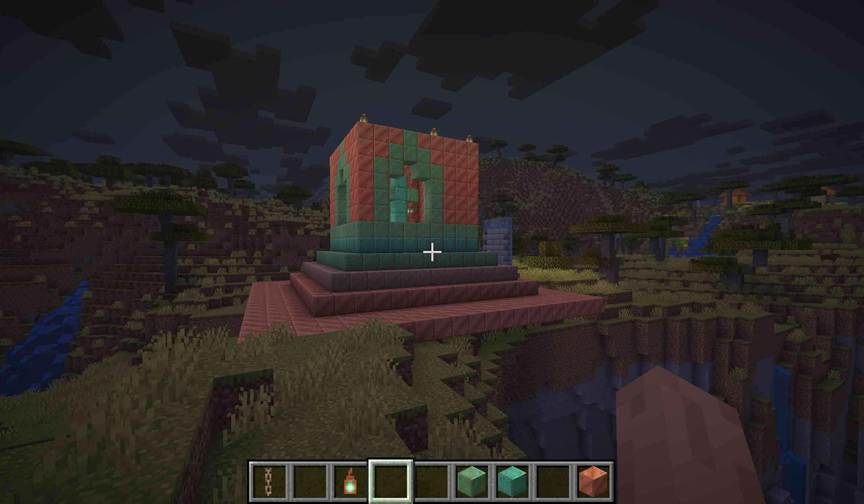
For interior design, copper stairs, slabs, and cut copper variants expand textural options. Builders use these to break monotony, combining slabs and stairs of different oxidation levels to simulate erosion or rust spreading unevenly across surfaces. Because oxidation is block-specific rather than chunk-wide, mixed states remain permanent until modified, letting creators build with controlled imperfection. This approach brings authenticity rarely achievable through static materials, echoing the layered patinas of historical architecture and industrial machinery.
Integrate new copper materials
The Copper Age update extends copper’s aesthetic potential through complementary items: copper chains, lanterns, torches, and bars. These elements share oxidation behavior, allowing entire environments to age consistently. Hanging lanterns suspended from oxidized chains emit a cool, mint-green glow, harmonizing with surrounding patinated blocks. Bars and fences crafted from copper provide slender linear accents that can enclose spaces without visual heaviness. Used alongside oxidized walls and slabs, they give builds a sense of intricacy reminiscent of gothic ironwork or modern art deco structures.
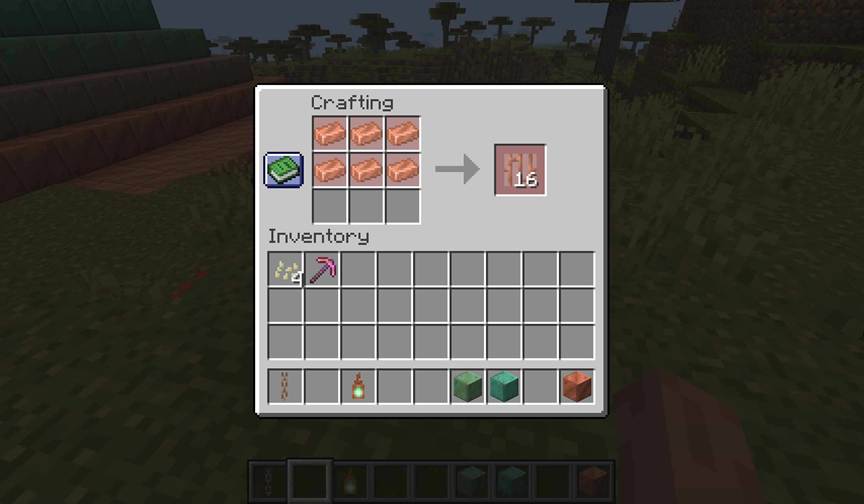
Lighting also plays a key role in shaping atmosphere. While copper lanterns and torches maintain consistent light levels regardless of oxidation, their shifting colors subtly alter mood. Early-stage copper lighting casts warm orange tones ideal for workshops or steampunk interiors, while oxidized variants emit cooler hues that complement underwater or futuristic builds. Combining both types within a single space creates visual depth, guiding the eye across a spectrum of ambient tones. Through such pairings, copper transitions from a static block to a storytelling device capable of representing age, technology, and mood simultaneously.
Combine copper with automation and motion
With the introduction of copper golems and copper chests, oxidation gains mechanical context beyond mere aesthetics. Builders can position oxidized copper statues alongside active golems to depict industrial life cycles - living machines gradually turning to still monuments. When connected to redstone comparators, oxidized golem statues emit distinct signal strengths depending on their pose, enabling decorative structures to double as functional circuitry. A row of oxidized statues can thus form both a sculpture gallery and an encoded redstone input system, bridging art and engineering.
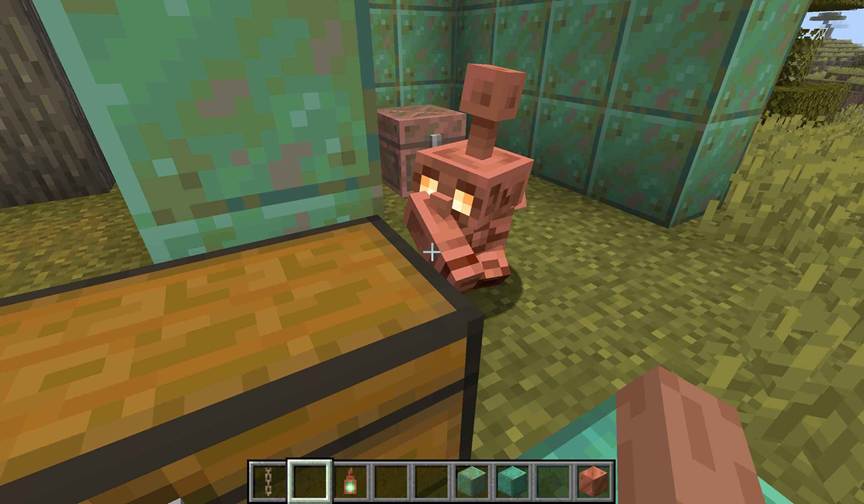
Copper chests complement this mechanical artistry by introducing color-coded storage that reflects oxidation states. Builders can assign shiny copper chests to raw materials, weathered ones to processed goods, and oxidized versions to valuables, using color as an intuitive visual index. When paired with copper golems, these systems become self-sorting installations that visually evolve alongside their function. Over time, a workshop filled with teal-stained chests and statues tells the story of a living base that has aged, automated, and settled into equilibrium.
Preserve or embrace the passage of time
Waxing halts decay, freezing a build at its ideal aesthetic peak. Many players use wax to protect key monuments or symmetrical designs that would lose balance if allowed to age. Others choose to leave their creations unwaxed, embracing natural transformation as part of the world’s history. In long-term survival worlds, oxidation becomes a quiet chronicle of time passed - structures turning green as a sign of endurance rather than neglect.
This approach gives builders a rare ability to design with time as an artistic tool. Instead of static monuments, copper-based builds can tell evolving stories, capturing the relationship between construction, environment, and decay. The Copper Age update thus extends Minecraft’s creative vocabulary beyond geometry and color into temporality itself. Each oxidized surface becomes a living record of exposure, each teal roof a memory of rain, and each waxed wall a defiance against change. In a game defined by infinite rebuilding, oxidized copper offers something new: the beauty of letting things stay exactly as they are - or slowly, beautifully, become something else.