
How to build and revive a copper golem in Minecraft The Copper Age Update
The Copper Age update represents one of the most significant expansions of Minecraft’s material-based ecosystem since the Netherite overhaul. Among its many innovations, the copper golem stands out not only as a long-awaited addition - first teased during the 2021 Mob Vote - but also as a bridge between redstone engineering and autonomous utility. Built by players rather than spawned naturally, the copper golem transforms copper’s once purely decorative function into a living system of automation, oxidation, and revival.
Assemble the golem from base materials
Constructing a copper golem begins with one of Minecraft’s simplest but most symbolic patterns. Players must place a block of copper - in any oxidation stage, waxed or unwaxed - and then top it with a carved pumpkin or jack o’lantern. The pumpkin must always be placed last, triggering the transformation sequence. When the structure activates, the copper block converts into a copper chest, and the copper golem spawns at the pumpkin’s position, inheriting the oxidation state of the block used in its creation.
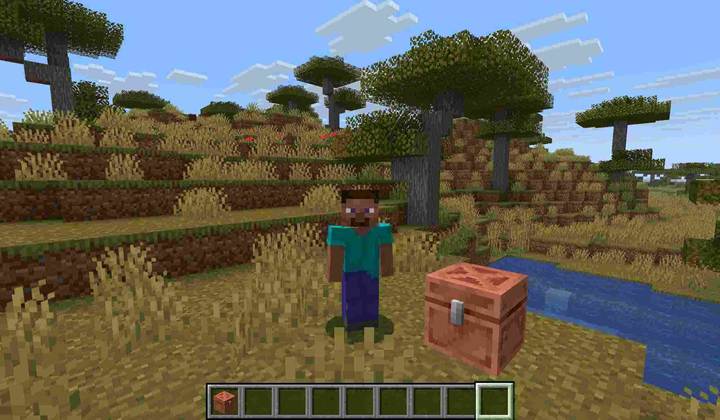
Unlike iron or snow golems, copper golems are deliberately limited to player construction. This ensures a controlled ecosystem where their population remains tied to player activity, preserving copper’s resource value. If the copper block used in the build is adjacent to another copper chest, the system automatically merges them into a double chest, allowing the golem to begin sorting immediately. The design emphasizes mechanical clarity: every golem exists within a storage loop defined by proximity and interaction.
Observe how the copper golem behaves
The copper golem is a passive mob that specializes in item transportation and organization. Upon activation, it begins scanning its surroundings within a 65×17×65 block cube, seeking copper chests to extract items from. Once it collects up to sixteen units of a single item type, it searches for wooden or trapped chests nearby, attempting to deposit the items into containers that are either empty or already contain the same type. This logic creates a rudimentary but functional form of automated storage management.
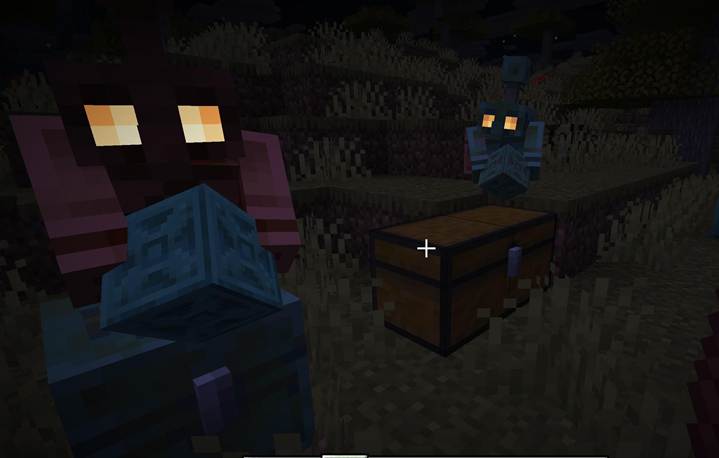
The golem’s behavior introduces a dynamic element to base organization. It does not recognize item metadata, enchantments, or NBT data, but it respects basic stacking rules. Players can retrieve held items directly by interacting with the golem, allowing for manual overrides within automated systems. Its design reflects Mojang’s intent to blend redstone-like precision with organic unpredictability - the golem can panic when attacked, sink but not drown underwater, and occasionally freeze in decorative poses before oxidizing further.
Manage oxidation and preserve functionality
Central to the copper golem’s lifecycle is its oxidation process, a mechanic adapted from copper blocks but applied to a living entity. Over approximately seven real-time hours, an unwaxed copper golem transitions through four distinct oxidation stages: unoxidized, exposed, weathered, and fully oxidized. Each stage alters its coloration, movement frequency, and behavioral responsiveness. When oxidation reaches completion, the golem ceases activity and transforms into a copper golem statue, dropping any held items and assuming a random pose.
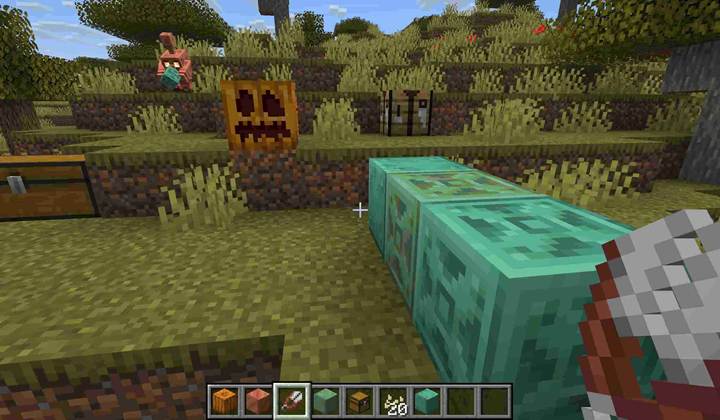
Waxing the golem with honeycomb halts oxidation entirely, preserving its current state indefinitely. Conversely, an axe can remove oxidation one stage at a time, visually restoring the mob and functionally resetting its lifespan. Lightning strikes also act as natural deoxidizers, linking the mob’s condition to weather patterns and redstone experimentation. The decision to wax or allow natural oxidation becomes a creative choice: players can either preserve the golem’s utility or let it become a living sculpture that slowly freezes into art.
Revive the statue and restore automation
Once a copper golem fully oxidizes into a statue, it remains inert until reanimated. Players can revive it by scraping the statue with an axe - a process that removes oxidation stages incrementally until the golem regains mobility. The revived golem restores its original behavioral logic, including its prior item-handling routines, effectively resuming operations from where it left off. This reversible transformation establishes a closed life cycle that encourages maintenance rather than replacement.
Copper golem statues can also be manipulated decoratively before revival. Interacting with them cycles through four poses - standing, sitting, running, and star - while comparators can read these poses as redstone signals ranging from one to four. This integration transforms the golem statue into a programmable redstone component, suitable for use in secret mechanisms, puzzles, or ambient animations. Its dual identity as both utility and ornament exemplifies the Copper Age update’s philosophy: every material should serve both function and form.
Integrate copper golems into survival design
The copper golem’s introduction marks a convergence of mechanical engineering and environmental storytelling within Minecraft’s sandbox structure. By tying automation to oxidation, Mojang introduces a new form of entropy-based gameplay - one where time, maintenance, and atmosphere directly influence utility. Copper golems automate storage, enhance base interactivity, and visually age alongside the player’s world, reflecting its temporal progression through shifting hues and statuesque stillness.
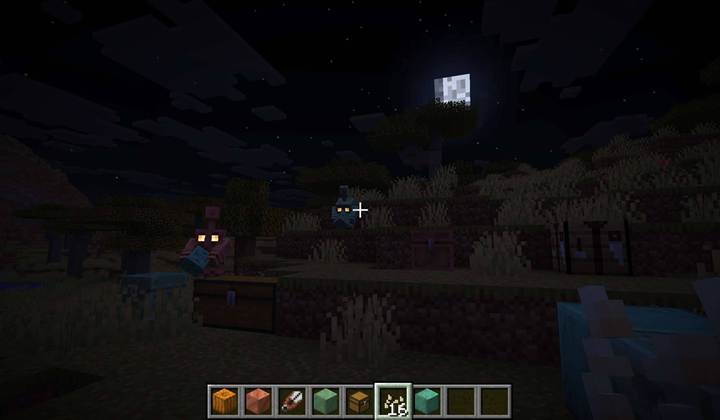
In practice, these mechanics enrich both survival and creative play. Builders can use oxidation control for visual storytelling, while survival players benefit from a renewable, low-cost automation assistant. Unlike redstone contraptions, copper golems embody an approachable complexity: tangible, visible, and narratively cohesive. Through them, The Copper Age update extends Minecraft’s material logic into personality - transforming the humble copper ingot into the beating heart of a living, aging, and revivable machine.