
How to bring oxidized copper golems back to life in Minecraft The Copper Age
In Minecraft’s Copper Age update, the life cycle of the copper golem has become a symbolic and functional reflection of time. Once a tirelessly working automaton designed to organize chests and transport materials, the copper golem eventually succumbs to oxidation, freezing into a statue - a silent monument to its service. Yet, this petrification is not permanent. Players can intervene, reversing oxidation to restore their metallic companions to motion. The process, though simple in practice, reveals an intricate balance of chemistry, weather, and player intent, turning what seems like a decorative mechanic into an act of resurrection embedded within the game’s material logic.
Scrape the layers of time
Bringing an oxidized copper golem back to life begins with the axe - the same tool that governs every stage of copper’s transformation. Each swing removes one layer of oxidation, moving the golem backward through its weathering phases: from oxidized to weathered, from weathered to exposed, and from exposed to unoxidized. The visual and textural cues are immediate: the teal corrosion fades, brown undertones emerge, and the orange glow of polished copper returns. Unlike static copper blocks, the golem’s reanimation requires one final strike once all oxidation is cleared, symbolically awakening the mob from its frozen state.
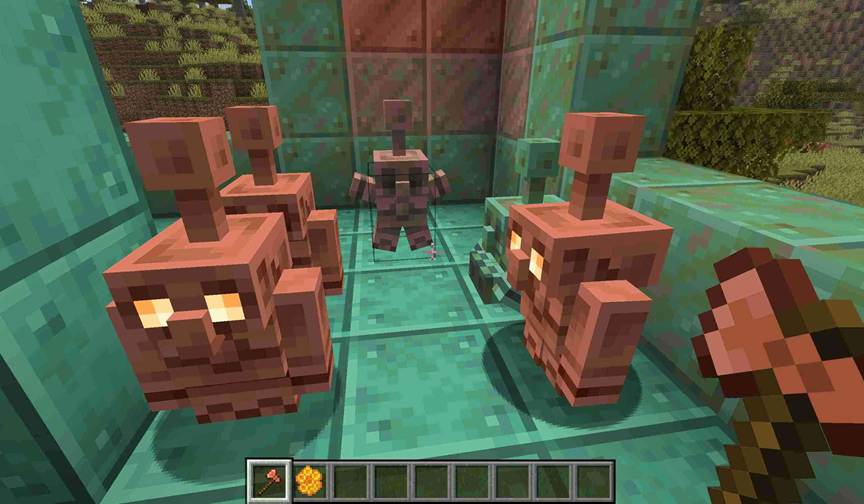
Each axe type affects the process identically in speed but differs in durability cost, with the pick of material reflecting the player’s progression. The restoration mechanic maintains parity across Java and Bedrock Editions, though Bedrock requires empty-hand interactions in some cases to prevent conflicting item use. Importantly, scraping is reversible at any oxidation stage - players can pause or restore the statue’s aging process at will, crafting an emergent rhythm of decay and revival. This layered interaction ensures that copper golems are not merely temporary helpers but renewable elements in a continuous ecosystem of maintenance and design.
Summon lightning to awaken power
Lightning represents the elemental alternative to manual restoration. During thunderstorms, a natural strike can instantly purge oxidation from a copper golem or statue, bypassing gradual scraping. The electrical discharge mirrors the material transformation observed in other copper-based blocks, stripping away every stage of corrosion at once. In both editions, this event is rare and unpredictable, but its effect carries dramatic visual and thematic weight - the momentary flash of white light against green metal, followed by movement, evokes the imagery of technological rebirth.
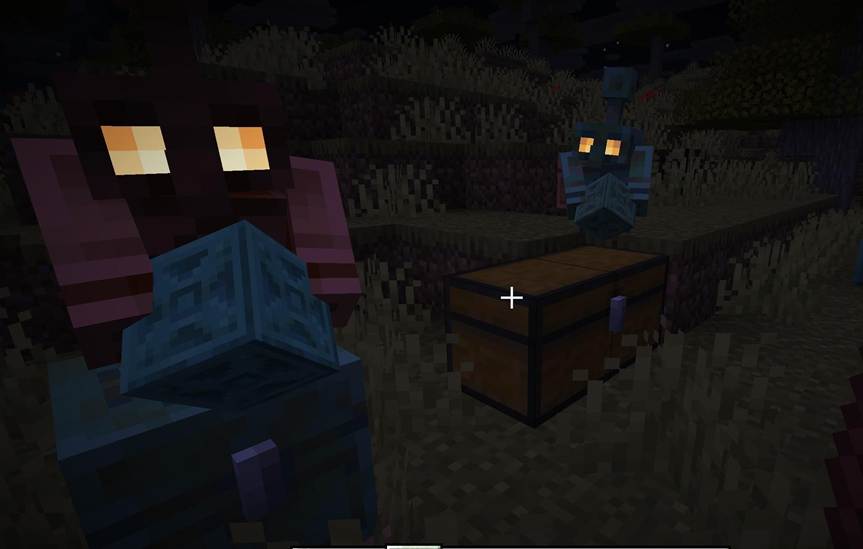
Players seeking controlled resurrection often pair this method with lightning rods to channel strikes toward specific statues. By strategically placing rods near oxidized golems, a single thunderstorm can rejuvenate an entire row of inert constructs, converting a static sculpture garden into a suddenly active assembly line. Some builders use this mechanic to stage large-scale cinematic reveals - rooms of silent figures that awaken in unison under stormlight, their eyes reigniting as they resume their programmed tasks. The lightning method, while less predictable than manual scraping, offers the most efficient and visually impactful restoration, merging environmental systems with deliberate player orchestration.
Preserve motion with wax
Once revived, a copper golem remains vulnerable to the same oxidation process that once stilled it. To preserve its renewed state, players must apply honeycomb, which coats the surface and permanently halts oxidation. Waxing can be performed at any stage - from partially restored to freshly reanimated - and serves as a protective barrier against future decay. The honeycomb method mirrors that used for copper blocks and statues but acquires greater significance in the context of animated entities: here, it represents a deliberate decision to preserve vitality rather than surface aesthetics.
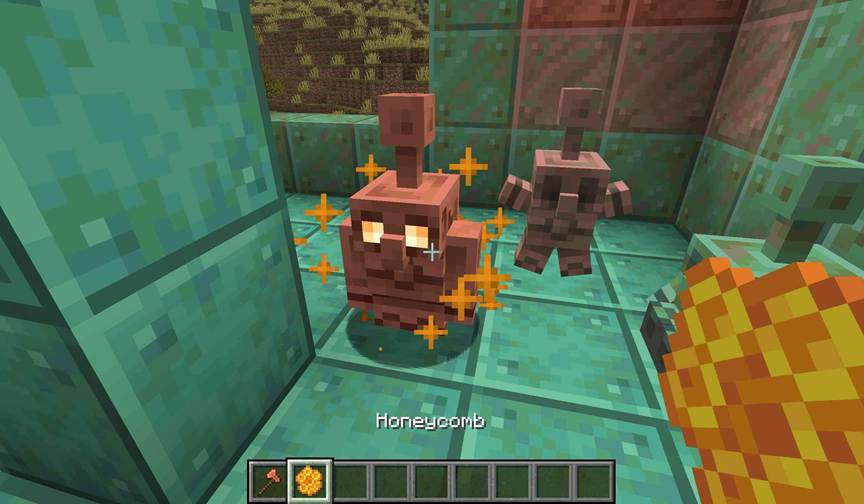
This system introduces an element of moral and aesthetic choice. Some players prefer to allow their golems to age naturally, accepting their eventual transformation into statues as part of the world’s progression. Others preserve them indefinitely, treating waxing as a ritual of care or control. The Copper Age update reinforces this duality by making both outcomes meaningful - decay becomes a visual chronicle of time, while preservation becomes a demonstration of mastery. Through waxing, builders can maintain long-term utility in automation systems, ensuring that their revived golems continue operating as item sorters or redstone triggers without further intervention.
Rebuild the cycle of decay and renewal
The reversible nature of oxidation defines copper golems as uniquely cyclical entities within Minecraft’s ecosystem. They do not simply live or die; they alternate between motion and stasis, each transition marked by tactile feedback - the scrape of metal, the flash of lightning, the glow of waxed surfaces. This design choice turns what could have been a passive visual effect into an active system of temporal storytelling. Builders who engage with this mechanic find themselves shaping not just structures but lifespans, curating environments where every statue holds the potential for reawakening.
Reanimation also integrates seamlessly with redstone engineering. A revived golem can resume its sorting behavior, interacting with copper chests and storage systems immediately upon awakening. Conversely, oxidized statues can serve as redstone components, emitting comparator signals based on pose - a subtle nod to the continuity between form and function. This convergence of decorative and mechanical design transforms the act of revival into more than maintenance; it becomes part of a broader creative loop where entropy fuels invention.
Shape your world through renewal
Reviving oxidized copper golems is more than a technical process - it is an act that merges craftsmanship with narrative authorship. The player, as builder and caretaker, determines which machines return to life and which remain as relics, composing a world that remembers its own history.
In this interplay of oxidation, restoration, and preservation, Minecraft achieves a rare synthesis of mechanics and meaning. The copper golem becomes not only a servant of utility but also a testament to persistence - a reminder that in this world of endless creation, even what has turned to stone can one day move again.