
How the new implants affect base productivity in Palworld v07 update
Palworld’s v0.7 update quietly rewires how efficient bases are built. Instead of treating productivity as a long-term breeding problem solved only by perfect passive inheritance, the new implants introduce a layered system where player effort, Pal labor, and specialization can be tuned independently. The result is not just faster numbers on paper, but a different rhythm of base management where time, presence, and role separation matter more than ever.
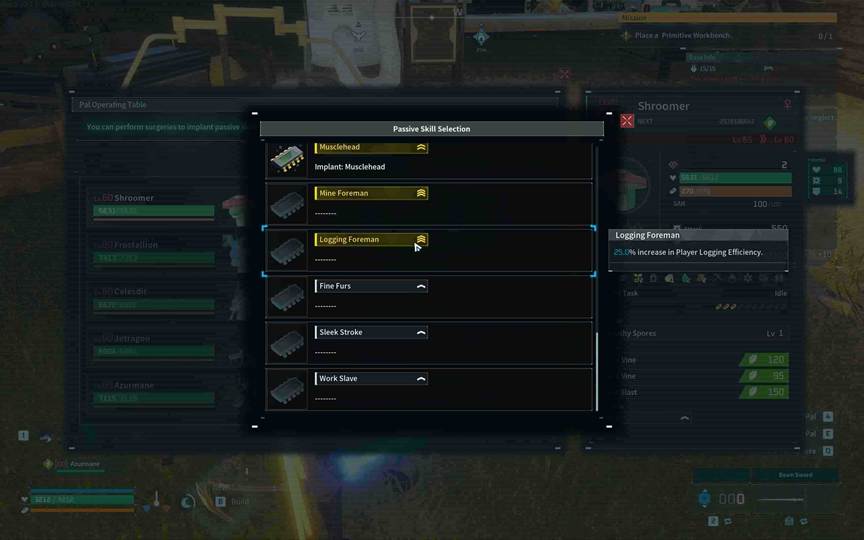
Separate player and Pal labor
The most important conceptual shift introduced by the new implants is the clear separation between player-driven productivity and Pal-driven productivity. Mine Foreman and Logging Foreman do not accelerate Pals at all; they directly enhance the player’s efficiency when manually harvesting nodes or trees. This distinction matters because it reframes these implants as time-saving tools rather than automation upgrades.
In practical terms, Foreman implants reduce the opportunity cost of stepping away from the base loop. Mining runs that previously felt like chores become short, focused bursts that refill stockpiles quickly, allowing players to return to construction, crafting queues, or combat progression sooner. The base benefits indirectly, not because Pals work faster, but because bottlenecks caused by missing raw materials disappear more often.
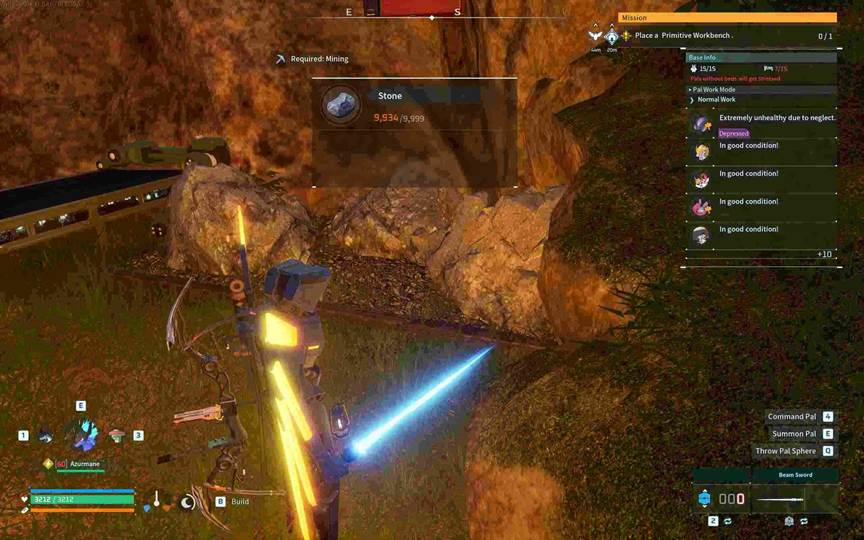
This design also avoids power creep in automated bases. If Foreman implants affected Pals, they would stack multiplicatively with existing Work Speed passives and condensation levels, potentially trivializing resource scarcity. By anchoring these bonuses to player action, Palworld keeps automation powerful but not self-sustaining, preserving the value of player presence in mid-to-late game bases.
The result is a more deliberate division of labor. Pals remain the backbone of continuous production, while the player becomes a highly efficient problem-solver who fills gaps, spikes output, and resolves shortages without needing to rebreed or restructure the entire workforce.
Accelerate Pal throughput deliberately
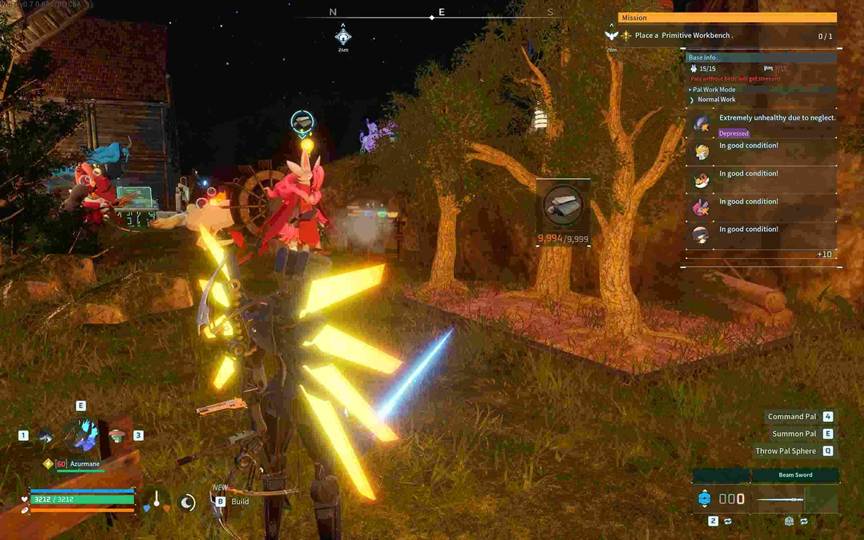
Where Foreman implants empower the player, Work Slave represents the most direct productivity lever for Pals themselves. Its substantial Work Speed increase dramatically accelerates crafting, mining structures, farming cycles, and assembly lines, but the accompanying Attack penalty locks the Pal firmly into a non-combat role. This tradeoff is intentional and central to how v0.7 expects bases to be organized.
In optimized bases, Work Slave allows players to formalize specialization rather than rely on flexible “do-everything” Pals. A Pal implanted with Work Slave is no longer a backup fighter or emergency defender; it is infrastructure. This clarity improves base predictability, as high-speed workers stay focused on production instead of being rotated into combat roles where they underperform.
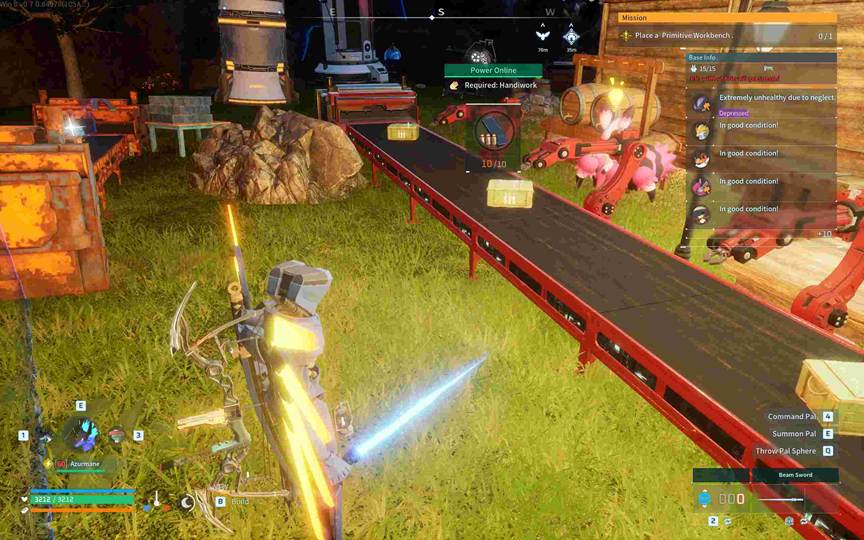
The implant’s impact scales with existing systems rather than replacing them. Condensation levels, inherent work suitability, and other Work Speed passives still matter, but Work Slave acts as a multiplier on an already solid foundation. Instead of chasing perfect four-passive breeding outcomes, players can stabilize productivity earlier by retrofitting strong but imperfect workers.
This also changes failure tolerance. Losing a combat Pal hurts, but losing a Work Slave Pal is primarily an economic setback, not a tactical one. Bases become more resilient to combat losses while remaining sensitive to labor disruptions, reinforcing the idea that production and fighting are now distinct domains with different optimization rules.
Reduce breeding dependency
Before implants, base optimization in Palworld leaned heavily on probabilistic breeding loops. v0.7 does not remove breeding, but it softens its dominance by allowing targeted correction. Productivity implants let players take a Pal that is structurally ideal - right size, right work aptitudes, right pathing behavior - and fix its inefficiencies directly.
This is particularly impactful for large bases where pathfinding and downtime matter as much as raw Work Speed. Instead of discarding usable Pals because they lack one key passive, implants allow incremental improvement without resetting progress. The base evolves through adjustment rather than replacement.
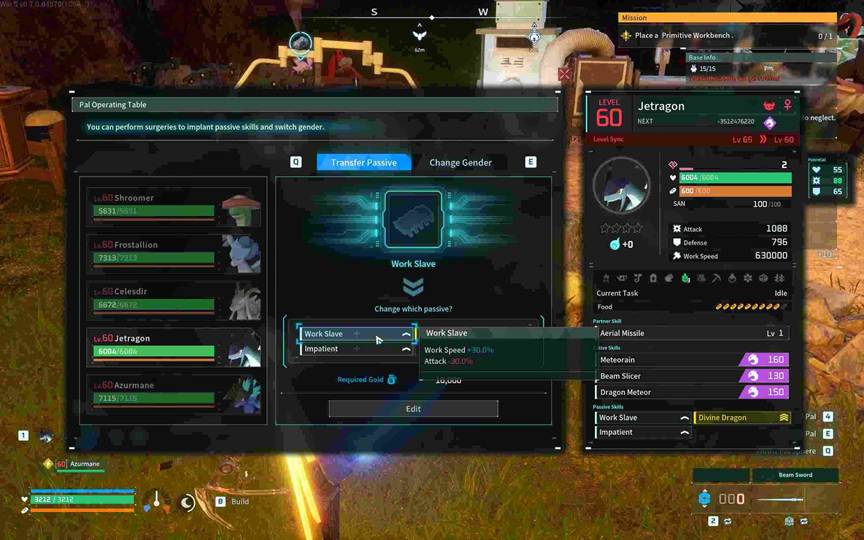
The effect is a flatter optimization curve. Peak efficiency still exists for players who pursue perfect breeding, but functional efficiency is reached sooner and with fewer dead ends. This shortens the gap between “working base” and “optimized base,” making productivity improvements feel continuous instead of gated behind long RNG cycles.
From a systems perspective, implants act as a pressure valve. They absorb frustration that previously accumulated during unlucky breeding streaks, while still rewarding long-term planners who invest in deeper optimization. The base becomes something you tune, not something you rebuild.
Reshape daily base routines
Taken together, the new implants change how a productive day in Palworld is structured. Player time becomes more valuable in short, high-impact bursts, while Pal labor becomes more specialized and predictable.
This predictability supports larger, more ambitious bases. With Work Slave handling internal acceleration and Foreman implants compressing manual gathering time, production chains stabilize earlier in the game’s progression. That stability encourages expansion, experimentation, and parallel projects rather than cautious, incremental growth.
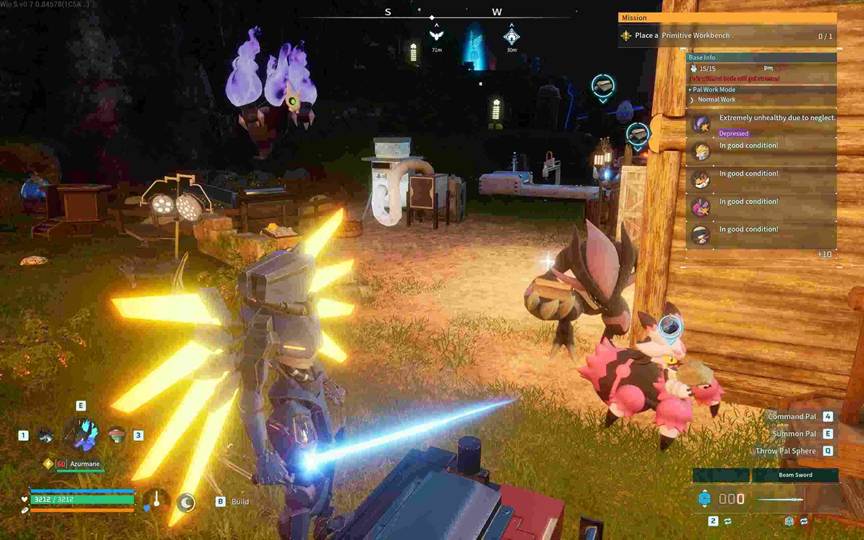
The broader implication is philosophical. Palworld v0.7 nudges base building away from survival improvisation and toward systems management. Productivity is no longer just about having more Pals or better luck, but about choosing where efficiency should live: in the player’s hands, in the workforce, or split between both.
In that sense, the new implants do not simply make bases faster. They make them legible. Productivity becomes something players can reason about, control, and intentionally scale, aligning Palworld’s base gameplay more closely with its long-term ambitions beyond Early Access.