
How sword, katana, and beam sword combo chains work after Palworld v0.7 update
Palworld’s v0.7 melee overhaul is less about turning blades into top-tier raid solutions and more about making them readable, rhythmic, and finally worth piloting for players who enjoy close-range tempo. The update adds consecutive combo attacks across three weapons and introduces hold-to-special behavior on katana and beam sword, creating a small but meaningful “ruleset” that rewards keeping contact, punishes dropped strings, and quietly reframes melee as a positioning game rather than a single-swing damage check.
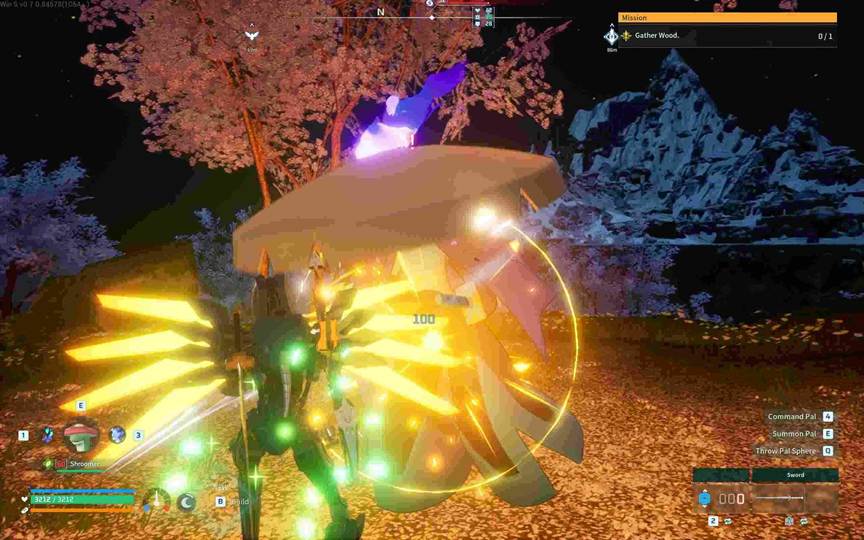
Confirm the new input rhythm
Palworld v0.7’s baseline change is simple on paper: the basic attack is no longer a single isolated swing, but a linked sequence that continues as long as inputs keep arriving within the chain’s timing window. On keyboard and mouse, this expresses as repeated left-clicks producing a fluid string; on controller, the same behavior maps to repeated right trigger presses. The feel is closer to an action game’s light-string cadence than Palworld’s earlier “one swing, one pause” melee.
The important mechanical implication is that the chain is not just animation flair. The system establishes a predictable order of strikes, and it assigns differentiated value to certain hits inside the sequence. Players who maintain the string access those higher-value steps reliably, while players who disengage or miss timing typically fall back to the opening hit when they reconnect.
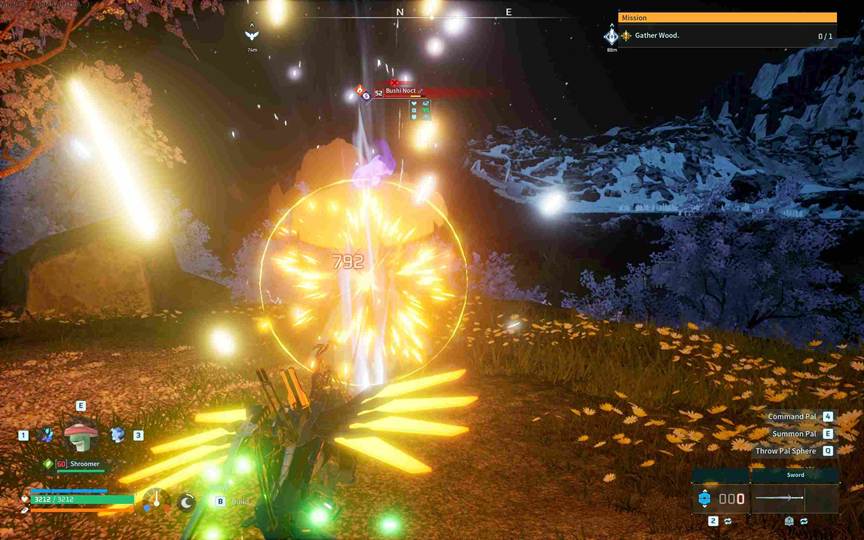
Katana and beam sword add a second layer: a held-input special that converts the same attack family into a forward-committing move, often described as a dash-slash or fast lunge. On mouse, this generally means holding one click while pressing the other to trigger the special behavior; on controller, it maps to holding a trigger to charge or activate the special. The practical takeaway is that katana and beam sword are no longer only “faster swords,” but weapons with an intentional entry move that can start or reshape an exchange.
Because the special is bound to attack inputs rather than a separate ability wheel, it is easy to accidentally trigger when frantic, and easy to underuse when cautious. Consistency comes from treating the special as a deliberate tempo tool: a way to close distance, realign, or compress time-to-impact, rather than a random extra swing that happens sometimes.
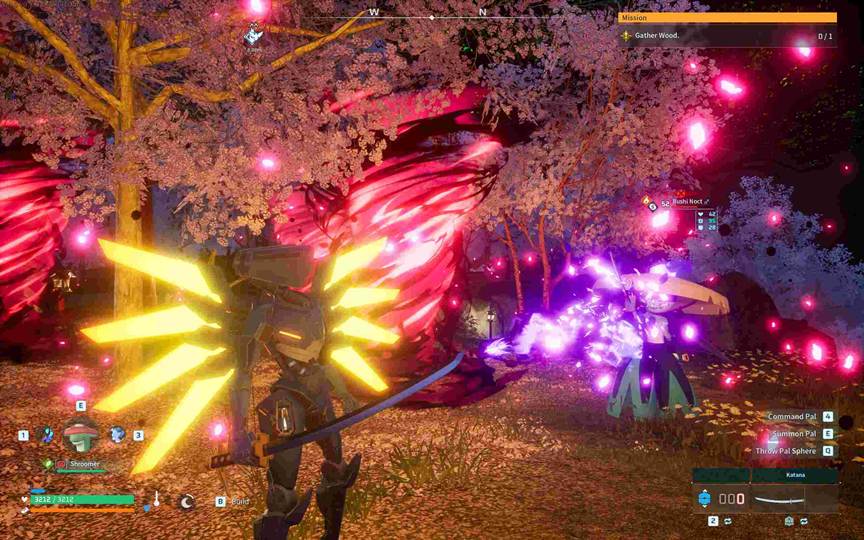
Track where the bonus hits land
The v0.7 combo system hides its most important performance detail in plain sight: certain steps in the chain are “bonus” hits that spike damage. Community testing and early impressions commonly describe an alternating pattern for katana and beam sword where every other strike can land as a heavier hit, while the standard sword tends to place its enhanced hit later in the string, often aligning with an every-third-hit rhythm. The exact multipliers matter less than the behavioral effect: melee damage now arrives in beats, not a flat line.
This beat structure is why melee can look strong in short clips and underperform over a full boss cycle. If a fight allows uninterrupted contact, the chain reaches its bonus hits frequently, and the weapon’s effective DPS rises. If the player is forced to dodge, re-aim, or chase a strafing target, the chain resets often, and the weapon spends more time repeating low-value openers.
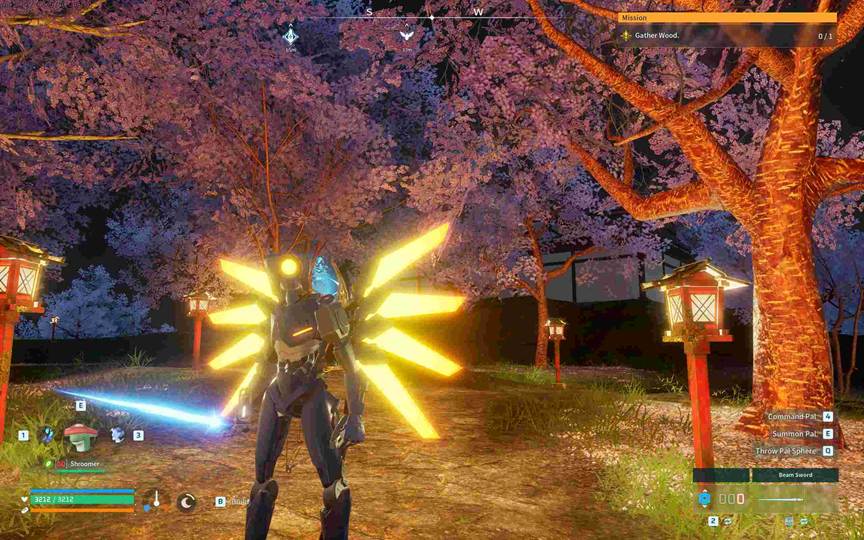
In practice, katana often feels stronger than beam sword despite beam sword’s late-game identity, largely because speed influences how quickly the chain reaches its bonus steps again after any disruption. Faster animation and quicker recovery can reduce the “penalty time” spent rebuilding the string. That advantage is subtle on paper but obvious in motion-heavy fights where targets drift, the camera swings, and the player’s inputs are constantly interrupted.
The standard sword’s slower tempo and later bonus step give it a different profile: it can still benefit from the new system, but it is more exposed to reset loss. When the enhanced hit is deeper in the chain, any forced disengage is effectively a damage tax, and the sword has to “earn” its spike again. That makes it more dependent on stable target access than the other two weapons.
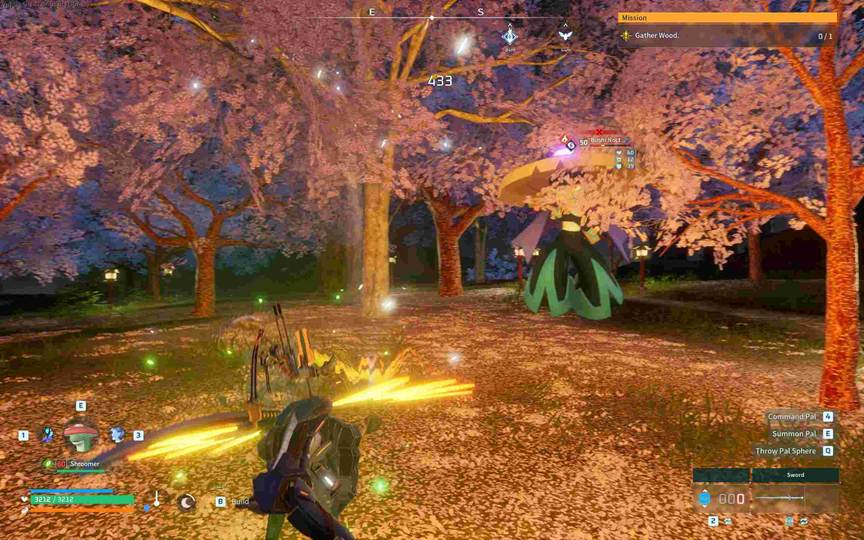
Use specials to control distance
The katana and beam sword special attacks are best understood as repositioning moves that happen to deal damage, not damage moves that happen to reposition. They shift the player forward and tend to compress the time it takes to re-enter melee range, which matters because chain resets are the main reason melee loses value. Used correctly, a special is a bridge back into the string so the bonus-hit cadence returns sooner.
The tradeoff is commitment. A forward lunge can carry the player under large bosses or into awkward camera angles, and Palworld’s enemies often circle or pivot in ways that make tight melee tracking uncomfortable. In these moments, the special can solve distance but worsen readability, which leads to missed follow-ups and yet another reset. The weapon’s “feel” improves, but the fight can still punish melee fundamentals like staying on the correct side of a hitbox.
Beam sword’s speed and multi-hit character make it attractive for aggressive play, but it also increases the importance of spacing because faster strings amplify the cost of being slightly misaligned. If the player’s lunge places the character at a poor angle relative to the target’s movement, the weapon can spend several hits shaving air, and the chain’s damage rhythm collapses.
This is where katana often reads as the more forgiving choice: it can reach its meaningful beats quickly, but it does not always demand the same tight camera correction as beam sword to keep hits landing. When evaluating the two, the deciding factor is rarely raw numbers and more often target behavior and arena geometry.
Judge melee by uptime, not hype
The v0.7 overhaul makes melee more dynamic, but it does not automatically make it dominant. In clean DPS testing, optimal chains can look respectable, especially when the bonus-hit cadence is maintained. In real encounters, ranged weapons and Pal abilities still tend to win on consistency, because they keep contributing damage while the player dodges, repositions, or deals with terrain.
Melee’s new ceiling is “useful and fun,” not “universally optimal.” The strongest case for swords, katanas, and beam swords after v0.7 is when fights allow prolonged contact, when the player can manage camera and spacing, and when the build is constructed to support staying in range. When those conditions are not met, the system’s most defining characteristic is how harshly it penalizes interruptions by snapping back to low-value openers.
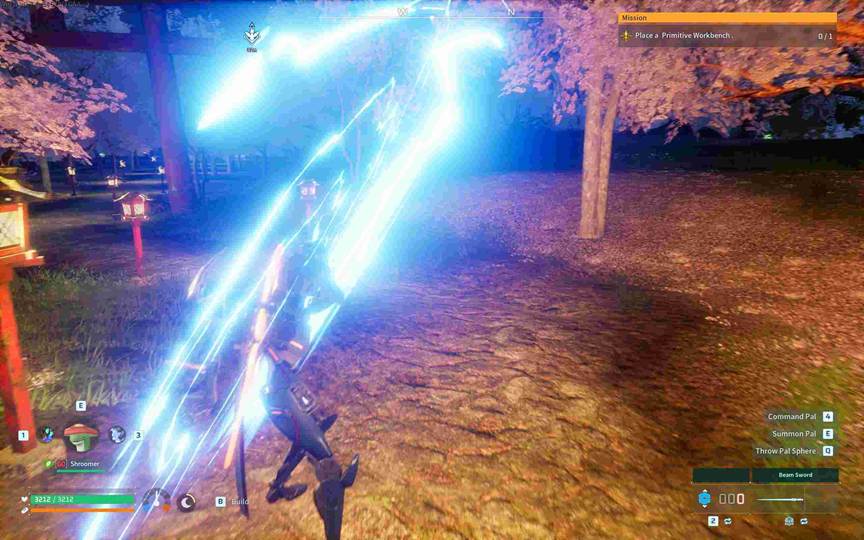
The practical way to evaluate melee in v0.7 is to measure uptime: how often the chain stays alive long enough to reach its bonus steps and how quickly the player can re-enter after being forced out. Katana and beam sword tend to score better here because their specials shorten re-entry time, while the standard sword relies more on the fight itself being cooperative.