
Herblore Skill Guide (RuneScape: Dragonwilds)
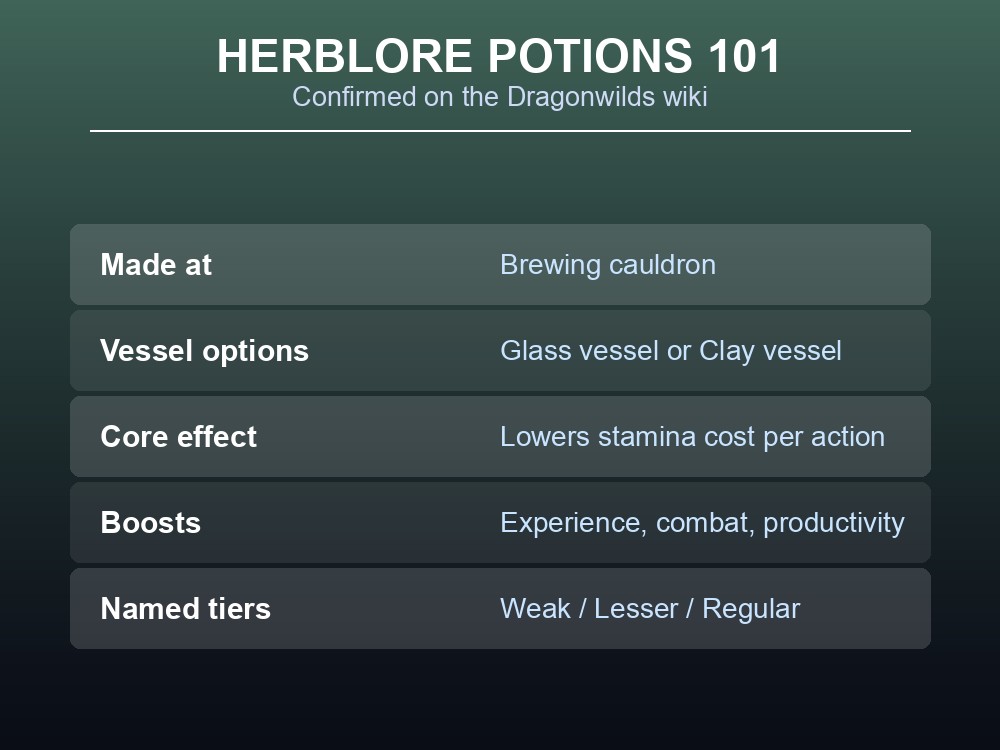
Herblore is Dragonwilds' potion-brewing skill, and on the game's own wiki the "Herblore" page redirects straight into the Potions article — meaning almost everything documented about the skill is documented through the items it produces, not through a separate leveling chart. The wiki describes the goal plainly: "Potions are consumable items that can enhance the experience, combat, and the productivity of the affected skill through lowering the stamina per action." Every potion is brewed at a brewing cauldron, using either a glass vessel or a fired clay vessel as the container. Beyond that framing, our source gives full recipe-and-effect detail for only two specific potions — this guide covers exactly what's confirmed and flags everything else as undocumented rather than guessing at it.
What Herblore Potions Actually Do
Quoting the wiki directly again, because the exact wording is the evidence here: potions "enhance the experience, combat, and the productivity of the affected skill through lowering the stamina per action." In plain terms, a potion tied to a given skill makes actions in that skill cost less stamina, which is how Herblore's output feeds back into everything else you're doing — gathering, crafting, fighting — rather than being a standalone combat consumable line. Brewing happens at a brewing cauldron, and the container can be either a glass vessel or a fired clay vessel. The source doesn't specify whether the two vessel types produce any difference in potion potency, duration, or yield — that distinction is undocumented in our facts, so don't assume glass and clay are interchangeable without checking in-game.
The Tier Structure: Weak, Lesser, Regular... and Beyond
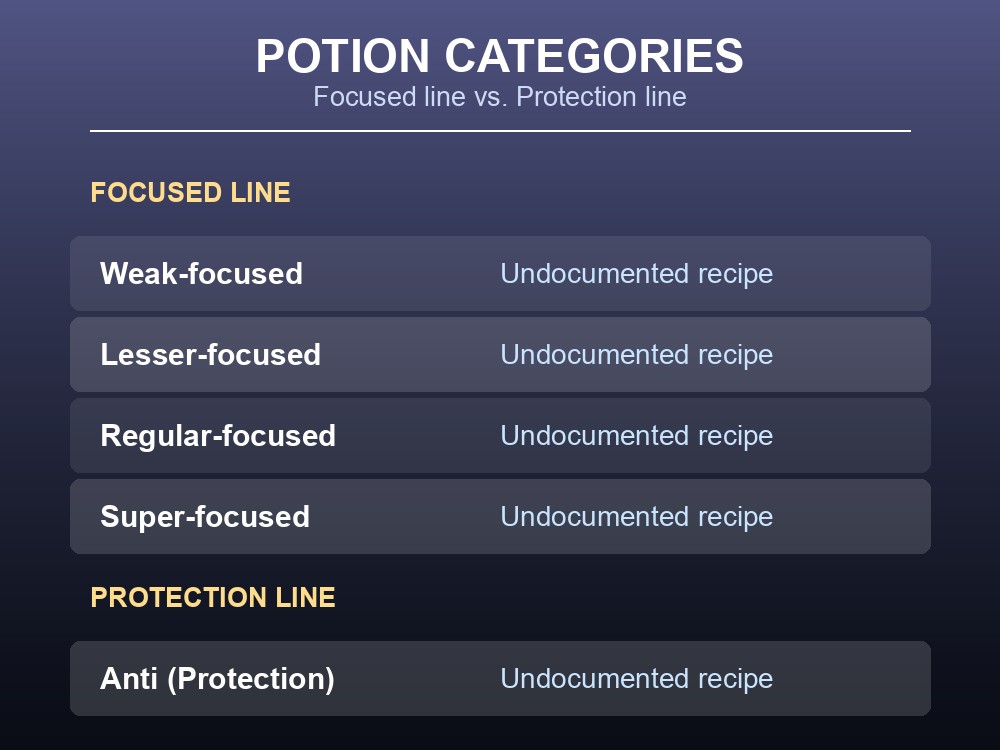
The wiki's own intro text says potions "are split into their weak, lesser, and regular versions, and involve several skills" — three named tiers. But the page's own section headers go further than that summary: it lists Weak-focused, Lesser-focused, Regular-focused, and Super-focused as one group, plus a separate Protection (internally labeled "anti") category. That's five tier/category headers against an intro sentence that only names three tiers by word — a mismatch worth flagging rather than smoothing over. What "Super-focused" potions do differently from "Regular-focused" ones, what a "Protection" potion protects against, and how any of these tiers map to Herblore skill levels are all undocumented in our source — the infobox data for this topic came back empty, so there's no level-requirement table to cite here. Treat every tier name in this section as confirmed to exist, and everything about its specific effect as unconfirmed until checked against the live game or a fuller wiki pull.
The Two Fully Documented Combat Potions
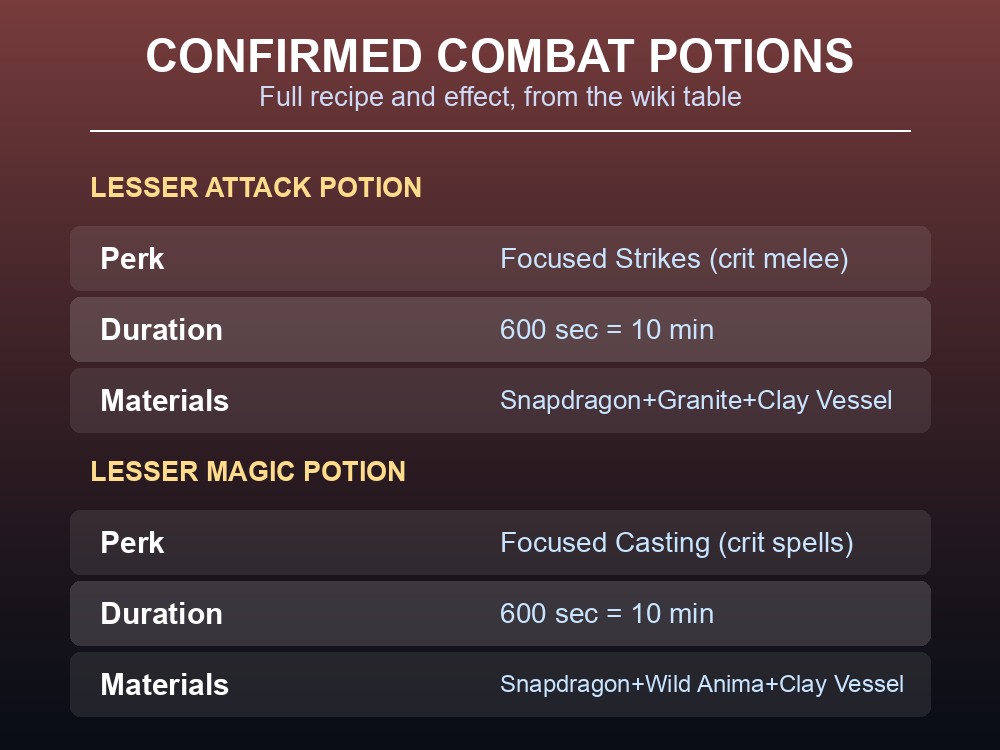
Under the "Combat" heading, the wiki gives complete recipe-and-effect data for exactly two potions, both at the Lesser tier. The Lesser Attack Potion carries the perk "Focused Strikes," described verbatim as an "INCREASED chance of landing CRITICAL HITS with MELEE ATTACKS." It lasts 600 seconds — that's 600 ÷ 60 = 10 minutes per dose — and its materials are 1 × Snapdragon, 1 × Ground Granite, and 1 × Clay Vessel. The Lesser Magic Potion carries the perk "Focused Casting," an "INCREASED chance of landing CRITICAL HITS with COMBAT SPELLS," also lasting 600 seconds (10 minutes), built from 1 × Snapdragon, 1 × Wild Anima, and 1 × Clay Vessel. Notice the shared ingredient: both recipes need exactly one Snapdragon and one Clay Vessel, differing only in the second reagent — Ground Granite for the melee-focused version, Wild Anima for the magic-focused one. That's the full extent of what's documented for either potion; the source doesn't state a source location for Snapdragon, Ground Granite, or Wild Anima, so gathering routes for those three reagents are undocumented here.
Related Herblore Items Worth Knowing
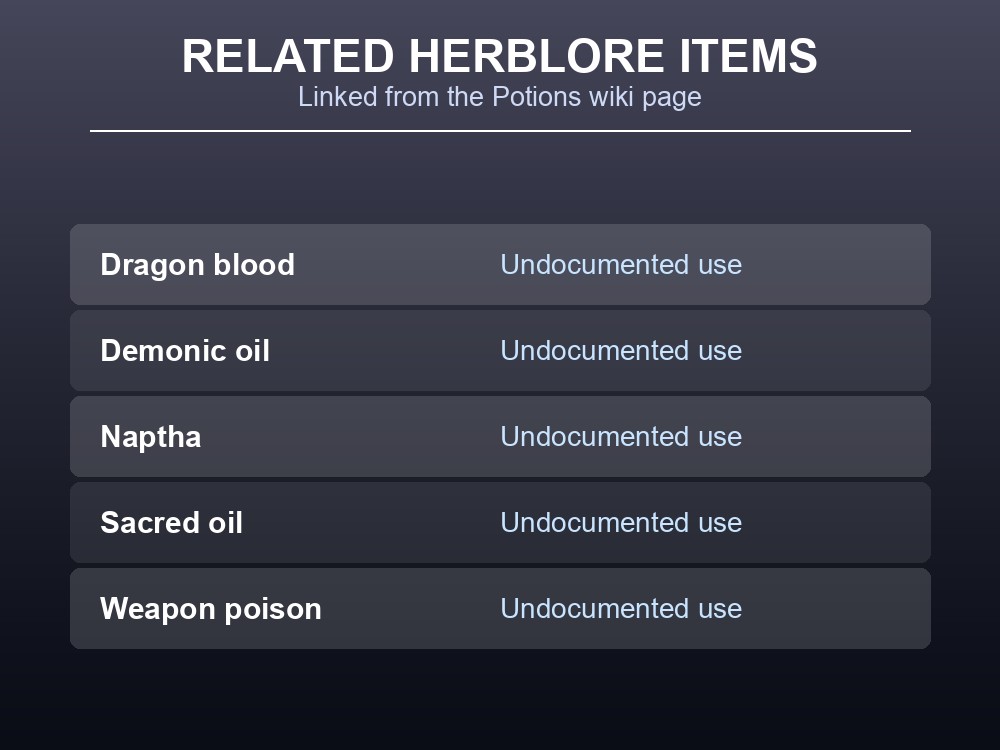
The wiki's "See also" list for Potions names five related items: Dragon blood, Demonic oil, Naptha, Sacred oil, and Weapon poison. Our source confirms only that these are linked from the Potions page as related material — it doesn't include a description, recipe, or in-game effect for any of the five. Rather than guess what each one does, treat all five as confirmed-to-exist, undocumented-in-detail items until a fuller source pull covers them individually.
Before you brew: keep at least one Clay Vessel and one Snapdragon on hand at all times — both confirmed Lesser combat potions need them. Pick Ground Granite if you want melee crit uptime, Wild Anima if you're leaning on spells, and remember each dose only covers 10 minutes (600 seconds), so time your brew to a fight or a farming session rather than brewing far in advance.
Running your own Dragonwilds server
If you and your group want to test Herblore brewing and Combat-potion timing without competing for cauldrons, vessels, or reagent nodes against a public population, a private Dragonwilds server keeps that loop entirely in your own hands. You can set your own pace for gathering runs, coordinate who's brewing what before a shared fight, and adjust PvP and world settings to match how your group actually plays — all through standard server configuration and launch options, no public-server contention involved.
Conclusion
Herblore in Dragonwilds is documented, right now, as a two-tier story: a clear framing (cauldron-brewed potions that cut stamina cost per action, split across weak/lesser/regular/super tiers plus a protection line) and two fully specified recipes (Lesser Attack and Lesser Magic, each a 10-minute crit buff off one shared reagent). Everything else — vessel-type differences, the Super and Protection tiers' actual effects, reagent gathering locations, and the five related items in the "See also" list — is confirmed to exist but undocumented in detail here. Come back to this guide once a fuller wiki pull fills in the rest.
Ready to brew without the queue for a public cauldron? Spin up your own Dragonwilds server in minutes and get your group testing Herblore combos today — free with code WELCOME.